
You know this relationship: When you first met, you were sure it was fate that brought you together. He was all you had ever wanted; he couldn’t do enough for you.
But now, you’re drifting apart; you begin to wonder whether he even has your best interests at heart. You’re not getting much out of it, and every interaction makes you feel as if you’re losing.
Could it be time to break up with your mutual fund manager?
In many ways, our relationship to our money – and to those who manage it for us – can be just as turbulent and fraught as any romantic entanglement.
Many find the challenges of selecting a prospective manager even more daunting than hopping on Match.com: so said nearly half of respondents to a recent survey by Natixis. The fear of being alone can be even worse when it comes to managing money, which makes one yearn for a wise team-mate.
So if we end up stuck in a toxic mutual fund manager relationship – putting up with lousy returns, an erratic and inconsistent investment style, high fees – should anyone be surprised?
Consider the case of the Pimco Total Return Fund. It was managed by bond market legend Bill Gross until the end of September, when he left the firm in spectacular Game of Thrones fashion. Gross had been steadily losing the faith of investors – and their money – for nearly a year before he eyed the exits. Investors were irritated by his prolonged period of underperformance, but they continued to pull money out even during months when the fund’s returns seemed to stabilize. Clearly, they were worried about a lot of factors.
Gross lost his quixotic battle against US Treasury bonds. First he cut his investment in Treasuries from 20% of his portfolio to zero. He defended his move with theatrical, over-the-top rhetoric, calling Treasuries a “robbery” of investors. He was wrong. The fund’s returns faltered.
It was a kind of death spiral: the stress from his bad call seems to have taken its toll on the relationship between Gross and his heir apparent, Mohamed El-Erian. That culminated in a spat in front of Pimco employees, during which El-Erian told Gross, “I’m tired of cleaning up your shit.” Within months, El-Erian had resigned – and billions of dollars more left Pimco as investors worried about the signs of dissension and dysfunction at the top.
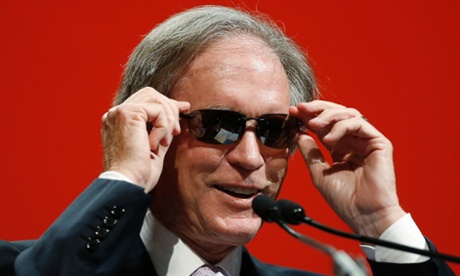
But things are turning around for Gross. Now that he has found a new home at Janus Capital, taking the helm of the fledgling Janus Unconstrained Bond Fund, about a billion dollars of capital followed him to Janus within days, and the assets of his new fund began to grow.
Confusing, isn’t it? One group of investors is so loyal that they’ll follow Gross to a money management firm not even known for its prowess in fixed income, while others have been fleeing his advice in droves?
So, just when should you be prepared to break up with your mutual fund manager? And for what reasons?
If infidelity is the single biggest cause of relationship breakups, it’s performance that is the equivalent in the investment world. It’s hardly surprising that it was Pimco’s performance woes that brought other issues to the surface.
But if you’re going to make performance a reason to bid your manager farewell, make sure that you understand what you’re doing.
“Performance chasing is almost an American pastime,” says Daniel Wiener, CEO of Adviser Investments. It can also be a costly one: not only can it have tax consequences, but investors have shown themselves to be just as bad at determining when a particular manager is about to outperform or become a laggard as they are about anticipating which way the stock market will swing next.

It’s unrealistic to expect your manager to beat the market every month or avoid losses constantly. (If there are no losses on individual positions from time to time, odds are he isn’t taking enough risk to generate attractive returns.) Put those losses in context. Was it a bad market environment or a bad judgment call?
If the manager’s performance relative to his peers is slipping, dig more deeply. Was it due to a bad bet on a single stock or something broader? (Read the quarterly report for more insight.)
Then look at the manager’s track record. In past periods when he has done poorly, how long does it take him to recover? Does the fund tend to have volatile performance?
No baseball team will fire a starting pitcher based on the results of a single game, or even a few of them. A season is another matter. What is a season in the financial markets? Some experts will suggest waiting at least a year before canning your fund manager, others, as long as two or three years. Me? It depends on your tolerance for losses and the impact of a sale on your your portfolio.
If performance is the single biggest reason to fire “your guy”, there are other, more subtle signs that can alert you to the fact that something is amiss. Some of these might never affect the fund’s returns; others could, or at least could distract the manager from his main job: looking after your money.
Is the fund manager suddenly managing a lot more money – without much more in the way of support from analysts? Has a manager who once was very visible – popping up on CNBC every five minutes – suddenly vanished from view, or has your quiet manager suddenly developed a taste for the limelight? Has the portfolio suddenly changed dramatically, and gone from being a diversified fund to one dominated by a few outsized, risky bets?
Has the fund been sold to a new owner, leaving the manager to try to find his way in a strange environment? Has the fund manager suddenly announced his intention to resign, leaving his firm scrambling to fill his shoes because they have no succession plan? (That’s a red flag warning for both the manager and the investment firm that he’s departing.)
Perhaps the easiest time to break up with a manager is when you’ve determined there’s just no place for his kind of fund in your life any more. If you’ve soured on emerging markets, or you’ve decided you would rather use exchange-traded funds as a cheaper alternative to that biotechnology fund, well, you don’t need to second-guess your breakup decision. Those funds no longer have a spot in your asset allocation.
Your romantic life is unlike your financial life in one important respect, however: you can’t afford to be single after the breakup. You don’t want your money sitting idly by in cash, not generating a return, for any longer than it takes to transfer the assets into the hands of your new manager. Do some research into alternative funds that fit your asset allocation before telling your soon-to-be ex that it’s over.
Then you can walk away without looking back.