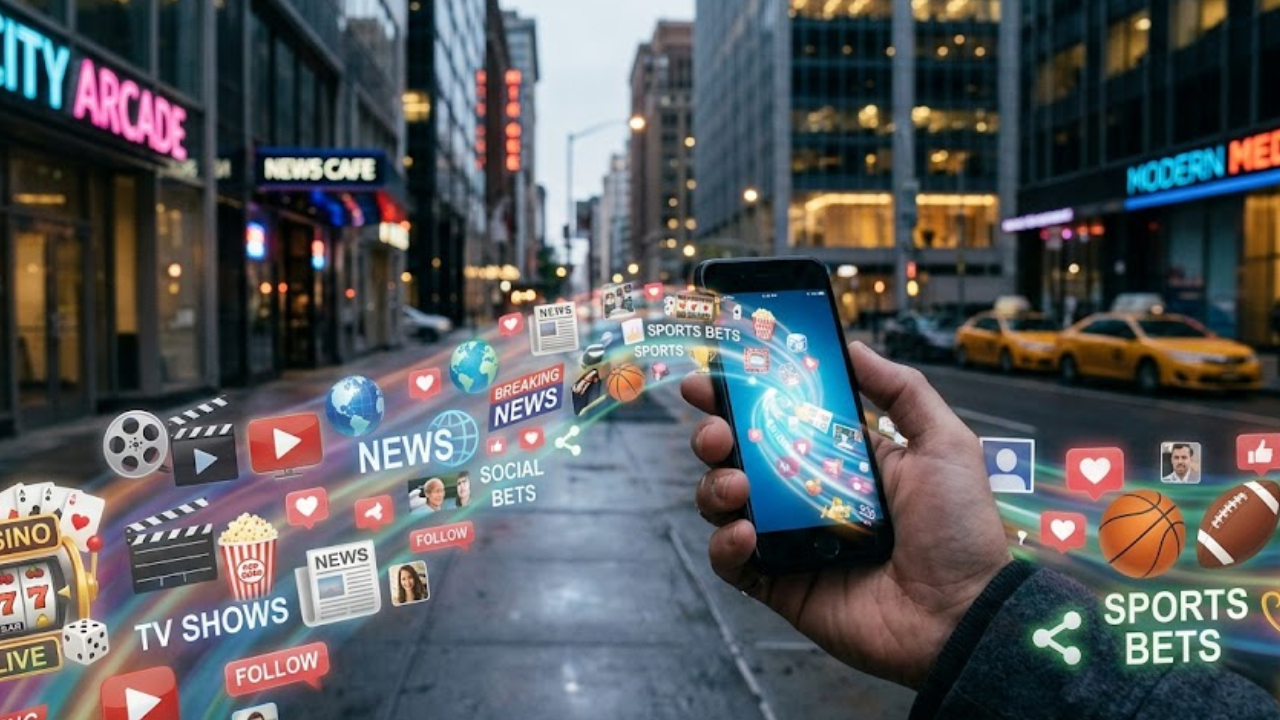
As the global economy becomes increasingly digitized, the American entertainment sector exemplifies that shift. Home and mobile streaming dominates over TV and movies. Online casino gambling is increasingly eating away at big tribal casinos and Las Vegas-based gambling operators. All brands now have some kind of digital presence, often in collaboration or crossover with others.
This article will look at exactly what the trends are in digital entertainment and where the future growth of the business likely lies. From online casinos massive growth to streaming service domination to the rise of the "everything platform" and consolidated IPs, this is what you need to know about the changing landscape of digital entertainment in the US.
Consolidation Among Big Players Continues
One of the biggest trends of recent years in the entertainment business has been consolidation. Large companies have been buying competitors or complementary smaller firms in an effort to build all-in-one entertainment ecosystems spanning streaming, media, social media and gaming.
Two major deals of 2026 illustrate this shift. One is Paramount Skydance's pending acquisition of Warner Bros. The $110 billion deal brings together news brands, sports broadcasters, Hollywood studios, streaming platforms and television networks under a single company. Showing the entertainment giants' clear plans to bring everything they can under one roof.
The other big digital entertainment deal of the year so far is the $18 billion sale of Las Vegas-based gambling giant to companies owned by Tilman Fertitta. Fertitta's Golden Nugget gambling group runs land-based and online casino ventures across the US. They are soon to add 60 US casino properties and the Caesars Sportsbook and Caesars Palace online casino app to his portfolio.
Both deals illustrate the broader move towards diversification, with major entertainment companies expanding across multiple sectors by acquiring established or fast-growing brands. Buying existing businesses is often quicker and more cost-effective than building new ones from scratch, while also bringing proven technologies, products and loyal audiences. Although these transactions frequently attract regulatory scrutiny, consolidation is likely to remain a defining trend in the entertainment industry for years to come.
Online Casinos and the Pressure on Land-Based Operations
The above $18 billion deal shows the scale of gambling as an an entertainment sector in the US. Massive - bigger than the videogames or music markets for example - but not on same level of the streaming giants.
US online casinos are only regulated in six states but they made a combined $10.7 billion across 2025 - and 2026's number looks likely to be even larger given the scale of monthly growth. Outside of that offshore casinos serve players across the US and although exact figures are unclear they may well make even more in revenues.
The scale of the market is not only reflected in revenues, but the number of operators competing for custom. For example, this list of recommended online casinos in the USA by review site Casino Guru shows just how much competition is in the booming market. Players use these services to assess differences between the many casino options, from bonuses to game selections or payment systems.
These platforms demonstrate that the ways people choose to spend their entertainment dollars are increasingly moving online and mobile-first - and it's the same story in film, TV and retail.
This all leads into why online casinos haven't spread to more US states at the same pace as sports betting has. Tribal casino operators have lobbied against the idea because they're afraid online casinos are taking their business.
The accuracy of this is debated, but it remains a key sticking point in this fast-growing space.
Streaming Domination and the All-In One Platform Shift
To put that in perspective - US online casinos and sports betting combined were worth about $32 billion in revenues in 2025. Home streaming platforms made $62 billion over the same period.
Streaming is now the second biggest entertainment sector by revenues in the US, behind only sports - which is a trillion dollar market. Increasingly, streaming platforms are reaching into the sports market too, such as Netflix's high profile boxing fights or Paramount's UFC deal.
Which is an example of probably one of the biggest trends of US digital entertainment in recent years - crossovers and all-in-one platforms.
Video game developers bring in other media IPs for skin sales, have live music concerts in games and run their own YouTube channels. Streaming services run games, broadcast live sports, work with YouTubers and run offline events or brand experiences. Gambling companies work with sports broadcasters and offer live casino games that feel like real casino gaming.
This can also be seen in betting with recent launch of DraftKings and FanDuel's combined sports betting, casino, lottery and prediction market apps, which rolled out nationally earlier this year.
So, if there is one trend in digital entertainment across the US in 2026 that you need to be aware of, it is the crossover and the merger.