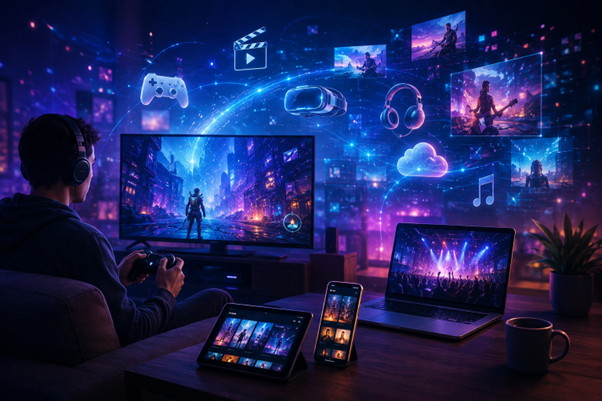
Digital entertainment has changed at a remarkable pace over the last two decades. Faster internet connections, mobile devices, cloud technology, and changing consumer habits have reshaped the way people spend their free time. Many activities that once depended on physical locations or dedicated hardware now take place through connected devices that people carry every day.
Entertainment no longer follows a fixed schedule. Users choose when and where they want to watch, listen, read, or play. They switch between devices without interrupting their activities and expect quick access to content that matches their interests. These habits continue to shape digital services across many sectors.
One example appears in online gaming platforms. Many users who discuss digital gaming trends also mention services such as spinanzia casino while comparing account features, mobile access, payment methods, and interface design. This reflects a broader shift toward digital environments that focus on convenience, accessibility, and consistent user experience.
Digital Access Changes Everyday Habits
The spread of broadband networks and mobile internet has expanded digital entertainment across many regions. Faster connections allow users to stream videos, participate in multiplayer games, join live events, and communicate with others without noticeable delays.
Smartphones have become central to this shift. Instead of waiting until they return home, people access entertainment during travel, breaks, or quiet moments throughout the day. Tablets, laptops, smart televisions, and handheld devices support the same trend by offering connected experiences in different settings.
Several factors support this development:
- High-speed internet continues to reach more households.
- Mobile devices deliver strong performance at lower prices.
- Cloud storage keeps personal data available across devices.
- Wireless technology reduces hardware limitations.
- Digital payment systems simplify online purchases.
Each improvement encourages people to spend more time with digital services while expecting smoother experiences.
Entertainment Expands Beyond Traditional Formats
Entertainment once followed clear categories such as television, radio, books, or video games. Today those boundaries rarely remain separate. A single platform may combine live broadcasts, recorded videos, interactive chats, community discussions, and personalized recommendations.
Users rarely consume content in only one way. Someone might watch a documentary, listen to a related podcast, join an online discussion, and continue reading articles about the same subject during the same day.
This shift encourages developers to create platforms that support several forms of interaction instead of limiting users to one activity.
The following table highlights some noticeable differences.
|
Earlier Digital Services |
Current Digital Services |
|
Fixed schedules |
On-demand access |
|
Single-device use |
Multi-device synchronization |
|
Limited interaction |
Real-time participation |
|
Local storage |
Cloud-based access |
|
Static recommendations |
Personalized suggestions |
These changes reflect evolving expectations rather than temporary trends.
Mobile Technology Shapes User Behavior
Mobile technology continues to influence nearly every area of digital entertainment. Modern devices combine processing power, fast internet access, quality displays, and long battery life within compact designs.
People expect applications to load quickly and respond without delays. They also expect accounts, preferences, and progress to remain available across different devices.
Developers pay closer attention to several areas:
- Interface simplicity.
- Fast loading times.
- Battery efficiency.
- Secure authentication.
- Stable performance during heavy traffic.
Small improvements in these areas often create noticeable differences in everyday use.
Artificial Intelligence Supports Personal Experiences
Artificial intelligence has become part of many digital platforms. Recommendation systems analyze viewing habits, listening history, reading preferences, and user activity to suggest relevant content.
This technology also assists customer support, language translation, subtitle generation, search functions, and content moderation.
Developers continue refining these systems because users expect suggestions that match their interests without requiring long searches.
Artificial intelligence also helps identify technical issues before they interrupt normal service. This allows digital platforms to maintain stable performance during periods of heavy activity.
Cloud Computing Removes Hardware Limits
Cloud computing has changed how people access entertainment. Instead of storing every file locally, users retrieve content through online servers whenever they need it.
This approach reduces storage requirements on personal devices and allows quick synchronization between smartphones, computers, and televisions.
Cloud services also simplify updates. Developers improve applications without requiring users to reinstall large software packages every time new features appear.
Many digital services now depend on cloud infrastructure for:
- Media streaming.
- Online gaming.
- Document storage.
- Personal settings.
- Cross-device synchronization.
These functions have become ordinary expectations for many users.
Social Interaction Becomes Part of Entertainment
Entertainment no longer focuses only on individual activities. Many digital platforms encourage communication before, during, and after content consumption.
Users exchange opinions through live chats, discussion groups, community forums, and direct messaging. Shared experiences increase engagement because people enjoy discussing events while they happen.
Streaming events demonstrate this pattern clearly. Viewers often comment in real time while creators respond directly to audience questions.
This interaction creates ongoing conversations rather than isolated viewing sessions.
Security Receives Greater Attention
As digital entertainment grows, users pay closer attention to privacy and account protection.
Many services now include stronger authentication methods, encrypted connections, account verification, and fraud detection systems.
People also expect clear privacy controls that explain how platforms collect, store, and manage personal information.
Developers continue improving these protections because security concerns influence long-term user confidence.
Several practices help strengthen account safety:
- Multi-factor authentication.
- Strong password requirements.
- Login notifications.
- Device management tools.
- Session monitoring.
These measures reduce common security risks while keeping accounts easier to manage.
Payment Technology Continues to Improve
Digital transactions have become faster and easier than they were only a few years ago.
Users complete purchases through bank cards, digital wallets, instant transfers, and other electronic payment methods without lengthy verification processes.
Improved payment technology benefits many forms of entertainment, including subscription services, downloadable content, event tickets, digital books, and online gaming.
People also expect transparent payment histories and simple refund procedures whenever necessary.

Content Creation Reaches Larger Audiences
Modern technology allows individuals and small creative teams to publish videos, podcasts, articles, music, and interactive projects without depending on traditional distribution channels.
Affordable production equipment, editing software, and online publishing platforms reduce technical barriers.
Content creators now communicate directly with audiences through comments, live sessions, newsletters, and community spaces.
This direct relationship allows creators to understand audience interests more quickly and adjust future content based on feedback.
Personalization Continues to Expand
Many entertainment platforms organize content according to individual preferences instead of displaying identical selections to every visitor.
Recommendation systems examine factors such as viewing history, search activity, completed content, and user ratings.
Although personalization improves convenience, many users still appreciate manual browsing because unexpected discoveries remain valuable.
Developers continue balancing automated suggestions with user control.
Accessibility Improves Digital Inclusion
Accessibility plays an increasingly important role in digital entertainment.
Developers include larger text options, screen reader compatibility, subtitles, adjustable contrast, keyboard navigation, and voice controls.
These improvements allow more people to participate without changing the core experience.
Accessibility also benefits users in temporary situations, such as watching videos without sound or navigating applications while using alternative input methods.
Future Directions
Digital entertainment will continue changing as technology progresses.
Several developments may shape future services:
- Faster wireless networks.
- Smarter recommendation systems.
- Better language translation.
- Expanded cloud capabilities.
- Improved accessibility features.
- More efficient device synchronization.
These changes will likely focus on convenience, speed, security, and user control rather than dramatic redesigns.
Developers will continue studying user behavior because expectations evolve alongside technology. Small improvements introduced consistently often create greater long-term impact than isolated feature updates.
Conclusion
Digital entertainment continues to change because technology, consumer habits, and internet infrastructure evolve together. People expect immediate access, responsive interfaces, secure accounts, and consistent experiences across multiple devices.
Cloud computing, artificial intelligence, mobile technology, stronger security practices, and improved payment systems all contribute to this ongoing progress. At the same time, social interaction, accessibility, and personalization shape how users discover and enjoy digital content.
Future developments will likely strengthen these existing directions instead of replacing them completely. As technology advances, digital entertainment will continue responding to changing expectations while remaining an important part of everyday life.