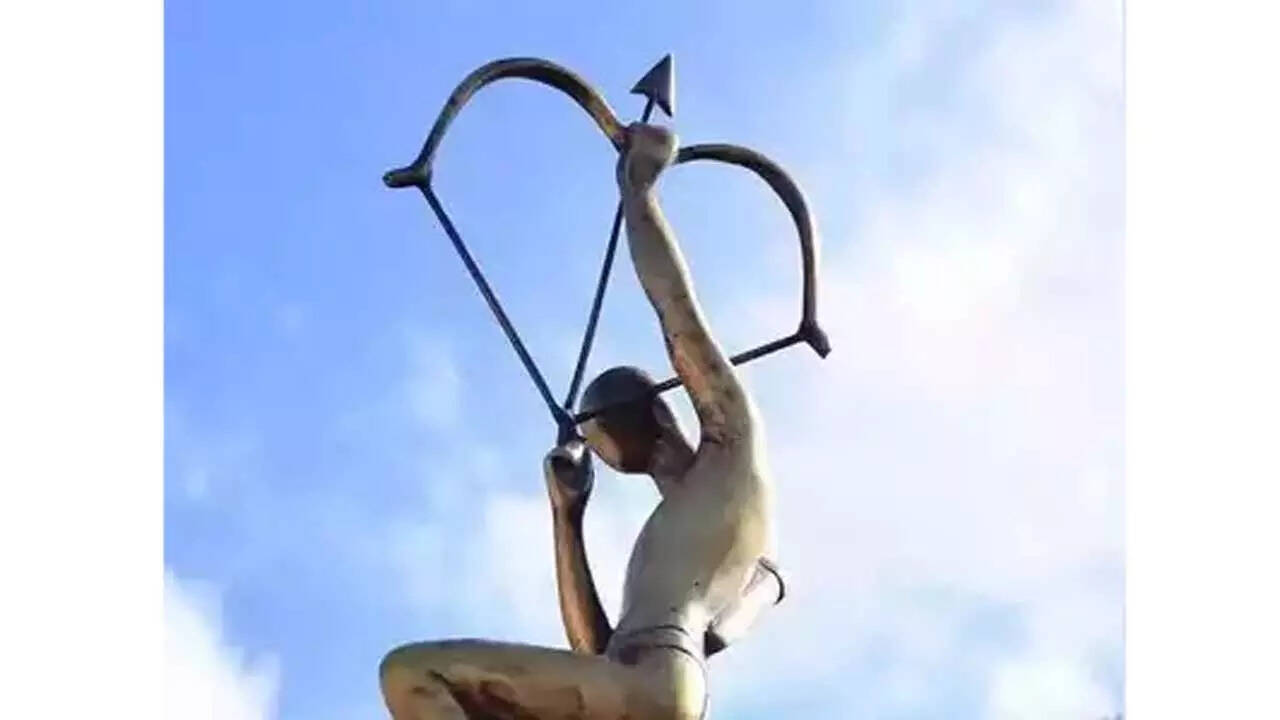
NEW DELHI: Were the selection committee members not informed about the doping past of a Paralympian athlete recommended for this year's Arjuna award or did the ministry and Sports Authority of India (SAI) officials sitting inside the meeting hall choose to overlook its own order dated August 6, 2021 denying the national sports awards honour to sportspersons with dope-tainted past?
In one such case, the 12-member selection committee, headed by retired Supreme Court judge, Justice Mukundakum Sharma, recommended the name of para-athlete Sharad Kumar, who won a bronze in the men's T-63 high jump event at the Tokyo Paralympics on August 31. According to the International Paralympic Committee's (IPC) website, Sharad had tested positive for the prohibited substance stanozolol at the 2012 Malaysian Open Championships and was subsequently suspended for two years.
"I was devastated when I got to know about the doping charges against me. I felt ashamed that I would have to fight a doping case and miss the opportunity to participate in the London Paralympics (2012). It was almost impossible to prove my innocence to the committee and the ban was inevitable. Those two years were a nightmare for me, but they have taught me a lot about the challenges of being a sportsperson in India," Sharad was quoted as saying in his personal bio section in a November 6, 2014 article published on the IPC's website.
On May 19, the ministry had come up with a circular inviting nominations for the Khel Ratna and Arjuna, where it had clearly mentioned that the dope-tainted athletes will be considered for the national honours. However, a couple of months later - on August 6, 2021 - the ministry put up another notification which read: "Sportspersons who have been penalized or against whom enquiry is pending/ongoing for use of drugs/substances banned by the Wada based on a sample collected by the Nada or any other agency authorized by Wada and tested by NDTL or any other Wada accredited laboratory, will not be eligible for the Award."
The notification has since been taken off from the ministry's website and can't be traced on google search. TOI has a copy of that order. Till last year, dope offenders were ineligible to apply for any national honours.
And if the ministry has recalled its order (no such update available) which had made dope-tainted athletes and coaches ineligible for awards, then the likes of boxer Amit Panghal, triple jumper Renjith Maheswary and discus thrower Seema Antil - who were found dope positive during different stages of their careers - should have also been considered for the Khel Ratna and Arjuna.
Reigning Asian Games champion Panghal has, for the second time, applied for the Khel Ratna and, during the four-year awards cycle, the flyweight boxer has won a total of 16 medals, including nine gold in various multi-sport and international events. Maheswary was nominated for the Arjuna in 2013 but was later denied the award due to doping allegations.
In fact, as per the Right to Information (RTI) records of athletes with doping past from 1999 till 2013 shared with TOI, the National Anti-Doping Agency (Nada) had replied to the petitioner on October 31, 2013 that Sharad had failed the dope test for banned substance and his name figured at serial number 366 in the list.
There had been athletes and coaches in the past who failed the dope test but were awarded with the Arjuna, Dhyan Chand and Dronacharya honours. According to a letter written by Maheswary to sports minister Anurag Thakur on September 9, 2021, the triple jumper had mentioned about the names of such dope-tainted athletes and coaches including Kunjarani Devi (weightlifting), Satish Rai (weightlifting), Neelam J Singh (athletics), Aparna Popat (badminton), Yashpal Solanki (judo), Geetha (athletics) and coach Ramesh Nagapuri (athletics).
All these had failed dope tests prior to the Nada's inception as the country's premier anti-doping watchdog in 2009. As per the letter issued by Nada to the ministry's under-secretary on 22/07/2017, it was understood that "the dope violation cases as committed by the sportspersons prior to 2009 may not be considered as anti-doping rule violations due to lack of well-established anti-doping rules at that time, absence of a WADA accredited laboratory in the country and lack of proper documentation as per the required international standards".