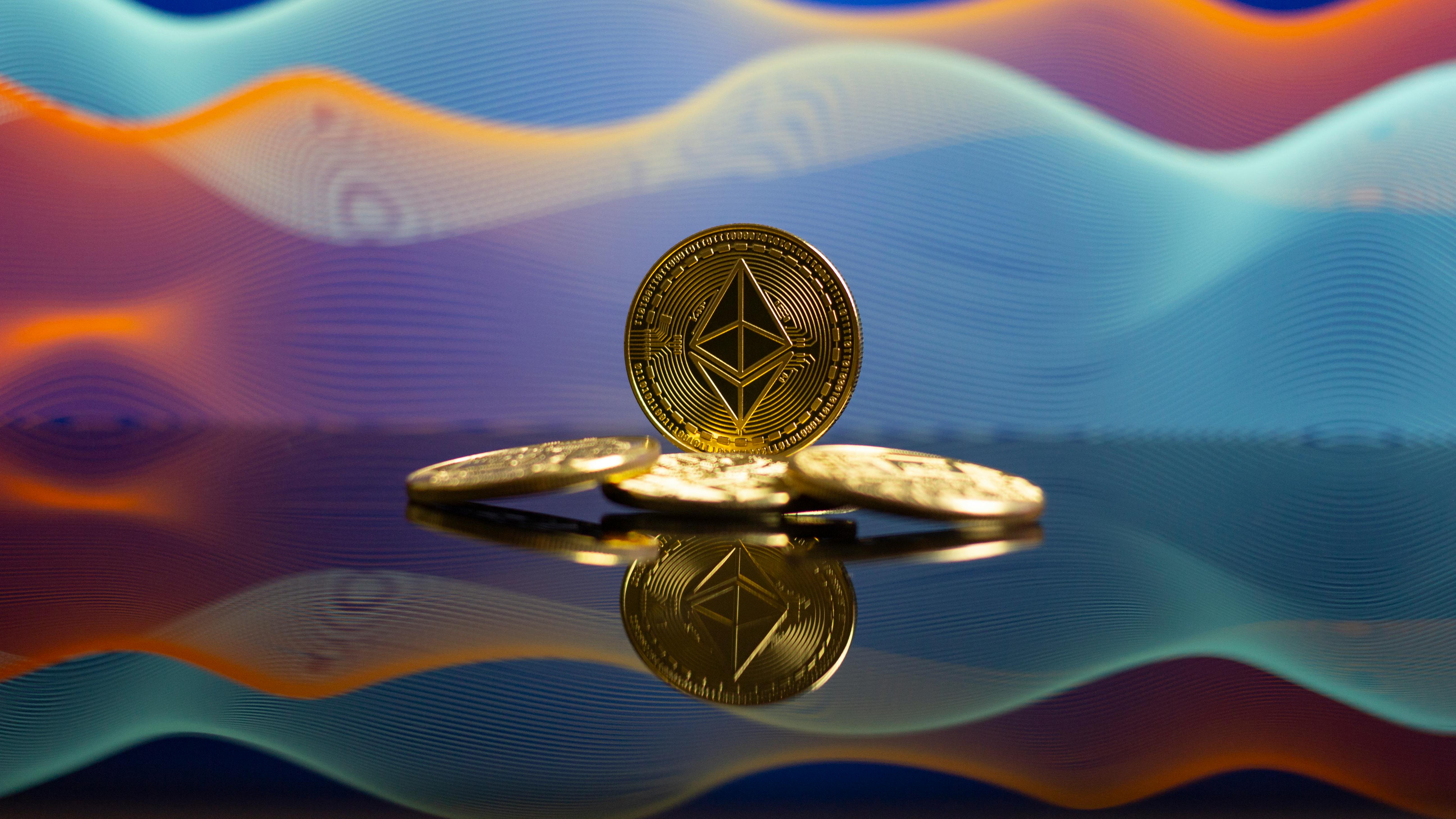
Public firms have traded legacy cash for 4.7 million ether, anchoring a $10.7 billion position that moves in lockstep with the significant 2026 protocol hardening known as the Strawmap roadmap. This article provides technical depth on Ethereum's institutional trajectory.
If you're still looking at ether as a speculative line item on a brokerage app, you're looking at the wrong numbers. By April 2026, corporate conversation has moved past simple price action to raw gravity of treasury accumulation. Bitmine Immersion Technologies now sits on nearly 4% of the circulating supply, creating a $10.7 billion firewall on their balance sheet. Strategy focuses on long-term utility of the network. Traditional skepticism of the legacy banking sector gets ignored. Leading entities don't just participate in the network; they secure it with hardware investments and protocol-level commitment.
Corporate Treasuries Move Toward High Density Assets
Analyzing the ethereum price of $2,005.42 on April 1, 2026, according to data from crypto exchange Binance, shows why firms prioritize the utility of a programmable settlement layer with 18.5% market dominance. Staking 3,142,643 ETH on the MAVAN platform generates returns that traditional banking can't match. You don't see this level of concentration in traditional equities. It's a structural commitment to the base layer that legacy banks haven't figured out yet.
Moving from cash-heavy reserves toward validator-heavy treasuries marks a significant transition in institutional asset management. It's an entry point for acquiring yield-generating assets at scale. According to a press release, Bitmine Immersion Technology now holds 4,732,082 ETH tokens as of March 30, 2026. Owning 3.92% of the total supply provides a technical moat rarely seen in corporate finance.
Daily operations focus on the Alchemy of 5% goal. Total holdings including secondary assets represent $10.7 billion in value. Bitmine functions as a pillar for the network's economic safety. High liquidity persists, as seen by Bitmine ranking as the 100th most traded stock in the US with a daily volume of $920 million. That kind of deep integration suggests that Ethereum may become the backbone of institutional balance sheets.
Technical Roadmaps Target Quantum Safety And Faster Slots
Engineering teams now follow Strawmap documentation to prepare for incoming compute threats. Four years of development focus on quantum-resistance and latency optimization. Performance targets include 2-second slots and single-slot finality between 6 and 16 seconds. Developers don't just want faster blocks; they're essentially rebuilding the network's cryptographic foundation to ensure it can't be cracked by coming hardware.
Binance Insights reports a historic staking ratio of 50.18%. Staking 80.95 million tokens secures the state.
- Introduction of Block Access Lists to enable parallel execution.
- Enshrinement of Proposer-Builder Separation via EIP-7732 to cut centralization risks.
- Deploying advanced cryptography to secure the network against incoming compute threats.
Glamsterdam arrives in H1 2026 to introduce L1 parallelization. Block Access Lists allow for simultaneous transaction processing. Parallelization moves the network away from sequential bottlenecks to reach a theoretical 10,000 TPS. Hegotá follows in H2 2026 with native account abstraction and ZK-EVM clients. Reaching these benchmarks ensures the network remains the primary choice for complex financial logic.
Infrastructure Plays Outpace Simple Asset Accumulation
Market interest moved from simple ownership toward operational efficiency after Bitmine became the largest corporate holder. Their stock prices surged 145% in late 2025 right after this milestone announcement. Focus turned to how efficiently nodes can run within a competitive environment. While others were busy writing whitepapers, Bitmine was dunking hardware in coolant to shave 22% off their operating costs and dominate the validator set.
Immersion technology reduces energy consumption by 22% according to company reports. Lowering overhead provides a buffer against price fluctuations. Efficient validators maintain higher uptime and consistent rewards. Institutional players recognize that hardware optimization is just as important as the underlying asset. Node resilience depends on these physical optimizations to survive varying network conditions.
Running a global validator set requires more than just capital. Technical mastery over heat dissipation and power distribution creates a moat. Bitmine's strategy centers on these technical advantages. Can legacy miners keep up with 22% better power efficiency? Hard metrics prove they're falling behind. Sustaining this level of performance requires a complete rethink of traditional data center management and energy sourcing.
Network Efficiency Gains Justify Big Capital Commitments
Institutional inflow into ETH-based products increased by 34% in Q1 2026 according to Binance Research. Technical stability drives this appetite for exposure. Liquidity remains deep with a 24-hour trading volume of $18.4 billion. The numbers obtained from Binance don't lie. A 34% increase in institutional inflow means the big players have stopped waiting for permission to join the network.
Protocol progression resembles a digital ship of Theseus. Components get replaced and upgraded while the network continues to settle billions in value. Strong liquidity enables significant capital movement without disrupting order books, drawing in companies that previously saw digital assets as too illiquid. Performance metrics now resemble those of high-frequency trading platforms.
The base layer’s reliability backs these big investments, confirming the network's role as a global settlement layer. Institutions care more about uptime and security than retail hype, and consistent operation builds trust for cautious treasury managers seeking returns.
Ethereum's transformation into a hardened financial utility is nearing completion. Corporate adoption provides economic weight while technical upgrades provide speed. Watching the protocol mature clarifies the long-term vision. Data points toward a resilient, parallelized system that scales naturally. Network functionality is a proven constant. Attention now focuses on maximizing the ceiling for efficiency gains.