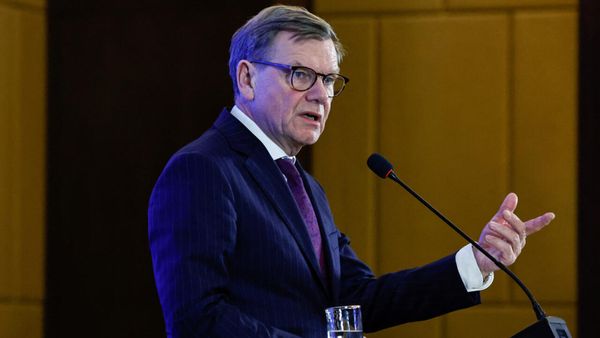
Cities are increasingly embracing circular economy principles; updating and adapting policies, sharing knowledge, and encouraging innovation for less wasteful systems. As chief executive of the Ellen MacArthur Foundation, Andrew Morlet has noted that built-up urban areas lend themselves particularly well to circular business models. This is due to the close proximity of citizens, retailers and service providers; the highly-skilled workforce and technology savvy markets; and high concentrations of biological and technical nutrients.
Cultural trends and city lifestyles are also playing a part, according to Dustin Benton, head of energy and resources at environmental think tank Green Alliance. “There’s something here about cultural power. If you can get the people who are the creators and makers – the early adopters – interested, then it tends to spiral and is picked up more broadly,” he explains.
“This is allied with the fact that city dwellers live in a high-density world with relatively low storage space compared to someone living in the countryside, so tend to be more willing to go for access to things rather than ownership of things. Businesses like Streetcar and Airbnb are primarily urban phenomena.”
So how are cities approaching the circular challenge and fuelling innovation? Some are taking a bottom-up approach, by incorporating circular ideas into city planning. Amsterdam recently announced it will be building 3,500 homes and 200,000m² of workspace in a “circular fashion”. The project is intended as a testing ground, and the site – in the neighbourhood of Buiksloterham – was chosen because it is already home to residents’ initiatives, housing associations and start-ups working on the circular economy.
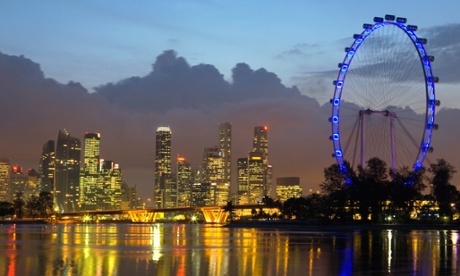
Singapore has a similar strategy with its Punggol Eco-Town, a “living laboratory” for sustainable public housing. The development reuses water from the sinks to flush the toilets, promotes waste recycling to residents, and is leasing solar panels from a private company, which maintains the technology and sells back the power to recoup its costs. Singapore is also now paying for its street lighting as a service rather than as a product. The LED lights are installed and maintained by lighting company Philips, which also takes them back at their end of life to recycle and upgrade for reuse.
Other cities are taking targeted steps to encourage businesses to rethink their waste practices. Anne-Maree Huxley, an Australian-based blue economy expert who runs MOSS, an industry body for corporate responsibility and sustainability, explains. “Some cities are setting up clusters so businesses can share details of their waste streams and find ways to collaborate and innovate through industrial ecology and industrial symbiosis adding value to the waste stream,” she says.
“In Melbourne, Australia, a group of local government agencies have come together to develop and deploy ASPIRE (Advisory System for Processing, Innovation and Resource Exchange) an ICT system that will assist the efforts of businesses – especially manufacturers – and councils to reduce the amount of waste going to landfill. Ultimately, it will also reduce operating costs and improve the economic development outcomes of the region. Detroit, has set up the Reuse Opportunity Collaboratory in an effort to bring entrepreneurs, business and industry together to create closed-loop systems in which one organisation’s waste becomes another’s raw materials.”
Initiatives aimed at facilitating collaboration and learning more broadly, between businesses interested in innovating for a circular future, are also driving progress. The Dutch town of Nijmegen recently hosted the Circular Economy BOOSTcamp, where businesses worked together on areas such as local energy facilities and healthcare and a deal was made for an energy neutral TPN West, a business area in the city. Brussels, meanwhile, is running a programme call Resilient Web, which provides SMEs with strategic support to become more sustainable.
In the UK, the London Waste and Recycling Board is working with the private sector and the London Infrastructure Delivery Board to develop a “route map” to a circular economy, an outline of which is due in autumn this year. It will look at incentives to encourage the adoption of circular models and how to share best practice. University College London has a Circular Economy Lab, which is currently working on a number of community initiatives to reuse resources. According to the lab’s co-director Julia Stegemann, the department also has plans to train waste sector workers in order to improve the level of resource recovery, although there is no specific date as yet.
“Cities are having to adapt, think differently, and update their economies,” says Huxley. “If they want to grow and strengthen their local economies, they must now look beyond traditional jobs and industries. Key to that is education, and helping businesses find innovative ways to generate jobs and local prosperity from what is deemed waste.”
But, she adds, there is more to be done. “In terms of whether communities and businesses are being educated in the circular economy, it’s not happening enough. It’s still in its infancy and we need leaders to get behind those with the skill and knowledge to have them roll out training.”
Content on this page is paid for and produced to a brief agreed with Philips, sponsor of the circular economy hub