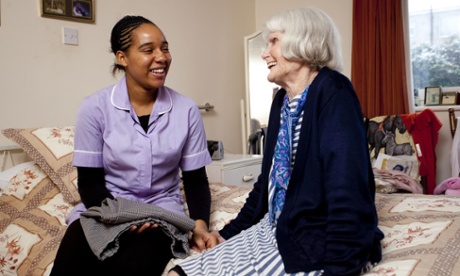
What are the ingredients for a truly clear integrated health and social care service model? To help drive this agenda, Skills for Health and Skills for Care gathered experts from both sectors to discuss how integrated services can be realised and what barriers need to be broken down to achieve this. The outcomes of the discussions will surprise you.
Among the many improvements stipulated in NHS England’s Five Year Forward View – particularly when considered alongside the Care Act 2014 – is a new model enabling health and social care services to work cohesively together. The concept of integration will mean something different depending on the type of service provider you are. One of the issues discussed was how organisations can seamlessly integrate their workforces to meet the demands of long-term integration and ultimately deliver better outcomes for citizens.
The importance of culture
Addressing issues around cultures as quickly as possible was one of several challenges mentioned in the discussion. Recognising that organisations can work and act very differently, Fiona Russell, of the Local Government Association pioneer programme, said co-locating staff was important, although not a solution in istelf to integrating services. “You need to address cultures as quickly as you can,” she said. “I’s not just about transferring people, there are a lot of new ways of working; there are very different ways of thinking about services and collaboration with users is a huge challenge.”
A further challenge faced around culture is recognising that organisations are being encouraged into very different ways of thinking. Martin Samuels, of the Association of Directors of Adult Social Services, said: “From a local authority perspective and from the NHS as well, we’re moving away from a sense of ourselves being organisations that provide services and instead thinking of ourselves as services that facilitate outcomes.
“Our role is to create conditions for our citizens so that they live the life that they choose to live. This is a major shift in philosophy that affects how we go about integration”.
When thinking about integration, there is sometimes a difficulty in understanding what staff groups from ‘other’ organisations do. Where do competences and skills overlap? Where do staff groups fit together? What are the differences between them and specialisms they need to retain?
While some staff groups are already truly integrated, others are isolated and stay in their professional boundaries. Lisa Navin, of Staffordshire and Stoke-on-Trent partnership NHS trust, said: “Get groups to talk to others, which really helps to move integration on … the movement will help by breaking down barriers.”
Streamlining competences
Understanding the different skills and competences of staff is vital for seamlessly integrated services. However, this is difficult. Navin added: “It’s important to baseline where you are … to look at skills, knowledge and competence, rather than academia, is a big driver.” One way to achieve this would be a clearer career pathway detailing and supporting the training, competence and skills staff have and need.
Samuels discussed breaking down the barriers between the two sectors, adding: “We’re trying to recruit from the same pool or trying to recruit the same sorts of people in the organisations and for many people we deal with the fact that there’s something called health and something called social care is completely meaningless.” The challenge of defining workforce by competences focused on the outputs for patients, rather than the service employing them, and articulating this across health and social care, is a significant one.
It’s all about the finances
A further challenge to integration is financial constraint. One delegate stated: “Given the difficult financial climate we’re all in – deficits are huge – it’s easy to be driven to integration through the financial challenge.”
This was echoed by Robert Punton, of Community Navigator Service, who noted: “The worry is, that should we focus on integrating services due to financial constraints, that we lose the focus of integrating services for the service user. Focusing on the financial is in conflict with the immediate need for the service user. We need to recognise what the drivers are but we are struggling to recognise the drivers between long-term care delivery and sorting out the immediate pressures we are looking at.”
Indeed, there is a need to focus on why we are doing this. What are the drivers to integration?
One reason we need to integrate services is in order to have seamless care; to have a simple point of access and what feels like a single service delivery from organisations. Navin said: “Fundamentally, it’s about the experience of individuals who are patients who use the service, not out of choice but out of necessity.”
We need to look at the citizen and holistic care. Let’s start from the beginning, let’s plan holistically. We’re all passionate about integration but it means nothing without this focus on the citizen.
As the leading provider of workforce planning solutions, Skills for Health is working on a number of key national and local projects focusing on the integrated health and social care agenda. Find more information on how we can help you here.
Content on this page is produced and paid for by Skills for Health