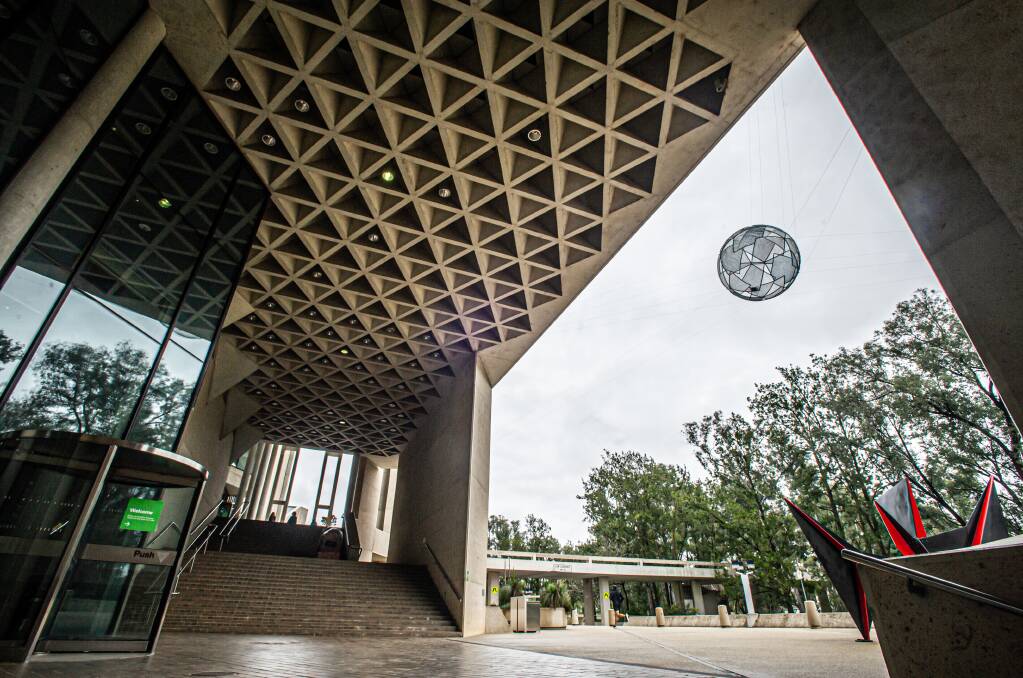
Of all the aspects of daily life that will be irreversibly changed by Covid, we probably haven't given enough thought to architecture, and the buildings we live in, work near and walk past every day.
But for Jane Cassidy, president of the ACT chapter of the Australian Institute of Architects, Covid has actually sped up the process of addressing the changing way we live and work in built landscapes.
"The world was already changing before Covid, and I think that the world is shifting to meet a number of goals," she said.
"We are moving to really address the issues of climate change ... that's one of the big shifts. People were already wanting to move to some new way of working, and a more flexible way of working, and particularly a way that increases collaboration. Now Covid has just put that whole story on hyperdrive."
So it seems timely, even in this time of extremes, that the National Gallery of Australia has announced its annual Contemporary Australian Architects Speaker Series.
The series, set to kick off on September 7, will look at issues like sustainability, public design and the transformative power of architecture.
This includes the gallery building itself, as it prepares to mark 40 years since it first opened its doors in 1982.
In announcing the speaker series, gallery director Nick Mitzevich foreshadowed a new emphasis on the much-admired Brutalist classic, designed by Col Madigan, through new hangs and changed spaces.
"We are undertaking several building improvements to re-invigorate the spirit of the building and return many important elements to their original intent," he said.
Speakers in the series include NSW government architect Abbie Galvin, Madeleine Blanchfield, and Nathanael Preston.
Ms Cassidy said contrary to popular belief, many architects were focused on buildings that benefited large communities, rather than just wealthy private clients.
"I think really importantly, for the speaker series, it sets up the aspirational and the inspirational kind of examples to demonstrate where this works so well," she said.
- Contemporary Australian Architects Speaker Series tickets on sale now, at nga.gov.au/architects