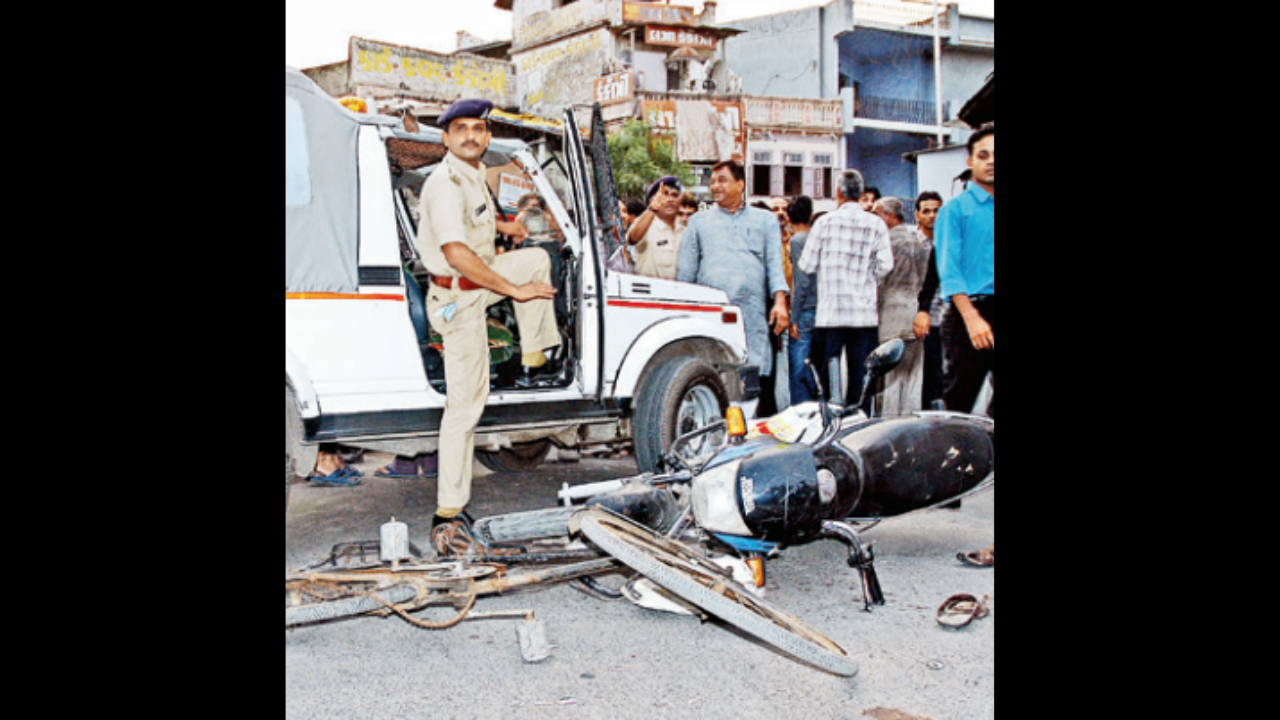
AHMEDABAD: At the time of the blasts, Gujarat Police was a force with about 1 lakh officers and personnel. CCTVs and face recognition were still concepts of the future.
The state police had two experimental software for call data record (CDR) analysis. “The incident put technical intelligence under sharp focus. For the first time, they had to sieve through a large volume of call records to get to the suspect numbers and other data.
The state later invested in and developed their own software that can deal with such volume and extract the desired information,” said a senior official. “Heavy investment in digital forensics and CCTV networks also came after the incident along with stringent checks at various public places. ”
The biggest change after the blast was strengthening of the Anti-Terrorism Squad (ATS) with more funds and personnel. Before the blasts, the agency was considered ‘punishment posting’ or an avenue for less-stressful periods after field work for the officers. In fact, ATS – the primary agency to deal with such an event – was in a supporting role as the Detection of Crime Branch of Ahmedabad police took centre stage.
But what has no t changed, rued the senior officials, is the lack of human intelligence. “The ‘near-the field’ officers are a matter of the past as the network of informers is primarily criminals or those who provide tip-offs for help in cash o r kind.
Thus, there is still a lot of scope to improve the net work for state police to thwart such incidents in the future,” said a retired official, adding that the new generation is heavily dependent on digital intel and CDRs for detection of cases .