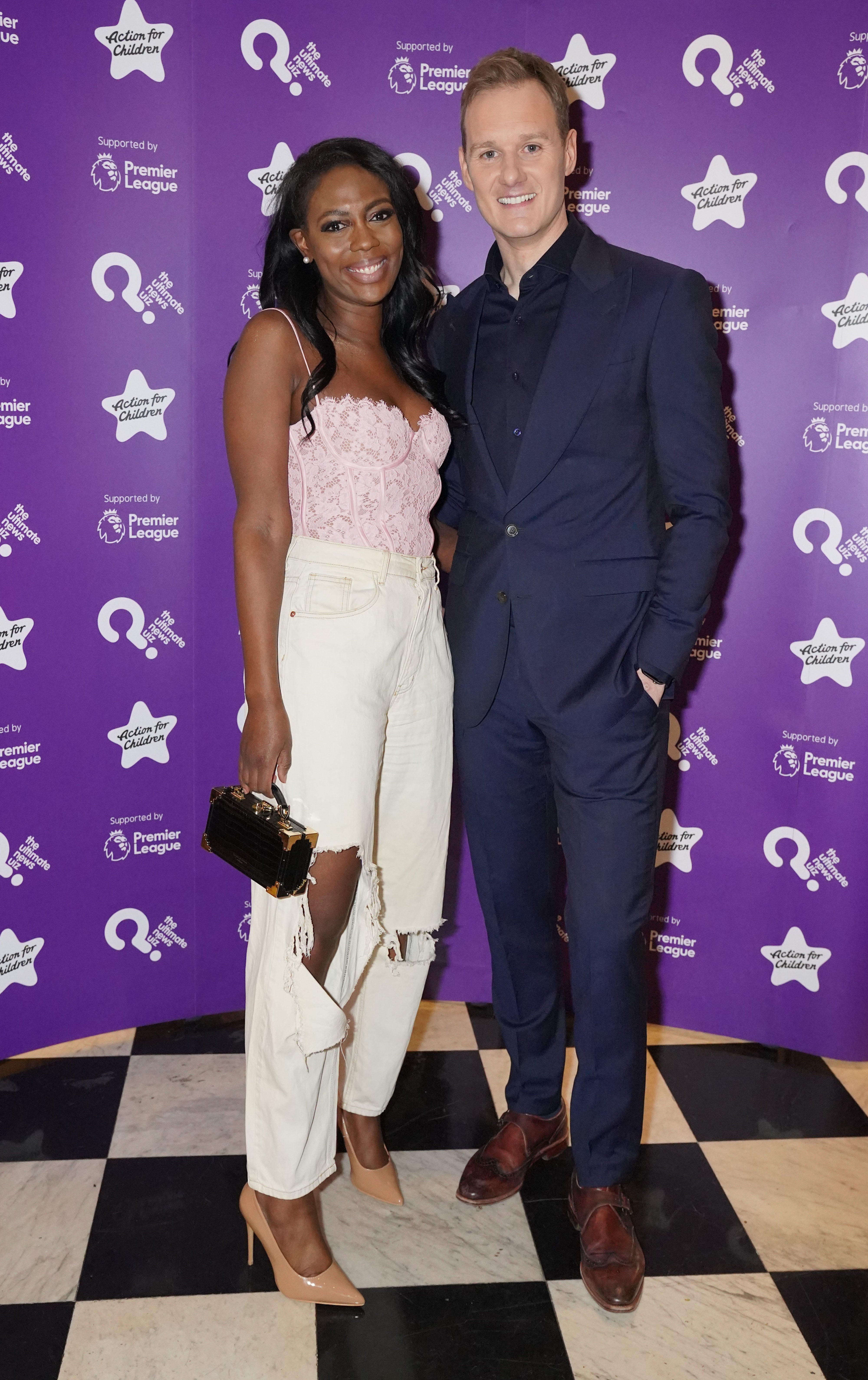
Dan Walker and Naga Munchetty’s BBC Breakfast partnership was one of the blandest pairings on morning television. The hosts, who frequently presented alongside each other from 2016 until Walker’s departure in 2022, were good at their jobs, sure. Occasionally, they went off-script with a bit of banter. But the overwhelming vibe? Beige.
And in fairness, that’s perhaps exactly why they were hired. Fronting the BBC’s breakfast news programme isn’t a gig for wildcards or mavericks – it’s a job that requires a safe pair of hands, someone who can deliver a mix of serious news and softball stories while viewers are still reaching an appropriate level of caffeination.
How strange, then, that in recent months, these two steady presenters have found themselves embroiled in a string of various bullying rows and allegations. Over the weekend, the Mail on Sunday reported that Walker is set to appear at an employment tribunal over accusations of bullying, sexism and misogyny by his former Channel 5 co-anchor Claudia-Liza Vanderpuije, who he worked alongside for one year, after jumping ship from the BBC in a much-publicised £1.5m move.
Walker has strongly refuted the allegations, with a source telling the Mail on Sunday that he “absolutely denies any sexism, misogyny, racism or bullying”, adding that “it has been hanging over him for some years now”. He has also reportedly assembled “tonnes of witness statements” to demonstrate his character. A spokesperson for ITN, the production company behind Channel 5’s news programme, told The Independent that “this claim, which is denied in full, will be addressed through the tribunal process”. The Independent has also contacted a representative for Walker for further comment.
In 2024, Walker, a devout Christian whose public persona has always leaned into wholesomeness, albeit with a touch of Alan Partridge, was also “completely exonerated” after a workplace probe into “serious misconduct” on his Channel 5 show. Independent investigators concluded that there was “a lack of evidence to support allegations”. He later told The Telegraph that the episode was “not nice, but you hold on to what you know the truth is and ultimately the truth is the important thing”.
Meanwhile, the BBC reportedly launched an investigation last year into allegations of bullying levelled at Walker’s former colleague Munchetty. The broadcaster gave no details and said it “did not comment on individual HR matters”.
This alleged escalation came not long after reports suggested that the corporation had hired a consultant to conduct a review into bullying and misconduct allegations against BBC Breakfast editor Richard Frediani; he was later cleared of the accusations.
Stories of off-camera allegations and feuds are nothing new, which begs the question: What is it about a newsroom that seems to make it such a breeding ground for allegations of toxicity? And why are such allegations so often centered around the top talent? Not for nothing has the set of a news programme been the subject of so many television shows, from the Eighties-set Aussie drama The Newsreader to Aaron Sorkin’s fast-talking The Newsroom to the soapy, glossy world of Apple TV’s The Morning Show, where all the employees are as spiky and scandal-prone as they are well-coiffed and glamorous.
The fast pace of TV news, where producers and on-air talent alike must often throw plans out of the window at the last minute to respond to a breaking story, can be a pressure cooker environment. Stress can erupt and harsh words can be exchanged in a fit of panic or recrimination. Not that this should be weaponised as an excuse for unprofessional behaviour, of course, although this has certainly been the case in the past (the job description stock phrase “high pressure environment” can be used to paper over a multitude of sins).
Then there is the obvious hierarchy of offscreen versus onscreen star, with the latter tending to take priority as the “face” of the programme, often treated with quasi-divine reverence accordingly. This can create unhealthy power dynamics between junior staff and top talent, who might come to see themselves as somehow untouchable.
After the disgraced BBC News at Ten anchor Huw Edwards pled guilty to making indecent images of children in 2024, and was handed a six-month suspended sentence, one whistleblower told BBC News that he was somebody who “was kind of allowed to feel like he could get away with anything. Probably not just by BBC bosses, but by the media world. He was treated like this God of news”.
Hierarchies between the presenters themselves can, of course, prove tricky, too. When a longstanding staffer is supplanted by a splashy new hire, it is easy to see how bad feelings, even grudges, might arise, especially if the former feels like they were overdue for promotion.
It’s a situation that arises in so many workplaces – but in the newsroom, there’s the added pressure that comes with headlines shouting about your new colleague’s mega salary and click-y news stories picking up on any perceived tensions, fuelled by the vaguely parasocial interest that viewers have in the stars they see every morning or night.
And when one half of an onscreen duo starts to outshine the other, the fallout can be cataclysmic. Though it is certainly a stretch to refer to This Morning as a news show, it is thought that the relationship between the once matey presenting partnership of Phillip Schofield and Holly Willoughby first started to sour when a magazine cover pictured her as the “queen” of TV, with a crown to match, and a headline suggesting that her star had “eclipsed” his own. Schofield, of course, later left the show under a cloud after an “unwise but not illegal” affair with a junior member of staff.
When a longstanding staffer is supplanted by a splashy new hire, it is easy to see how bad feeling, even grudges, might arise
When your ego has been inflated by a newsroom cult of personality, clashes with your colleagues (who might have similarly, ahem, elevated opinions of themselves) are perhaps inevitable.
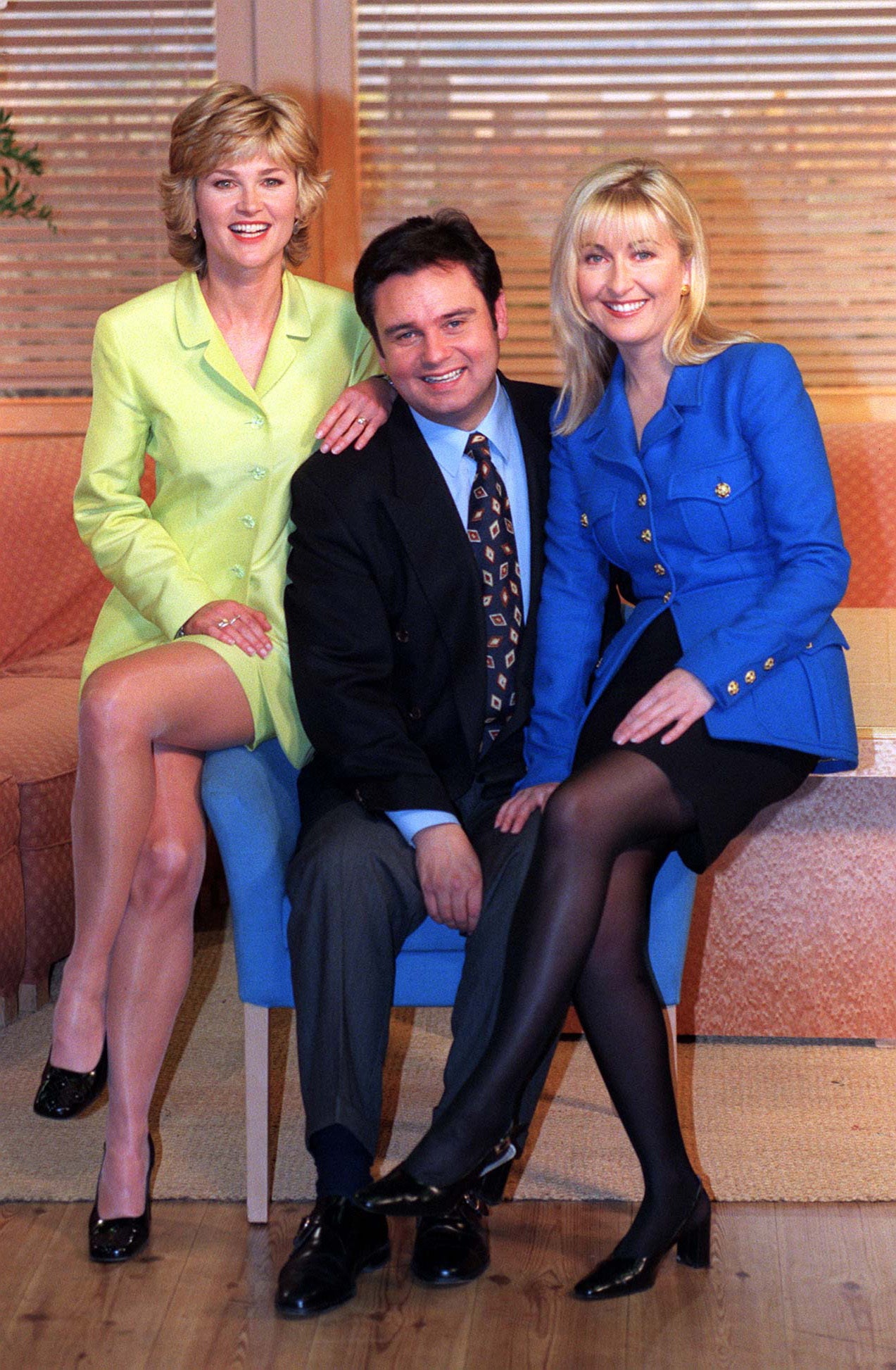
GMTV compatriots Eamonn Holmes and Anthea Turner’s Nineties feud was the stuff of daytime telly legend, with the older broadcaster famously labelling her “Princess Tippy-Toes” in a jibe at what he saw as her excessive ambition. “Eamonn is a trained journalist and I’m not,” Turner later told The Times. “That caused tension from the start.”
This particular programme, it seems, may have been especially lacking in behind-the-scenes bonhomie: who can forget Lorraine Kelly’s uncharacteristically chilly on-air run-in with her former co-presenter turned Tory minister Esther McVey in 2019? “Yes, yes, I do,” she curtly replied when Good Morning Britain’s Susanna Reid asked her if she remembered working with McVey in the Nineties (Kelly revealed that same year she snubbed McVey because she “strongly disagrees with her on LGBT rights”).
Perhaps big-money newscasters are also simply aware that they may soon be an endangered species. In 2021, John Ryley, the former head of Sky News, declared in the Press Gazette that “the age of the all-powerful anchor is gone”, a result of a more fragmented media landscape where traditional broadcasting still has a certain prestige, but no longer dominates.
Social media platforms, podcasts and more unconventional broadcasting personalities are growing in clout and popularity; the latter now command salaries that equate to – or in some cases, vastly outstrip – what a news anchor might expect to receive. Is it any wonder that former TV stalwarts such as Emily Maitlis (once at the forefront of Newsnight, now one-third of The News Agents) are hot-footing it to podcasting?
What seems clear is that the TV newsroom is now so febrile an environment that it’s not just the more mercurial presenters who can get caught up in an alleged scandal. Even the most stolid of personalities can get dragged into drama, breaking one of the biggest rules in journalism: never become the story.
Who will replace Scott Mills as BBC Radio 2 breakfast show host?
Radio 2 ‘lining up wildcard’ Scott Mills replacement after BBC firing
BAFTA nominee to star in Adrian Mole reboot as first look revealed
TV brain rot: The real reason television shows are getting stupider
Euphoria has become the most toxic show on television
The Malcolm in the Middle reboot lacks the one thing that made it magic