(Bloomberg Businessweek) -- In February 2017, Stephen Schwarzman toasted Wang Jian, co-chairman of HNA Group, at a charity event at Manhattan’s Park Avenue Armory. Wang lauded the billionaire Schwarzman as a “god of fortune” and a man with the “key to opening up the chest of treasures.” Fourteen months later, Wang has had an unexpected change in fortune—and Schwarzman and his Blackstone Group LP may be uniquely placed to unlock some of HNA’s real estate treasures.
Chinese authorities have moved to curb and unwind overseas investments by homegrown dealmakers including HNA, Anbang Insurance Group, and Dalian Wanda Group. At least one common thread in those companies’ deals has emerged: Each company found itself sitting across from Blackstone at the negotiating table, often more than once, as it executed its global spending spree.
Although it may be more commonly thought of as a private equity firm, Blackstone has $120 billion in real estate assets under management. Jon Gray, Schwarzman’s second in command and designated successor, rose within the company by building up that business. As a seller, Blackstone spent much of the past few years feeding a hunger from Chinese buyers that proved insatiable—until now.
Among other transactions, Anbang bought from Blackstone New York’s Waldorf Astoria for $1.95 billion, a record-breaker that thrust the financial conglomerate into the spotlight in the U.S., as well as a DoubleTree by Hilton next to Amsterdam’s Centraal Station. Blackstone sold a stake in a Hong Kong property developer to HNA and a Sydney office tower to Wanda. Data from Real Capital Analytics Inc. show that Blackstone has been by far the largest seller to Chinese companies, reaping $25.3 billion from 708 properties since 2013, with a single deal accounting for more than 600 of them. The figure would jump to $31.8 billion were it to include HNA’s purchase of part of Blackstone’s stake in Hilton Worldwide Holdings Inc. in 2016. That’s almost triple the volume of any other seller to Chinese buyers over the same period, and roughly a fifth of Blackstone’s real estate sales in that time.
Blackstone’s “dry powder” for new real estate deals: $32 billion
The troubles of Chinese companies aren’t great news for anyone with real estate to sell—some big buyers have left the market. But with $32 billion in so-called dry powder earmarked for new real estate investments, Blackstone could be positioned to grab back some of its favorite assets, if the price is right. Beyond valuations, a key factor that might weigh on Blackstone is perception. Is it going to be viewed as saving these companies or humiliating them? If it’s the latter, which could tarnish the firm’s reputation among potential buyers or sellers, as well as among its bevy of foreign fund investors, it may well decide to abstain.
As RXR Realty LLC Chief Executive Officer Scott Rechler, who’s sold real estate to Blackstone, explains, the firm takes a long-term approach. “They respect their relationships as part of that approach,” he says. Still, it’s possible the firm would proceed with purchases if it viewed any intervention as helpful. “Blackstone could come in in one fell swoop, if the [Chinese] government wants to take the pain and call it a day,” Rechler says.
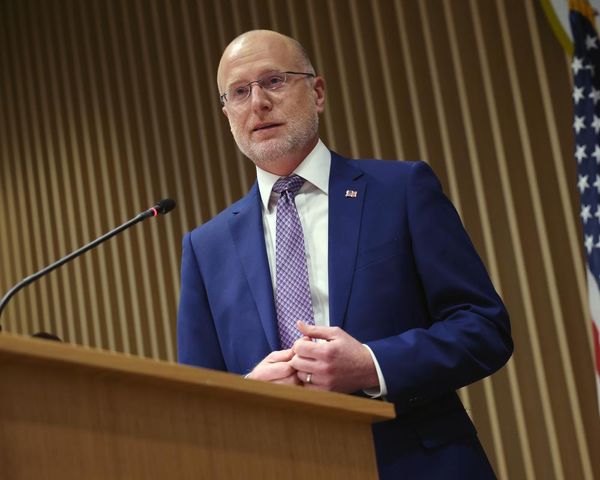
Schwarzman, the New York firm’s co-founder, chairman, and CEO, has personal ties to China—ties so close that the Washington Post dubbed him the president’s “China whisperer,” a moniker he has disavowed on Bloomberg Television. The billionaire has funded the Schwarzman Scholars program—modeled on the Rhodes scholarships—that sends promising students to study in Beijing. He’s put up at least $100 million, roughly a fifth of the funding. Perhaps to forge a closer bond, HNA has thrown its weight behind Schwarzman’s program, committing to fly those students around China and providing a library.
A Blackstone spokeswoman says of the sales to Chinese buyers that “the vast majority have been highly successful investments.” HNA did very well with its Hilton stake, which it has since sold, making about $2 billion on its investment. The public market stepped in as a willing buyer of the company’s shares in Hilton Worldwide as well as in the spinoffs Park Hotels & Resorts and Hilton Grand Vacations.
Where Blackstone is perhaps most likely to reenter the picture is as a partner or buyer for all or part of Anbang’s stake in Strategic Hotels & Resorts Inc. Initial talks have already been held, Bloomberg News has reported. A partnership-type structure would give Anbang some cash now and the ability to achieve a better outcome for later sales. Potential buyers might take comfort in Blackstone’s involvement, since Anbang has had bigger problems in China than its peers. The government has accused Wu Xiaohui, the former chairman, of fraud, and in February it took temporary control of the insurer.
Outside the real estate world, Blackstone has already benefited from Anbang’s misfortunes in at least one way. A year ago, Iowa-based insurer Fidelity & Guaranty Life abandoned a deal with Anbang, in part because it failed to obtain necessary U.S. regulatory approvals for the transaction. That made it possible for a group comprising Blackstone and its affiliated funds to buy the company for $1.8 billion.
Some market observers believe Blackstone’s ability to move fast could work to its advantage. “If you want to get out of an asset quickly, the fastest buyer is the person you purchased it from, because they know it better than anybody else,” says Woody Heller, vice chairman and co-head of capital markets at property brokerage Savills Studley. “Blackstone is famously and fabulously known for making large decisions quickly.” But just how fast the companies will have to sell is uncertain. Anbang has received a $9.7 billion injection from the Chinese government.
While it’s not exactly commonplace for investment firms such as Blackstone to revisit prior holdings, it does occur. The firm in December repurchased a 10 percent stake in European warehouse owner Logicor Ltd., half a year after selling the company to China Investment Corp. for €12.3 billion ($15 billion). Separately, it purchased Mumbai-based outsourcing company Intelenet Global Services Pvt. in late 2016, some five and a half years after it sold its initial stake in the company.
Other companies that sold real estate to Chinese groups have a chance to retrace their footsteps, too. Perhaps Brookfield Property Partners LP could once again own a share of 245 Park Ave., the New York office tower that HNA bought for an eye-popping $2.2 billion last March. That deal is just one of many examples of HNA far outbidding sophisticated longtime investors. The company reached on price to prove its credibility within the U.S. market.
A key unanswered question is how low Chinese companies such as HNA and Anbang will be willing to go as they sell real estate holdings. The prospect of deep bargains may draw Blackstone in, but to date it’s played only a minor role. It has bought from HNA a small office tower in Sydney—one that it didn’t previously own. All eyes in the real estate world are on whether Blackstone will veer from this quiet approach. —With Amanda L. Gordon
To contact the authors of this story: Gillian Tan in New York at gtan129@bloomberg.net, Sarah Mulholland in New York at smulholland3@bloomberg.net.
To contact the editor responsible for this story: Pat Regnier at pregnier3@bloomberg.net.
©2018 Bloomberg L.P.