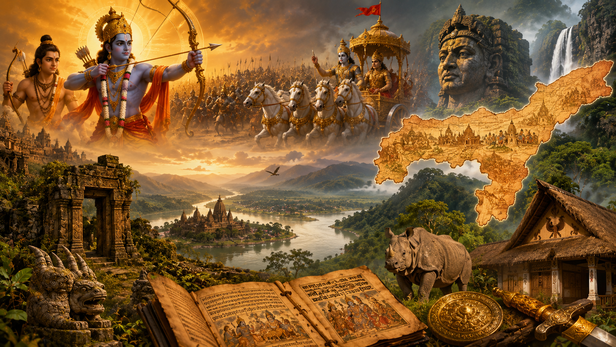
When we read the Ramayana, Mahabharata, and the Puranas, we often remember the heroes, battles, and miracles. But have you ever wondered where many of these legendary events actually took place? Surprisingly, one place appears again and again in Hindu scriptures under different names. It witnessed Lord Krishna's battles, Lord Shiva's divine presence, the birth of one of the most powerful Shakti Peethas, and stories that continue to shape Hindu traditions today. Today, that sacred land is known as Assam. Its spiritual importance is extraordinary, yet many people know only a small part of its remarkable story.
A Land Known by Many Names
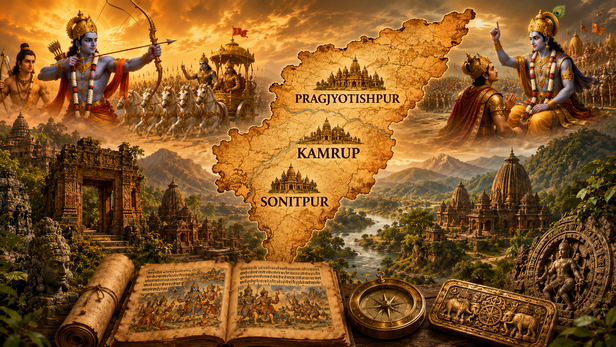
Ancient Assam was known as Pragjyotishpur, Kamrup, and Sonitpur in Hindu scriptures.
Long before it became Assam, this region was known by different names in ancient texts. It was called Pragjyotishpur, Kamrup, and Sonitpur, each connected to remarkable stories from Hindu mythology. These names appear in the Mahabharata, Puranas, and other sacred texts, showing that Assam was not just another kingdom but an important center of religion, culture, and history.
The Kingdom of Narakasura
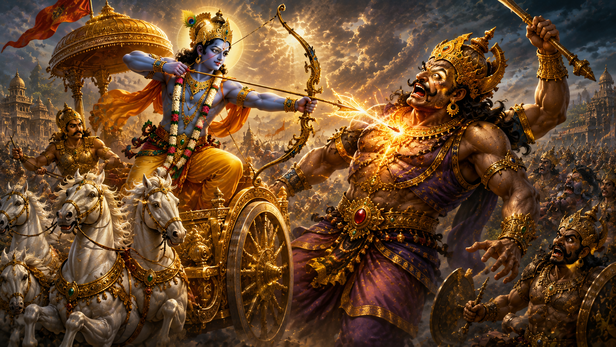
Lord Krishna defeated Narakasura to free thousands of imprisoned women.
According to the Bhagavata Purana, Pragjyotishpur was ruled by King Narakasura. His rule ended when Lord Krishna, along with Satyabhama, defeated him and freed thousands of imprisoned women. This victory is remembered every year during Naraka Chaturdashi, celebrated before Diwali. The story symbolizes the victory of righteousness over arrogance and injustice.
Where Krishna and Shiva Faced Each Other
Ancient Sonitpur, believed to be in present-day Assam, was ruled by Banasura, a devoted follower of Lord Shiva. When Krishna came to rescue his grandson Aniruddha, a great battle took place. Scriptures describe this as one of the rare occasions where Lord Shiva and Lord Krishna stood on opposite sides, highlighting divine duty rather than personal conflict.
The Sacred Home of Kamakhya Devi
Assam is home to the famous Kamakhya Temple, one of the 51 Shakti Peethas. According to Hindu tradition, Goddess Sati's sacred yoni fell here, making this temple one of the most important centers of Shakti worship. Every year, thousands of devotees visit the temple to seek the blessings of Goddess Kamakhya for strength, devotion, and spiritual growth.
The Story Behind Kamrup
Another legend says that after Lord Shiva reduced Kamadeva to ashes with his third eye, Kamadeva regained his form in this sacred region following the prayers of his wife, Rati. Because of this event, the land came to be known as Kamrup, meaning the place where Kama regained his physical form.
A Sacred Land Facing Real Challenges
Today, Assam is known not only for its spiritual heritage but also for the challenges its people face. Seasonal floods affect thousands of families across Assam and other northeastern states. While devotees remember the sacred stories connected to this land, these difficult times remind us that compassion and support for the people living there are equally important.
Remember the Land, Not Just the Stories
The Ramayana, Mahabharata, and Puranas have kept Assam's stories alive for centuries. But remembering only the legends is not enough. This sacred land continues to preserve India's spiritual heritage while facing modern challenges. Honoring Assam means respecting its history, protecting its culture, supporting its people, and recognizing its lasting contribution to Hindu civilization.
Unlock insightful tips and inspiration on personal growth, productivity, and well-being. Stay motivated and updated with the latest at My Life XP