Iran and the United States made "significant progress" during talks in Switzerland on Thursday, according to mediators, with both sides agreeing to resume negotiations in Austria next week.
Washington is demanding curbs on Iran's missile programme, its network of regional proxies, and above all its nuclear capabilities - a demand that carries a particular historical irony, given that it was the United States itself that launched Iran's nuclear ambitions in 1953 under Eisenhower's Atoms for Peace initiative.
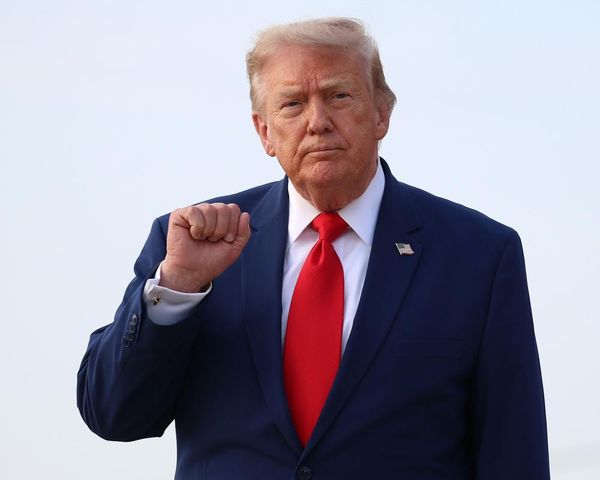
The talks, brokered by Oman, follow repeated threats from Donald Trump to strike Iran militarily. The US president gave Tehran a 15-day deadline to reach a deal last Thursday.
The two sides, however, remain some distance apart on scope. Iran has insisted the discussions be confined to its nuclear programme, while Washington wants Tehran's missile arsenal and its financial and operational support for militant groups across the region brought to the table as well.
'Atoms for peace'
Iran's nuclear programme was launched with American help in 1953 under President Dwight Eisenhower's Atoms for Peace initiative, a Cold War effort to balance the threat of nuclear conflict with the promise of uranium's peaceful applications.

In 1967, the Tehran Nuclear Research Center, equipped with a US-made five megawatt nuclear research reactor fueled by highly-enriched uranium, started operating. One year later, Tehran signed the Non Proliferation Treaty allowing the International Atomic Energy Agency (IAEA) to inspect its nuclear sites.
In March 1974, the Shah unfolded plans to build 23 nuclear plants by the year 2000, claiming the energy would be used as a substitute for oil. Loans worth billions and nuclear cooperation agreements were signed with the US, France, Germany, South Africa and others.
1979 Revolution
When Ayatollah Khomeini's revolution installed an anti-western theocracy most western nuclear companies withdrew from Iran — but the programme continued with Russian and Chinese assistance.
The first allegations that Iran was pursuing an atomic bomb emerged in 1984, based on reports from West German intelligence, though the IAEA found nothing to substantiate them at the time. Iran meanwhile acquired nuclear expertise from both Russia and China, including a 915MW water reactor built with Russian assistance at the existing Bushehr complex.
Conspiracy theories have since added further layers of mystery to Iran's suspected pursuit of a nuclear weapon.
Merlin program
In his 2006 book State of War New York Times investigative journalist James Risen alleged that the CIA may inadvertently have helped Iran develop a nuclear weapon.
Under an operation codenamed Merlin, a Russian defector working for the CIA was tasked with posing as a disgruntled nuclear scientist willing to sell classified bomb designs to Tehran.
The CIA had doctored the blueprints beforehand, inserting deliberate flaws in the hope that Iran would build a faulty device and set its nuclear programme back by years.
Risen's conclusion was the opposite: the Iranians identified the flaw, and the blueprints may in fact have advanced rather than hindered their weapons development. The operation has since passed into popular culture, providing the basis for the Israeli television series Tehran, created by Moshe Zonder.
The CIA source who disclosed the Merlin programme to Risen, Jeffrey Sterling, was subsequently prosecuted under the Espionage Act, sentenced to three and a half years in prison, and released in 2018.
People's Mujaheddin
It was not until 2002 that the question of Iran's nuclear ambitions entered the public domain in earnest. At a press conference in Washington on 14 August of that year, the Paris-based opposition group Mujaheddin-e-Khalq (MEK), which had fought first against the Shah and later against the Khomeini regime, claimed to have satellite evidence that Iran was running two top-secret nuclear facilities, at Natanz and Arak.
A year later, the IAEA reported that Iran had failed to declare certain uranium enrichment activities. Iran has maintained ever since that its nuclear programme is entirely peaceful, insisting it has enriched uranium to less than five per cent, consistent with the requirements of a civilian power plant.
Iran went to considerable lengths to deny any ambition to develop a nuclear weapon. Its supreme leader stated repeatedly on his official website that the use of nuclear weapons was a "great sin," that Iran did "not accept nuclear weapons because of our beliefs," and that "according to Islamic thought, a weapon that destroys civilians is prohibited."
None of it persuaded Washington or its regional ally Israel, which feared it would be the primary target should Iran ever acquire the bomb.

Ali Khamenei believes that his survival, and that of his regime, depends on possessing a nuclear weapon," according to Adrian Calamel, co-author of a report on Iran's foreign influence operations.
The allegations surrounding Iran's nuclear activities eventually led to sweeping sanctions and a prolonged diplomatic process, culminating in the signing of the Joint Comprehensive Plan of Action (JCPOA) in 2015. The agreement was struck between Iran and the so-called G5+1: the five
permanent members of the UN Security Council (the United States, China, Russia, France and the United Kingdom) plus Germany. Its aim was to curtail Tehran's nuclear programme in exchange for a gradual lifting of sanctions.
The deal did not hold. Mounting criticism, led most vocally by Israeli prime minister Benjamin Netanyahu, culminated in the United States unilaterally withdrawing from the agreement on 8 May 2018, during Donald Trump's first term in office. Washington promptly reimposed sweeping sanctions on Iran's oil, banking and shipping sectors, triggering a severe economic contraction.
The remaining signatories attempted to salvage the agreement, establishing the Instex mechanism to facilitate limited trade with Iran. It was never adequate compensation for the loss of access to the US-linked global financial system.
Europe skirts US sanctions to send Covid-19 aid to Iran, but is it enough?
From mid-2019, Iran responded with a series of calculated breaches of its JCPOA commitments, gradually raising enrichment levels, expanding its stockpiles and increasing the number of advanced centrifuges in operation, while continuing to permit IAEA monitoring.
Diplomacy shifted into crisis management mode. European governments pressed both sides to step back from the brink, while indirect contacts between Washington and Tehran continued through European, Omani, Swiss and Qatari intermediaries, focusing on prisoner exchanges, de-escalation in the Gulf and limited sanctions relief.
Formal negotiations to restore or extend the JCPOA proceeded fitfully under successive American administrations, but were repeatedly derailed by regional instability, domestic political pressures in both Tehran and Washington, and a fundamental mistrust over which side should move first: sanctions relief or nuclear rollback.
(With newswires)