It was a barrier that had existed for decades: so long and so strong that some feared it would never be broken, that it represented a limit on human speed. But in London on Sunday morning, two men finally smashed through it, and ran the marathon in two hours.
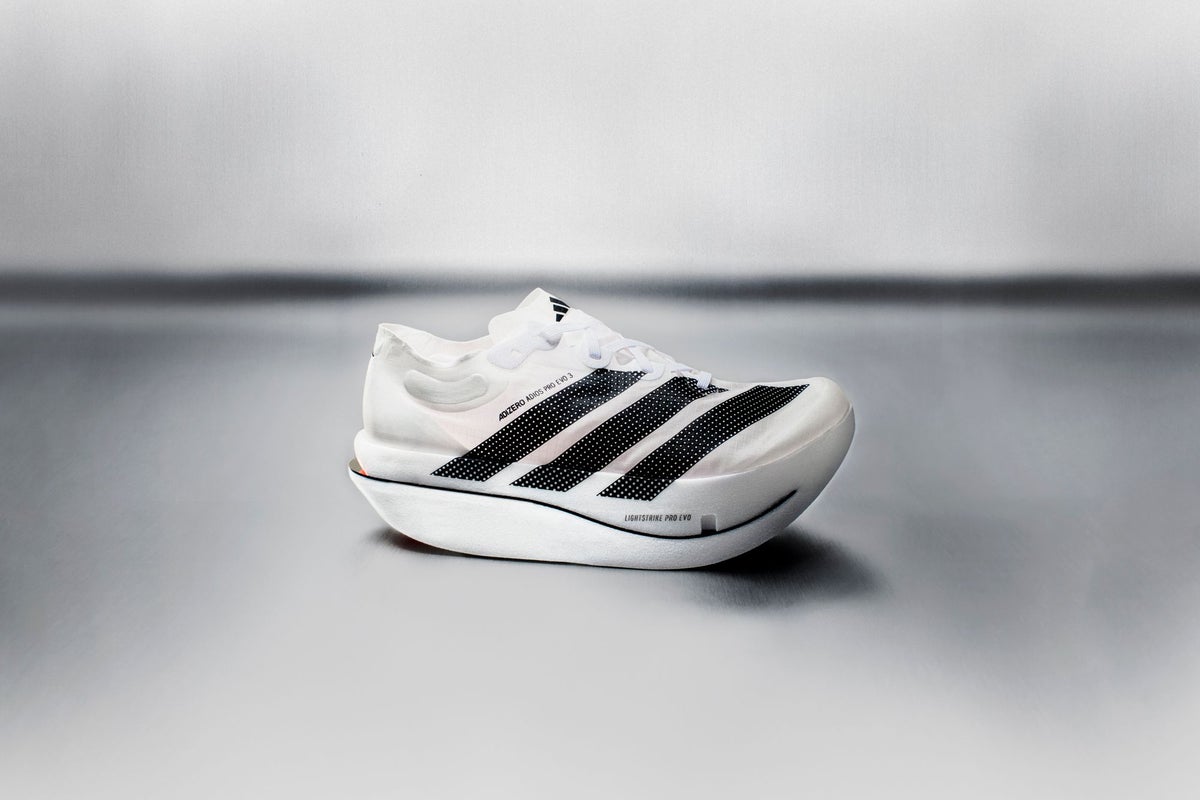
But first their shoes – and the people who make them – had to surmount their own insurmountable barrier. Days before the marathon was run, Adidas officially unveiled their Adizero Adios Pro Evo 3, a shoe that weighs just 97 grams (and costs £450).
Sabastian Sawe, who ran 1.59.30 to become the first ever person to run under two hours, was wearing those shoes. So was Yomif Kejelcha, who came second by 11 seconds and so broke that barrier himself.
Until now, breaking through 100 grams for a running shoe had been an "almost mythical barrier", says Patrick Nava, Adidas's general manager for running. "There's been historical literature over the last 15 years that says for every 100 grams you can shave off in terms of weight, you can increase your running economy by one per cent – but when you cross the 100 grams, you start being in the territory where it actually doesn't matter that much," he tells The Independent.
(He hands over the shoe and the feeling is absurd: it is as light as a sock. Some athletes who received them for testing had initially worried there was a mistake and that their boxes were empty, Nava says.)
"But the weight – the diminishing weight, was a means to an end. The point was to create the fastest shoe, which happens also to be the lightest."
This year, Adidas managed to do both. Speaking days before the marathon, Nava is humble about the difference the shoe could make: "in the end, the athlete runs the race; we can give them the best tool, the best equipment for that, and then hopefully something special happens."
Something special did happen at the London Marathon, but it has been in the works for some time. For years, so-called supershoes – which make use of bouncy carbon fibre in their soles, as well as whole new kinds of foam, to help propel the athletes that wear them – have been taking minutes off the fastest marathon runners' times.
The change has been so dramatic that it has led to accusations of "shoe doping", and the suggestion that it is unfair since it means that it is impossible to compare running times. That began in earnest with the introduction of Nike's Nike Vaporfly 4% shoes, which were the first with carbon fibre plates and dominated the 2016 Olympics.
But Adidas appears to have overtaken Nike with their new shoes, now the fastest in the world. Doing so required looking into "every single detail of the shoe", says Charlotte Heidmann, who runs Adidas's performance-focused Adizero category.
"Starting with the midsole, which is usually the heaviest part of the shoe, we were able to decrease the weight by 50 percent compared to the is Pro Evo Two, which is already huge and helped us a lot when it comes to the performance that we wanted to achieve." The company also took inspiration from kite surfing materials – which are "very light and very sturdy" and allowed Adidas to make the upper of the shoe light too.
Adidas also added a new kind of "energy ring", the carbon fibre part of the shoe, which instead of being built out of rods instead wraps around the inside like a horshoe. That not only saves weight but also adds more comfort, she says.
But there were more specific details that allowed Adidas to reduce the weight of the shoe even more. The new shoes' laces are shorter, by adding more stretch to them, which helped take two to three grams off.
And the sole of the shoe is not fully covered. Instead, it includes a Continental rubber that covers only the front part of the shoe to help save weight.
Looking at that bottom of the shoe is a reminder that the Adizero Adios Pro Evo 3 is absolutely not a shoe for everybody. It is aimed at the elite marathon runners who stay on the front of their feet, like a sprinter.
Eventually, the technology will trickle down onto the feet of normal runners, too. "We always take inspiration from the pinnacle performance product", says Heidmann – "we need to take the learnings and see how we can distribute, for instance, the energy ring or components into shoes that actually target a wider range of consumers, maybe the marathon runner who's running four hours".
At £450 – World Athletics regulations require that all shoes are made commercially available – most people are unlikely to be buying them anyway. And besides, they wouldn't be able to hold onto them for long, since the lightness of the shoes also means that they are unlikely to last for very long.
"Durability was not a brief of the design of the product," says Nava. "But maybe one misconception that you've seen circulated is that it's not meant to last only one marathon.
"It's been designed for the fastest marathon. We have many athletes who tried it and had it for hundreds of kilometers.
"It ends up, of course, being dependent on the type of stride of the runner, the weight, what surfaces you use it on. But how long it lasts – that was never a point in this sort of shoe.
"That's not the intent. It's like measuring a Porsche by the size of its trunk."
The speed of the shoe will no doubt lead to further questions about whether it is actually fair: whether it offers too much help, and is undermining the egalitarian and simple nature of running. Nova defers to World Athletics rules, which set limits on details such as the shoes' stack height to try and ensure fairness.
"Our job is to work within the legal limits, which are set by World Athletics, to allow them to express their best athletic potential on race day," he says. "One of the principles that Adidas said is only the best for the athlete, and this product represents the epitome of that."
Australia unveils laws to make tech giants like Meta and Google pay for news
Musk v Altman: The court showdown that could shape the future of AI
Elon Musk is about to change X app in a huge way, report claims
OpenAI outlines plans to create superhuman AI
Germany accuses Russia of targeting politicians in phishing attack
China blocks Meta from buying Manus amid AI tensions with US