I bet you say hello and extend your greetings when meeting another person. But which greeting, I may ask. It could be a wai if you are Thai, a bow if you are Japanese, la bise (cheek kiss) to good friends if you are French, or a firm handshake if you are American.
Perhaps the most important thing you must get right, to leave a good first impression, is to sort out your greetings. Whether you are a candidate coming for an interview or a sales manager trying to impress a prospective customer.
Screw it up and not getting your handshake, wai or bow correct, spells trouble ahead.
Handshake, wai or both?

The Thai "wai" remains to this day an extremely important part of social behaviour among Thais. As a foreigner, you may not be accustomed to the wai and it will take more than this article to explain the intricacies of this beautiful greeting. Suffice to say here, a kind nod or a smile would go a long way to avoid any embarrassment if you are not comfortable in returning a wai.
If you are Thai meeting a farang (from America, Australia or Europe), you should expect to use a handshake as you introduce yourself. Many Thais struggle with the handshake and often get a meeting off to a really bad start because of a too weak and even wet handshake.
The challenge is in particular evident when two different nationalities clash. How often have I seen a Thai and a farang go from wai to handshake to nodding? If it wasn't so serious, we could all have a good laugh. But here is the "but".
The worst case scenario is that you risk losing everything even before you are seated. If your handshake is too weak, the farang executive will jump to conclusions and see it as a sign of weakness, lack of confidence and interest, a lack of masculinity. A handshake must be firm, not weak and not strong. The word is: "firm".
So please, you must firm it up, and I recommend that you practice with a friend before the all-important interview or meeting. Even better, find a foreigner who is willing to let you do a couple of handshakes to get it right.
Do's and Don'ts when meeting a Japanese client

One of the most well-known greetings in Japan is not a handshake but a bow. It's considered so important in Japan that many companies even provide training to their employees in how to execute bows correctly.
The bow can range from a small nod of the head to a deep bend at the waist. A deeper, longer bow indicates respect and conversely a small nod with the head is casual and informal. Bowing with your palms together (wai as in Thailand) is not customary in Japan.
- When you are invited to the meeting room in a Japanese company, please go to the opposite side of the room, away from the door and sit down. Wait for the meeting host to arrive.
- Stand up and walk towards the Japanese host when he enters the room. Hand out your business card with both hands. You may nod your head slightly. If the Japanese client hands out his business card, your card (and hands) should be lower than his.
- The exchange of business cards is considered a handshake. No need to shake hands or wai. You can go back to your seat and sit down.
- The caveat, most Japanese working overseas have taken to a handshake and may want to shake your hand after the exchange of cards. But wait and see.
- It's not polite to hand your business card across the table or give the card with one hand only.
- Meeting a Chinese or Korean businessman

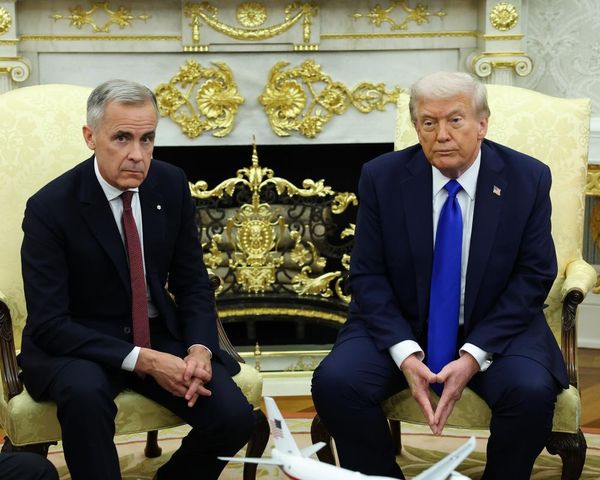
If your meeting is with a Chinese or Korean businessman, I am told that a soft or weak handshake is actually preferred. Don't go for a Donald Trump-style arm grab lasting for several seconds. Even in Hong Kong, handshakes are weaker than those in the Western culture. And please do not stare or eyeball the other person.
Touching the other person to show how friendly you are is not polite and may instead come across as creepy or overly intimate. Cheek kissing even when greeting close friends, as is often practised in some European countries, is definitely a big "no-no".
It is considered rude or disrespectful to have your free hand in your pocket while shaking hands.
It is the senior person who will initiate a handshake, so if you are there for an interview, wait and see what your host will do.
By the way, Westerners consider it the height of rudeness when you let a door slam in somebody else's face. But not so in China where holding the door open for strangers is seen as unusual at best.
Cheek kissing is common in some Western cultures: read "Western!"
Cheek kissing is a common greeting in many countries, whether one, two or three kisses. Most common in France is two. In Oman it is not unusual for men to kiss one another on the nose after a handshake. In Galapagos women kiss on the right cheek only. Kissing the hand is considered unsuitable for business situations.
In conclusion, kissing as a greeting is reserved for friends and family and you should not expect to come across this in a business setting.
Call me old fashioned but I do like a hug from someone I know well. But what's wrong with a good handshake or a wai if you master the art? Hugging or cheek kissing is best left back in Europe or the Middle East. Moreover, your staff party is not the time or place to introduce your Western greetings to your staff!
Tom Sorensen is a Partner at Boyden Thailand, a global Top 10 executive search firm. Contact tsorensen@boyden.com and learn more on www.boyden.co.th
Series Editor: Christopher F. Bruton is Executive Director of Dataconsult Ltd, chris@dataconsult.co.th. Dataconsult's Thailand Regional Forum provides seminars and extensive documentation to update business on future trends in Thailand and in the Mekong Region.