The future of the global economy once again rests on an 100-mile strip of water sandwiched between the Persian Gulf and the Sea of Oman.
Shipping through the vital waterway has halved following tit-for-tat strikes between the US and Iran this week, shaking the foundations of a sketchy 14-point interim peace deal between the warring nations.
It started when Iran attacked three commercial vessels passing through the Omani corridor of the Strait of Hormuz in overnight attacks on Monday.
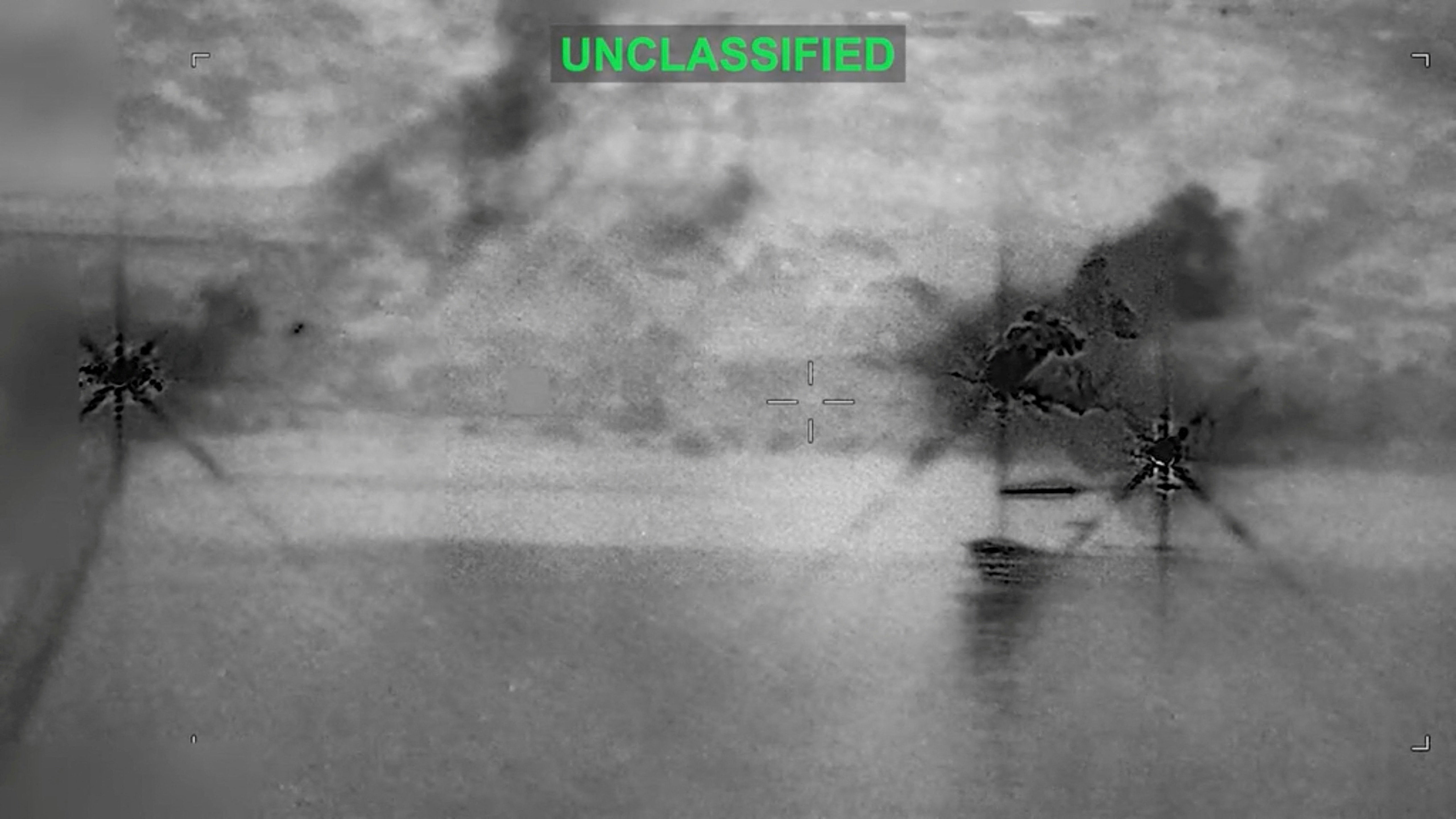
The US revoked sanctions relief on Iranian oil sales almost immediately and US Central Command launched a wave of strikes on over 80 military targets in response, accusing Tehran of violating the ceasefire agreement. Iran retaliated by hitting military bases in Kuwait and Bahrain.
Iran’s parliamentary speaker Mohammed Bagher Ghalibaf accused the US of violating the MoU, writing on X: “The era of bullying and extortion is over. It leads nowhere. We don’t fold.”
Each side blames the other for violating the ceasefire - and it all comes down to a single shipping lane.
A fight for control over shipping lanes
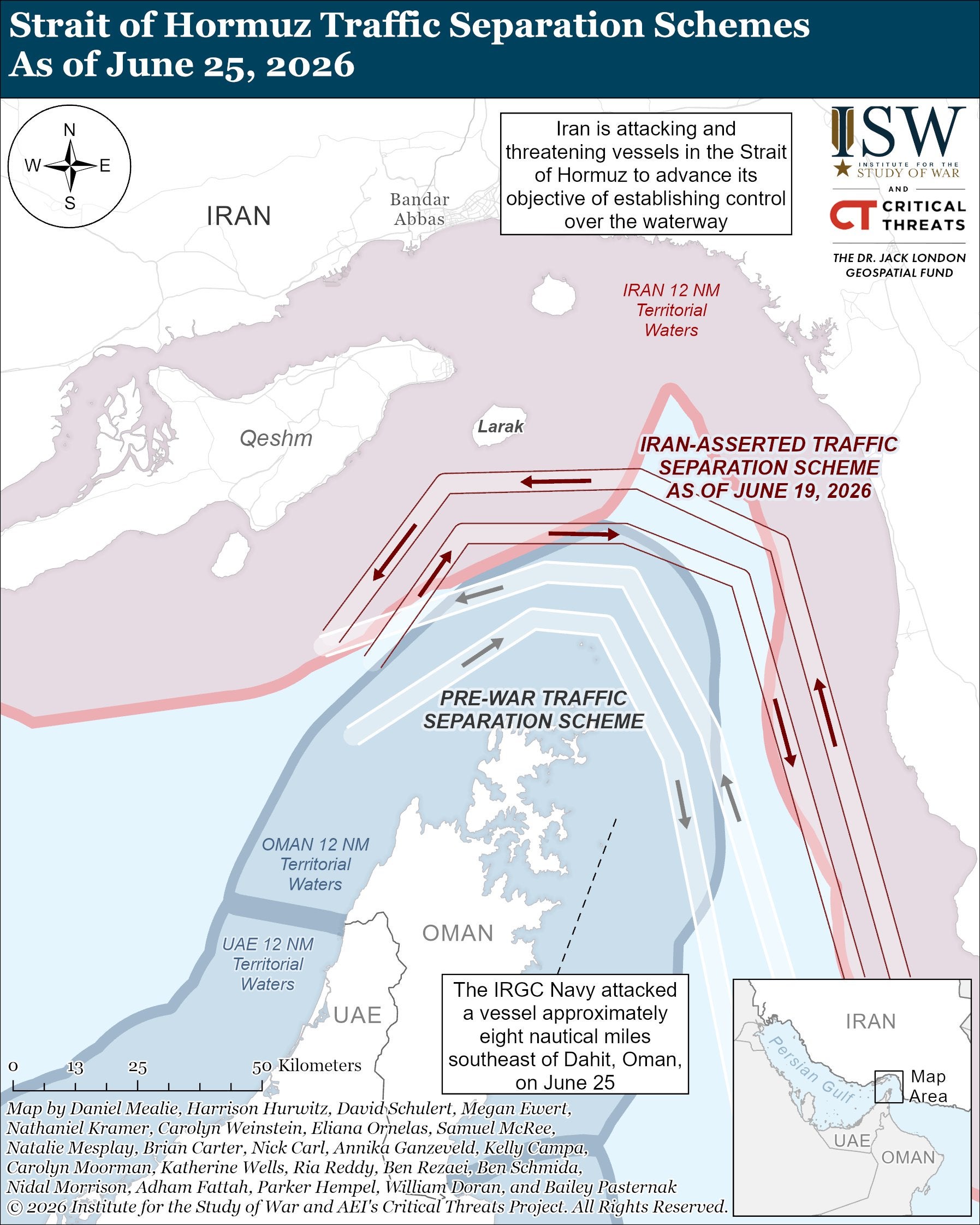
The Strait of Hormuz is made up of two shipping corridors. One is a southern passage that runs along the Omani coast, which was traditionally used for inbound ships.
The second lane, generally for outbound vessels, runs along the Iranian coast. Throughout the conflict the corridors have been used for both inbound and outbound commercial traffic.
In the days leading up to Iran’s attacks this week, tensions had been mounting as commercial traffic appeared to increase through the route along the Omani coast.
Iran said that any ships not using its approved route would face an “immediate and powerful response” and the IRGC has used various techniques including small boats to “swarm” commercial vessels.
“What we are witnessing is Iran wishing to retain control over Hormuz. It is clear that the Iranian regime calculates that vessels passing through the Omani passage without coordinating with the Iranian authorities constitutes a challenge to its ability to exercise control over Hormuz,” says Neil Quilliam, an energy policy, geopolitics and foreign affairs specialist, at Chatham House.
Iran has used its leverage over the strait to push the US for concessions and has floated the idea of a joint tolling system with Oman, which President Donald Trump has vehemently rejected.
“This is a test of wills between Iran and the US,” says Mr Quilliam. “The US has lifted its blockade of Iranian ports and shipping and Iran has allowed vessels to pass through the strait but is unwilling to cede its control over Hormuz as that would mean surrendering a main point of leverage.”
The Islamic Revolutionary Guard Corps released a statement on Thursday saying that “foreign powers have no claim to this land or to the Strait of Hormuz”.
But Dr Ashok Kumar, associate professor of political economy at the University of Birkbeck, says that the facts show very little strategic incentive for Iran to provoke US aggression.
“There would be no incentive for Iran to restart the tensions, because the Americans basically capitulated on almost every front,” he told The Independent, adding that the so-called “confusion” may be more intentional than is apparent.
“From ending sanctions to giving 300 billion dollars in support for repair and reconstruction, there is almost universal consensus on this. Israel is also a loser in this. There is incentive for both to restart the war.”
He does not believe that increased passage of ships through the navigational route along the coast of Oman threatens Iran’s leverage.
“The passage is extremely narrow. Iran does not need to physically stop every vessel; the mere threat of attack is enough to make insurers, shipping companies and crews unwilling to take the risk. That alone gives Iran significant leverage over one of the world’s most important energy chokepoints.”
Confusion over a vague clause
The fifth clause of the MOU states that the Islamic Republic of Iran will “make arrangements using its best efforts for the safe passage of commercial vessels, with no charge for 60 days only, from the Persian Gulf to the Sea of Oman, and vice versa.”
It adds: “The traffic of commercial vessels will immediately start, and considering the need for removing the technical and military obstacles, and de-mining by the Islamic Republic of Iran, will be instated within 30 days.”
The confusion comes over the next section, which states that Iran “will conduct dialogue with the Sultanate of Oman, to define the future administration and maritime services in the Strait of Hormuz, in discussions with other Persian Gulf Littoral States, in line with applicable international law and the sovereign rights of coastal states of the Strait of Hormuz.”
Iran says that this means that the governance of the strait remains under their control and that passage without their approval constitutes a violation. The US says that attacks on vessels is a violation of Tehran’s promise to allow commercial vessels unfettered access.
But Dr Quilliam says that while “the Iranians claim that the MoU includes discussion of Oman-US-Iran agreement, it’s not there. Iran also raised the issue of services, but again that’s not in the MoU. Iran is defending what it sees as a critical interest and is trying to use the MoU to justify that.”
Kpler told The Independent: “Regarding the MoU, it does seem that even though there is political will to find an agreement, it is becoming increasingly difficult, and at oil prices that are not prohibitively high, the impetus to find a deal is lower (from the US side at least). It does seem like a violation from both sides, and this is likely to rumble on.”
Nato intervention
Nato chief Mark Rutte defended the US decision to attack Iran in the aftermath of the strikes on Iranian vessels.
“When you have a ceasefire and Iran is basically violating the ceasefire, I think it is totally crucial that the US forcefully react,” Rutte told reporters at the Nato summit in Ankara this week. French president Emmanuel Macron also blamed Iran for a ceasefire violation but said his understanding was that talks would continue.
The Independent’s Daniel Keane called for Nato to join the negotiations in order to accelerate progress on the deadlocked talks that have stopped and started since they began weeks ago.
Dr Quilliam explained: “Nato won’t enforce the reopening of the Strait but if the Strait is opened fully in line with a permanent ceasefire then a naval coalition will help keep it open. That is a position Iran is unwilling to find itself in - hence it will continue to exercise coercive control over Hormuz.”