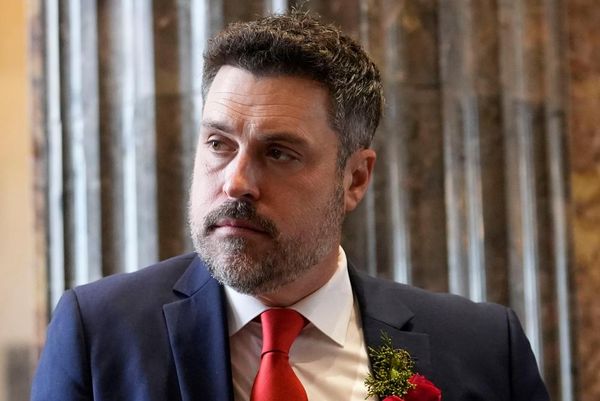
When Sydney GP Dr Brad McKay discovered he was the "face" of Facebook ads selling fake health products in Australia, he wrongly thought it would be easy to shut down with a quick report to the social networking site.
Instead, the former ABC Catalyst presenter and host of the Embarrassing Bodies Down Under TV series was frustrated by an ineffective complaints process and found Australian authorities were powerless to act.
While concerned for his reputation, Dr McKay is also worried about the health of consumers who buy and consume the "keto" weight loss pills he is purportedly endorsing.
"You need to be extremely careful if you choose to buy any health products online," Dr McKay said. "What you see is not what you get, and they can be extremely harmful to your health… I would never endorse or promote products like this."
Keto pills are supposed to trigger ketosis, a metabolic state where your body burns fat instead of blood sugar, thus facilitating rapid weight loss.
Dr McKay warns everyone to think twice before purchasing any celebrity endorsed health products advertised online.
"Weight loss products rarely work in the short term and never work in the long term," he said. "If you are thinking about buying any pills, potions or powders for health reasons, always run it by your own GP first."
Read the fine print
ABC News investigated the ads and website and found them linked to a sprawling global network of websites peddling bogus health-related products in Australia and around the world.
Dr McKay only realised his identity was being used in the scam when women in Australia and New Zealand started emailing to ask him about products called Keto Diet, Keto Premiere, and Keto Advanced that he was apparently spruiking online.
After he was contacted by one woman fuming that more than $500 had been taken from her account over two transactions, he recommended she contact her bank immediately and escalated his own efforts to stop the fraud.
But when he reported the ad to Facebook, he found no option to complain about the theft of his identity.
He was unable to speak in person to anyone at the network and Facebook's emailed response stated "our technology reviewed your report and, ultimately, we decided not to take the content down."
"Facebook eventually concluded that I didn't have a valid complaint and that was that. But they didn't provide me with any right to appeal," he said.
Frustrated, he reported the scam to the Australian Medical Board, NSW Fair Trading, and his medical indemnity provider, Avant, which is still waiting to hear back from its enquiries to those authorities.
Dr McKay also contacted ACCC's Scamwatch, but it doesn't respond to individual reports because of the large volume of inquiries it receives so he's unclear what action they would take.
With the ads still online and email inquiries coming in, Dr McKay contacted ABC News with screenshots and links showing at least one of the fake articles was styled to look like it came from the ABC.
The article on the fake ABC website looked convincing. It was using the broadcaster's official font and was also allegedly written by yours truly (Flip Prior).
ABC News found one ad linked to the fake ABC website was posted by the "Qween" Facebook page, whose page admins are based in Ukraine.
Consumers who clicked on a link in the article offering a 'free sample bottle' were taken to the KetoVatru website and prompted to provide credit card details to cover the $8.52 "shipping charge".
But what they might fail to spot is terms and conditions buried further down the page, which shows they have also agreed to be billed $147.02 for "continued monthly access" to a "16-week diet challenge".
They also state any disputes related to transactions would be governed by the law of St Kitts — a tiny island in the West Indies — and that the seller was "not responsible for any reviews, reports, emails, advertisements or blogs that may have led you to this page".
Links to a global network of scams
While these scams are nothing new, in Australia they are becoming an increasingly lucrative business.
An ACCC spokesperson said so far in 2020, Scamwatch had received 492 reports of celebrity endorsement scams with more than $1.6 million in losses, up from 311 reports and just over $872,000 in losses last year.
While most involved fraudulent bitcoin investment schemes — like one featuring ABC presenters Michael Rowland and Virginia Trioli without their consent — reports of fake celebrity endorsement scams for products including keto, weight-loss, make-up, and CBD oil have more than doubled.
In 2019, celebrity chef Maggie Beer's photograph was used without her knowledge in skincare scam. It similarly asked victims to provide credit card details to cover postage for products that in fact signed them up to a subscription costing around $130 a month.
Overseas, it's a similar story. Keto ads, featuring local celebrities in fabricated news articles are popping up in places such as Ireland, New Zealand, the Philippines and the United States
Digital sleight-of-hand means the fake articles open to versions of the website customised for local buyers.
A Facebook ad clicked on in Sydney, for instance, will lead to a website that claims the products are "made in Australia" and offer an "exclusive discount for NSW".
Unfortunately for Dr McKay, it's the second scam he's been caught up in this year.
Earlier in 2020, he appealed to NSW Fair Trading for help when he was contacted by someone enquiring about his affiliation with Perthmeds.com — an online retailer targeting Perth consumers with erectile dysfunction products.
With the website administrators based in Pakistan, NSW Fair Trading escalated the matter to their compliance team but there was little else they could do and his name and details are still on the website.
So what can be done about this?
At the moment, consumers are left highly exposed.
A report from the ACCC's extensive Digital Platforms Inquiry in 2019 found digital platforms had enabled the growth of online scams, resulting in significant losses for consumers and small businesses.
The Federal Government accepted its recommendation to pilot a dispute resolution scheme in 2020 to inform whether a Digital Platforms Ombudsman was needed, agreeing it was clear users had limited options to resolve complaints with digital platforms.
It said there was also merit in requiring digital platforms operating in Australia to show they had internal dispute resolution processes that gave a clear, transparent avenue for people to pursue concerns before escalating outside.
No pilot has been launched yet — but a Department of Communications spokesperson said it was "actively pursuing options" supporting analysis from the ACCC. The Department was also monitoring digital platforms' own efforts to improve their dispute resolution processes, they said.
In response to questions from the ABC, a Facebook spokesperson said scammers were using sophisticated cloaking technology to "mask content" so it showed different versions to Facebook's automated ad review systems than it did to people.
These were tactics intended to circumvent its ad review processes or other enforcement systems, they said.
Facebook has re-examined the ad in question and found it in clear violation of its policies. It has now been taken offline.
The website, however, is not — and a search for "Keto Premiere" on Facebook reveals there are plenty of other scam pages targeting multiple countries still online and selling products.
A spokesperson for the Federal Government's Therapeutic Goods Administration (TGA) said using the stolen identity of a medical professional to advertise therapeutic goods was likely to be a breach of its code and that Dr McKay's matter would be reviewed.
It cautioned that its jurisdiction did not extend to advertising conducted or controlled by overseas parties.
However, it was possible that "social media platforms operating in an Australian context" could be liable for non-compliant advertising if they did not take appropriate steps to indemnify themselves with an appropriate policy and compliance framework, the TGA said.