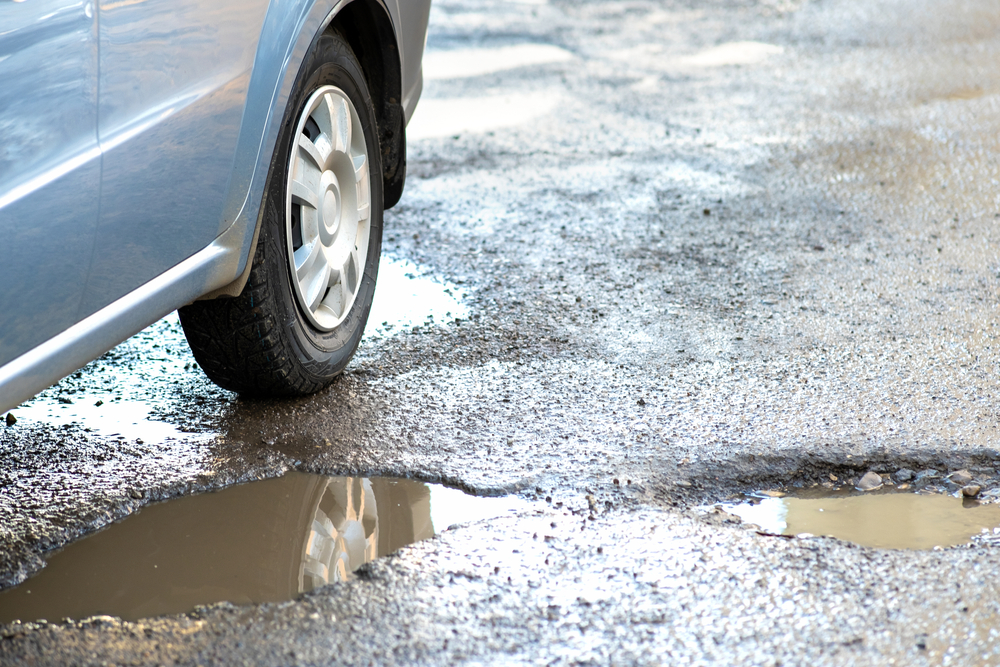
A single pothole looks harmless until it isn’t. Drivers hit one, hear a thud, and move on. Hours later, a dashboard light glows or a new vibration starts. That small impact can unravel hidden systems in a modern car, and the repair bill can rise fast. Pothole damage doesn’t announce itself immediately, and that delay creates costs that feel like they came out of nowhere. Here is how it can spin out of control quickly.
Hidden Suspension Damage
A pothole can bend suspension components that are already under stress. Control arms, ball joints, and bushings take the first hit. When they twist out of alignment, the car starts pulling to one side or develops a faint rattle that seems unrelated at first. Leave it alone long enough, and the entire suspension geometry shifts, forcing a shop to replace multiple parts instead of one. That’s how a $150 issue becomes a $1,000 repair tied directly to pothole damage.
Many drivers assume the suspension can handle rough impacts because it’s built for the road. It can, up to a point. A deep pothole strikes with a vertical force that spikes far higher than normal driving. One hit can be enough to compromise the metal, even if the damage stays invisible until a technician inspects it.
Tire and Wheel Failures That Snowball
Everyone expects a flat tire after hitting a pothole. What people don’t expect is the slow, compounding failure that follows a rim bend. The impact warps the wheel just enough to break the airtight seal. Air leaks out over days. The driver reinflates the tire once or twice without understanding the cause. Then the sidewall weakens from low pressure, and the tire fails at highway speed.
That chain of events leads to a rim replacement, a new tire, and sometimes a damaged sensor. Pothole damage turns an inexpensive fix into a three-part repair that hits the budget hard.
Strut and Shock Collapse
Shocks and struts manage constant road vibrations. A pothole throws them beyond their designed limits. The seals rupture, fluid leaks out, and the damping effect disappears. At first, the ride feels slightly softer. Then the car starts bouncing over small bumps, and braking distances stretch without warning.
Replacing a pair of struts can cost $1,500 on certain vehicles. Add alignment and mounts, and the cost climbs higher. The initial impact fades from memory long before the repair bill lands in the inbox, making the connection easy to miss.
Bent Steering Components
Steering parts sit close to the wheels, so they absorb the shock directly when a tire slams into a pothole. Tie rods and rack components bend in ways the driver can’t see. The steering wheel may sit slightly off center or feel looser than before. Some drivers ignore the change because the car still moves normally.
But steering systems don’t forgive damage. That slight bend creates uneven tire wear, and once the tire tread goes, the driver faces a fresh set of expenses. The original pothole damage sets off a chain reaction of premature part replacements.
Underbody Damage You Never Hear
The underside of a car hides fuel lines, brake lines, sensors, and protective panels. A deep enough pothole hits the underbody with a force strong enough to crack or pinch metal. The driver may not hear anything. No scraping. No grinding. Just a quiet impact that leaves a line slowly leaking or a bracket hanging loose.
When a fuel or brake line corrodes from even a small bend, the repair becomes complex. Shops replace entire sections rather than patching them. That’s when the bill moves toward four figures, and pothole damage becomes the culprit no one suspected.
Wheel Bearing Stress That Shows Up Weeks Later
Potholes force the wheel hub to absorb a sudden sideways load. Wheel bearings handle rotation, not violent impact. The hit can bruise the bearing internally without immediate symptoms. Weeks later, a humming noise appears at certain speeds. It grows louder. Drivers often confuse it with tire noise and delay the repair.
When the bearing fails completely, it can take the hub, the sensor, and even the axle with it. That assembly can cost more than $900 to replace. A single pothole sets the failure in motion long before the noise begins.
Alignment Drift That Damages Everything Else
Alignment problems rarely send a clear signal right away. The car may feel only slightly off. But misalignment wears tires down unevenly and stresses suspension components already weakened by impact. By the time uneven wear becomes obvious, the damage is already done.
This is where pothole damage becomes expensive. A simple alignment becomes a multistep repair involving tire replacement and suspension work. The pothole created the misalignment, and the misalignment quietly destroyed everything else.
Why the Damage Feels Invisible Until the Bill Arrives
Potholes strike fast and leave little evidence on the surface. Modern cars hide their weak points under layers of metal and plastic. Damage builds quietly. And by the time the symptoms show up, the repair involves multiple systems instead of one easy fix.
Drivers underestimate pothole damage because the impact seems brief, but the consequences spread through steering, alignment, suspension, and tires. That’s how a single jolt turns into a $3,000 repair.
What pothole-related car damage have you faced, and how did you find out something was wrong?
What to Read Next…
- These 6 Bad Driving Habits Are Costing You Thousands in Repairs
- 10 Common Car Repairs That Will Cost You Less Than You Think
- Your Car’s Timing Belt Isn’t Just Important, It’s a $3,000 Time Bomb
- 7 Car Models That Mechanics Avoid Even When They’re Discounted
- 8 Car Maintenance Habits That Will Save You Thousands
The post How a Single Pothole Can Trigger a $3,000 Car Repair You Didn’t See Coming appeared first on Clever Dude Personal Finance & Money.