
How often do you pay attention to your feet when setting up to hit a golf shot? If the answer is rarely, like many amateur golfers, you need to address that quickly - if you'll pardon the pun.
Most people think that in order to improve power, you need to invest hours in the best golf fitness exercises trying to boost their strength and clubhead speed.
While that strategy is certainly effective, you can also achieve pretty good results from making a simple foot adjustment at address.
Rotation can either help to generate or kill power in the golf swing, depending on how well you do it, so learning this simple tip can send you on your way to hitting longer tee shots and lower scores this season...
How A Simple Foot Adjustment Could Improve Your Rotation
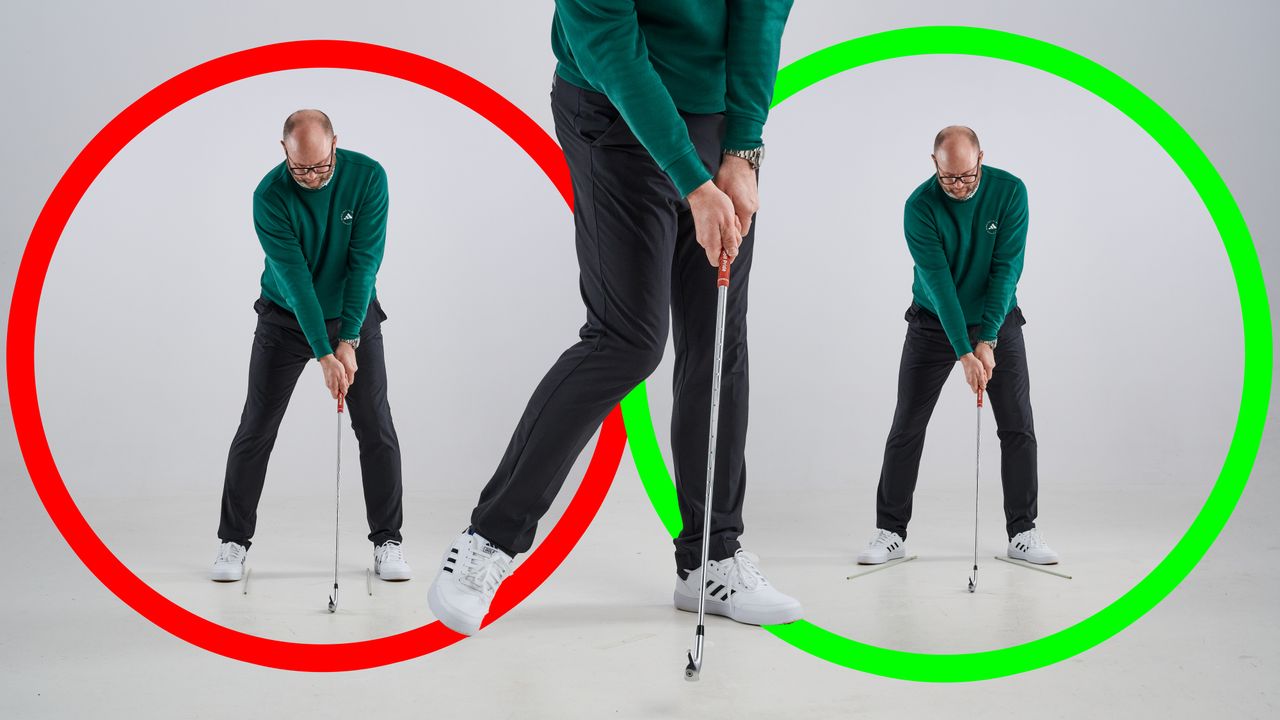
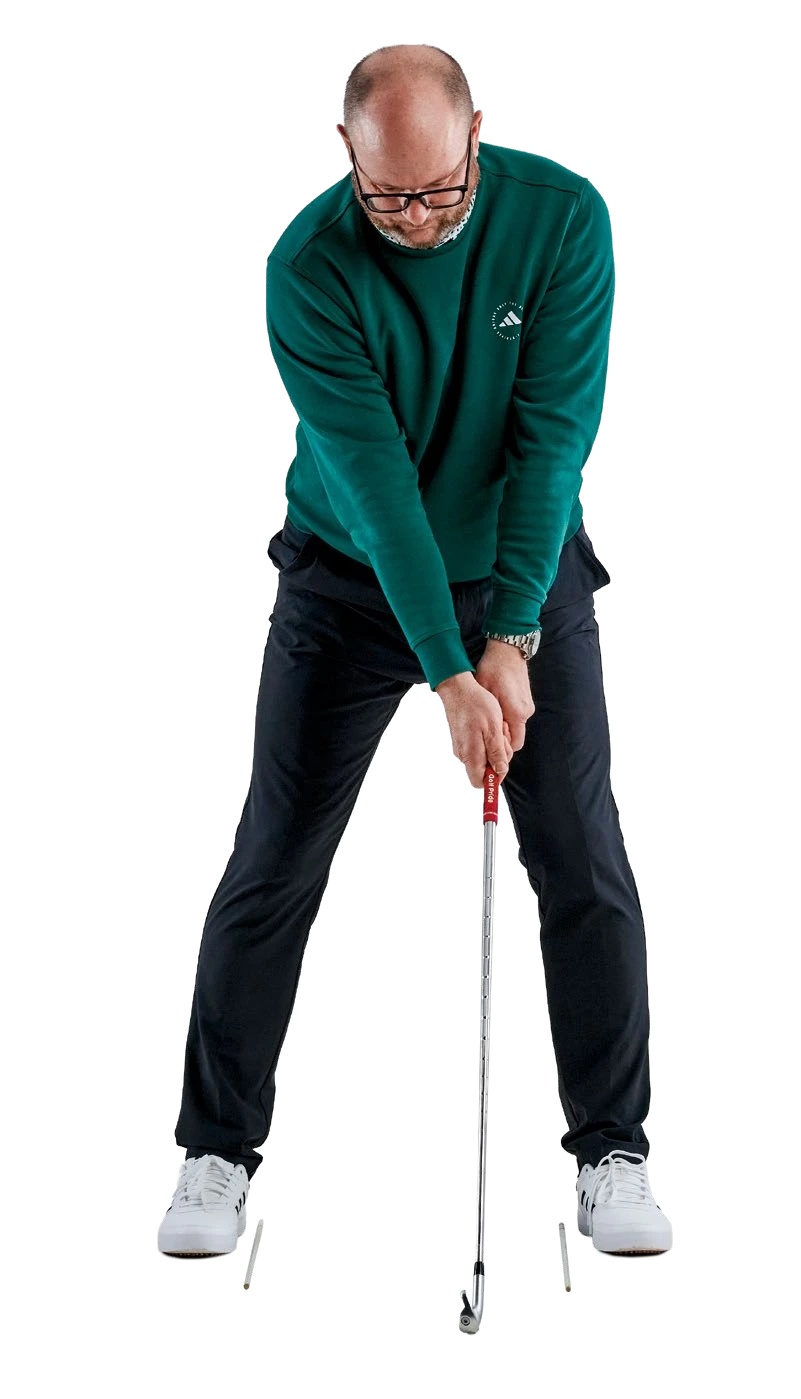
The image below highlights a problem that plagues the game of many amateurs. I'll see this kind of set-up every day when I teach... and it's a fault that even exists among some lower-handicappers.
Note the position of the feet, both pointing directly at 12 o'clock. It's really restrictive.
People ask how they can generate more power and tell me they struggle with balance and have a general lack of mobility.
Some complain of a backache and it's really no wonder when you consider how square the feet are.
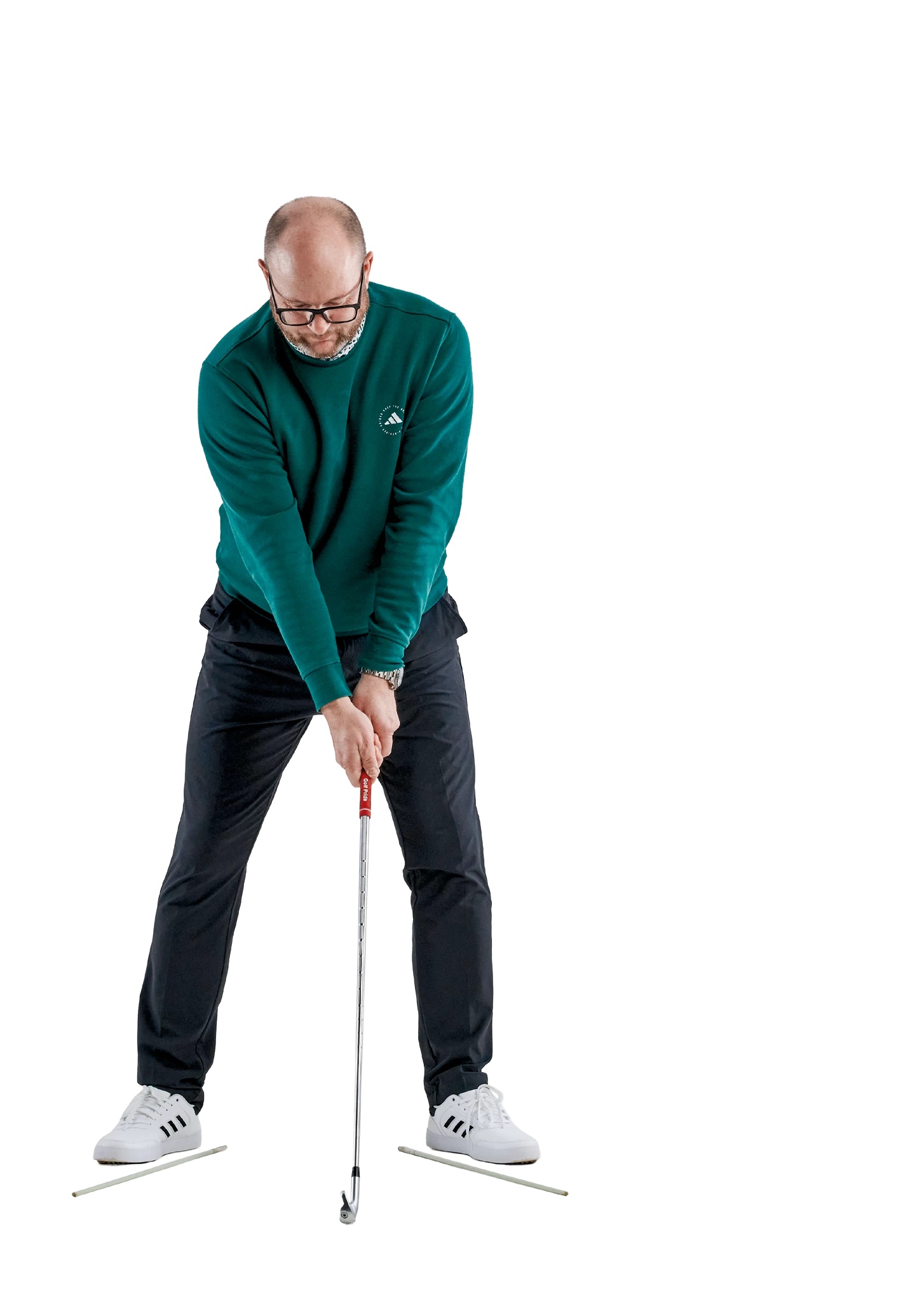
Most players on tour will have at least one foot fanned, typically the lead one at about 11 o'clock.
This is how I start: rotate that lead foot about 30˚ - as demonstrated below.
Quite simply, it gets it out of the way and gives the body more space. When doing this, most people instantly feel more flexible, better balanced and more powerful.
In the backswing, what we're trying to do is create space, power and consistency.
You can't do this with the handbrake on, which is often the case when the feet are square.
So I then get players to fan their trail foot slightly, too (the alignment sticks in the image below are just to highlight the flare or fanning).
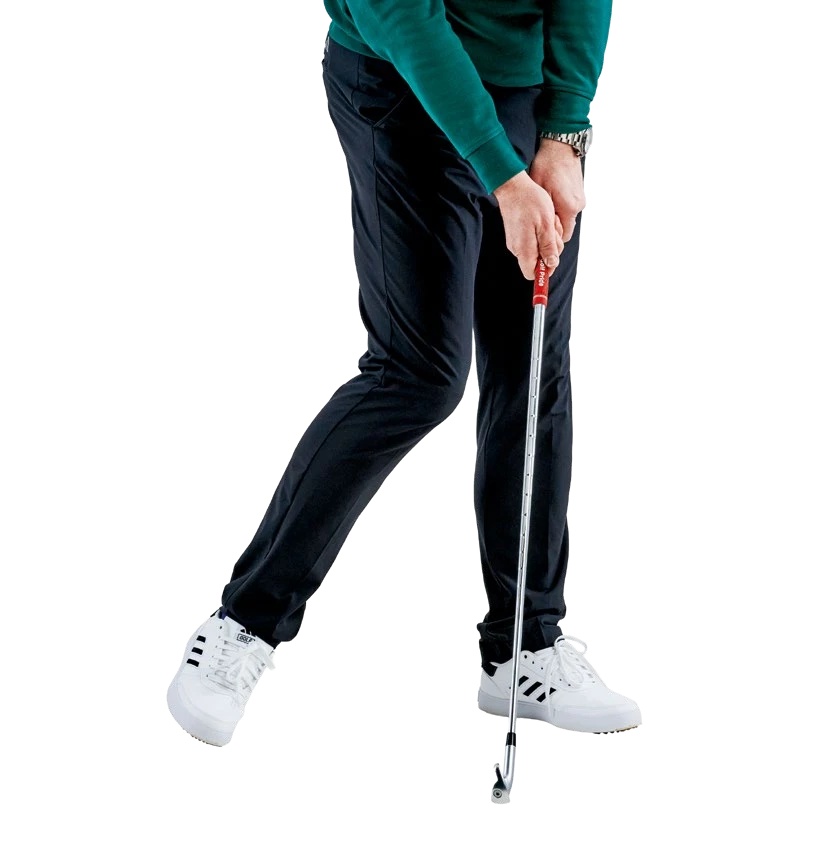
When you can't rotate properly, you can't create the space needed to allow the arms to get into the correct pre-impact position – you end up sliding the pelvis across.
Often, because of a lack of balance, this results in a big block or a push/cut to the right.
This (below) is what we want to see. With my lead foot flared, I've rotated nicely, cleared out of the way and used the ground to deliver a sweet and powerful strike.
It's such a simple way to improve the quality of your ball-striking and to be more consistent.
Bonus Drill To Try At Home
Try the tennis forearm drill at home to practice the movement needed.
Pretend to hit a forearm tennis shot. What do you notice? I guarantee that you'll clear your front foot out of the way. Practise this motion, and it will help you get into the habit of flaring that front foot.