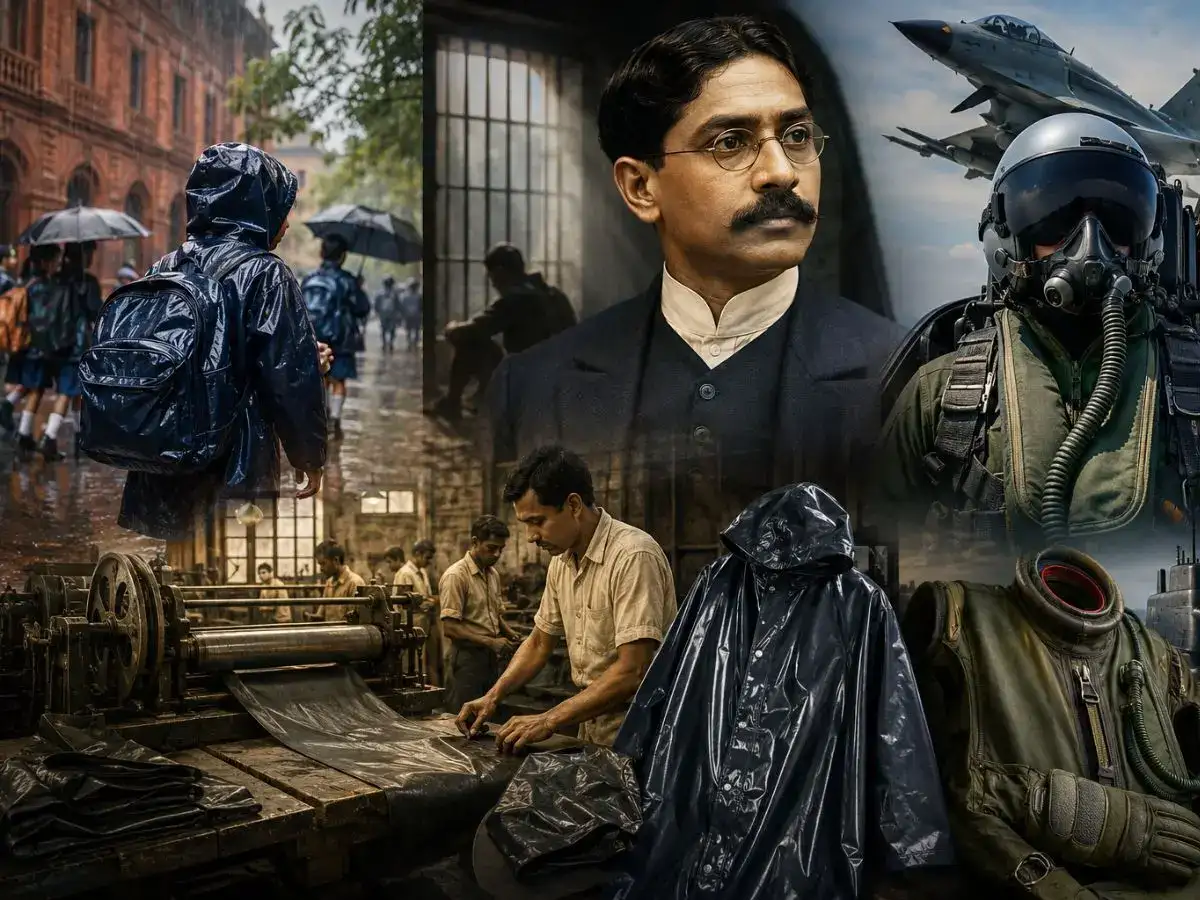
Long before branded rain jackets flooded store shelves, an Indian freedom fighter sitting inside a British prison was thinking about a different problem: why Indian soldiers had to suffer in rain-soaked conditions without proper protective gear. That concern eventually led to the birth of Duckback, India's first rainwear brand. More than a century later, the company that started with affordable raincoats inspired by ducks now produces specialised equipment for Air Force pilots and Navy personnel.
A prison term that sparked an idea
Surendra Mohan Bose was not only a scientist but also a committed nationalist. Educated at Berkeley and Stanford universities in the US, he returned to India during British rule and became involved in the freedom movement.
His political activities led to imprisonment during the First World War. While in jail, Bose came across accounts of Indian soldiers operating in difficult weather conditions without adequate rain protection, groundsheets or waterproof boots. At the same time, imported waterproof products remained expensive and largely inaccessible to ordinary Indians.
The contrast stayed with him. Bose began thinking about whether India could manufacture its own high-quality waterproof products instead of depending on British imports.
Turning a family home into a factory
After his release, Bose decided to act on that idea. He joined forces with his brothers, Ajit Mohan, Jogindra Mohan and Bishnupada, and started experimenting with waterproof materials at their ancestral home on Nazar Ali Lane in Kolkata.
The brothers converted a small shed into a workshop and began developing a manufacturing process that could produce durable rainwear at a reasonable price.
Their effort was driven by more than business ambitions. It was part of the larger Swadeshi spirit that encouraged Indians to build local alternatives to imported products.
Learning from nature's waterproof expert
The breakthrough came from an unlikely source, ducks.
The Bose brothers observed how water effortlessly rolled off a duck's feathers because of the natural oils covering them. Inspired by this phenomenon, they worked on a unique vulcanisation technique that made fabric waterproof while retaining flexibility and durability.
The method became known as the "Duckback Process." The company also adopted a name that reflected its promise. The phrase "like water off a duck's back" inspired the brand name Duckback, signalling protection against rain and moisture.
Bringing affordable raincoats to Indians
In 1920, the family launched Duckback rainwear. At a time when imported waterproof products were considered expensive, the new brand offered a locally made alternative for ordinary Indians.
The products quickly gained a reputation for durability. Over the years, Duckback raincoats became a familiar sight during monsoons across the country.
From schoolchildren heading to class and office-goers navigating crowded streets to farmers working in the fields, generations relied on the brand to stay dry during India's long rainy season.
From a shed in Kolkata to a national company
What started as Bengal Waterproof Works eventually evolved into Bengal Waterproof Limited. By 1940, the company had formally established itself and expanded its operations. The business continued to grow as demand for reliable waterproof products increased across India. The brand's reputation was built on a simple promise: products that lasted.
That focus on durability helped Duckback survive changing consumer trends and competition from newer brands over the decades.
A new chapter after Bose
Following Surendra Mohan Bose's death in 1948, his eldest son Debabrata Bose took charge of the company. Debabrata studied rubber technology in England when he returned to India to lead the family business. Under his leadership, Duckback continued to expand. In the mid-1960s, artist Ranen Ayan Dutt designed the company's now-famous logo, giving the brand a visual identity that many Indians still recognise.
Beyond raincoats and umbrellas
Although Duckback remains closely associated with monsoon wear, the company's current work extends far beyond raincoats. Its specialised products are used in defence applications, including G-suits worn by Air Force pilots and submarine escape suits designed for naval personnel.
The same company that once set out to solve a rainwear shortage for Indians now contributes equipment used by those serving the nation.
More than a business success story
Duckback's history is also a story of self-reliance. What began with a jailed freedom fighter's determination to reduce India's dependence on imported goods grew into one of the country's most recognisable brands. A lesson learned from observing ducks, combined with scientific expertise and nationalist conviction, helped create a company that has remained relevant for more than 100 years.
For many Indians, Duckback may simply be a familiar name seen every monsoon. But behind that name lies an extraordinary journey that started in a prison cell and continues to serve the country in ways few people realise.