Boldness of action has never been more crucial to the health of the planet and the billions who live on it. Changes we make at Philips today will be felt by generations to come.
Typically, innovation will be central to tackling complex issues such as ageing populations, middle class expansion in emerging markets, and new lifestyle trends causing health issues such as obesity and heart disease.
Innovation, however, cannot simply be measured in terms of high-tech products that steer us through such dilemmas - it is about the fundamental principles that business is built upon.
This is where sustainable innovation is leading the way, evident from this year’s Sustainability Report. We are changing people’s mindsets, the processes that encourage such changes to happen and the way we provide our products and services.
Dates for the sustainability diary
For me, sustainability has two important drivers. The first is the year 2050, when it is predicted there will be nine billion people on the planet (there are currently seven billion), all wanting a high quality of life that must be achieved within the limitations of the earth’s resources.
The second is a little closer. By 2025 Philips’ goal is to be improving the lives of three billion people a year. The 2014 Sustainability Report shows we are well on track to fulfilling both of those goals - in the past year our products had a powerfully positive impact on almost two billion lives.
These two dates frame the defining themes that connect Philips’ vision and sustainability. To improve society while protecting the planet, to decouple our material use and energy consumption from economic growth, and to experiment with leasing contracts instead of relying on a ‘boxed product’ business model. For example in hospitals, this could mean performance-based managed service propositions where customers would pay for the usage of MRI scans instead of the hardware (pay-per-scan).
Improving lives with Philips’ products
To achieve real transformation, we must encourage customers to adopt preventative, healthy lifestyles to protect them from illness rather than focusing on curing health conditions. This is what our company’s vision is all about. This is why we feel passionate about the fact that in 2014 we measured to have improved the lives of 1.9 billion people per year – it means touching the lives of every fourth person on earth. The calculation is made by combining the numbers of people touched by our products with the number of those products we delivered in a year.
New products we create must also be energy efficient and measured both in terms of customer satisfaction, and for social and environmental impact, which is why product specific eco-requirements and eco-performance labels remain important.
Key advances highlighted in the 2014 report include the fact that sales from Green Products increased to €11.1bn in 2014, or 52% of sales (50% in 2013), a record level for Philips. Achieving our €2bn Green Innovation Ecovision program target one year ahead of time is a clear testimony of how we have been accelerating sustainable business and value creation across our company.
Consumer behaviour is changing
However, more remains to be done. We see that our customers are increasingly influenced by social and environmental considerations in their buying behavior. Where once customers felt compelled to own products – and swiftly replace them with new versions – now there is a realisation that waste is an inevitable and burdensome consequence. The global population today already consumes 2.5 times the resources that the planet can sustainably support.
So instead of owning, customers may need to follow the lead of a ‘millennial’ generation more enthused by experiential and sharing behaviours and using services rather than abundant possessions. The circular economy is characterised by these things and more – a commitment to protecting the environment and developing a low-carbon society, a transformation from selling boxed products to supplying ongoing services, ensuring a more effective use of raw materials, nurturing relationships with customers rather than simply relying on a one-way corporate model of selling and buying.
Research undertaken by the Waste & Resources Action Programme has identified that circularity could result in an improved trade balance of £90bn across the EU and the employment of an extra 160,000 people in the materials recovery sector alone.
I strongly believe that Philips’ approach to circular economy will be successful when it is woven into the fabric of everyone’s job, mindsets and reaches the very highest levels of the company. We realise that the circular economy is not a strategy you can pursue alone. It requires relationships with recyclers, retailers, consumers, resource providers, regulators and so forth: basically, everyone involved in a company’s value chain, from start to finish.
Change cannot be achieved in isolation - we are stronger together.
About the author
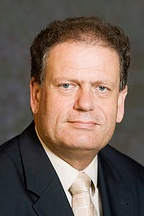
Henk de Bruin is the global head of sustainability within Royal Philips. Reporting to the executive committee, De Bruin focuses on strategy and policy development and stakeholder management. Through a small but dedicated network, the execution of structural sustainability action programs in the company is driven via the standing organisation.
De Bruin has developed expertise on a wide range of sustainability issues, as well as complementary skills into the area of sustainable business development. His team is in charge of the internal and external reporting and verification process on the Philips Sustainability performance which is integrated with financial reporting from 2008 onwards.
Content on this page is produced and controlled by Philips, supporter of the circular economy hub