MIAMI _At first glance, the menu item depicts a typical bowl of hearty chicken soup.
However, for chef Carlos Garcia at Obra Kitchen Table in Miami, it's much more than that.
As steam overflows from the boiling pot of chicken broth, Garcia dumps in some sofrito, tender shredded chicken, corn kernels, chopped onions and a variety of seasonal green vegetables. The Venezuelan chef tops it off with a pinch of sea salt and a sprinkle of chives.
The aroma wafts through the air _ and then, it hits him.
"The faces of the starving children and abuelos in my country. That's what floods my mind every time," Garcia said in Spanish as he assembled two mini arepas to lean against the ceramic bowl. "The only thing that makes me feel better is knowing that now people in Miami can help, too."
After the political unrest and hunger crisis in his native Caracas, Garcia _ who owns Alto, a world-renowned restaurant in Venezuela's capital _ established U.S. residency and in May opened Obra on Miami's bay to help offset the financial unpredictability.
Though Obra's menu features dozens of Latin American dishes with unique twists, it's the ordinary sopa de pollo that's making the biggest impact in a country transitioning from a strongman president, Hugo Chavez, to another commander, Nicolas Maduro, whose constitutional changes threaten to install a full-blown dictatorship.
"Each time someone buys the soup, a portion of that sale directly benefits 250 starving schoolchildren and teachers, along with 100 frail, elderly people at nursing homes in the slums of Caracas," Garcia said. "That soup, though here in Miami, is feeding dying people in Venezuela through our foundation Barriga Llena, Corazon Contento (full belly, happy heart) at Alto and Obra."
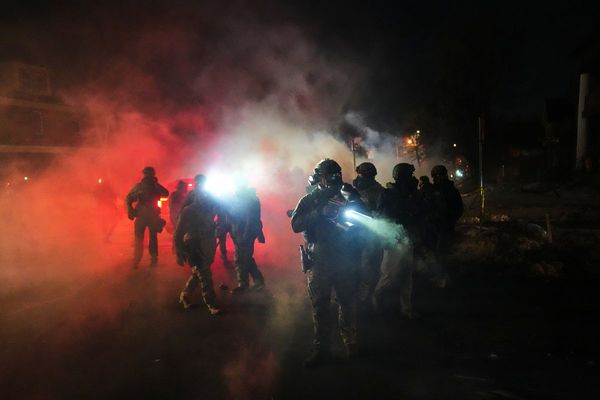
Alto, Garcia's restaurant in Caracas since 2007, was rated No. 32 on the continent by The World's 50 Best Restaurants Academy last year but has been struggling to survive during the violent protests and food shortages. It's two blocks from the heart of the demonstrations in Caracas, where the government quashes citizen protests. Over time, business became harder to come by, as people chose to stay home out of fear of violence and even death, Garcia said.
After Chavez died in 2013, having access to imported products became more arduous. Though getting the usual staples like flour, oil and sugar was possible, prices started to skyrocket. Slowly but surely, the fish markets had no inventory. And since the Barcelona-trained chef's restaurant had been mainly Mediterranean and Catalan-influenced, the business plummeted 45 percent, forcing Garcia to take money out of his own pocket to pay his 33 employees, he said.
Refusing to leave or close that business, and despite clashes between police and protesters on its business, Garcia over the years has bent to his circumstances, eventually leading him to open Obra _ Spanish for "good deed" or "labor."
When he went weeks without being able to get milk, Garcia cut every item that included dairy off the menu. Every week his offerings changed according to what was available. He found nearby farmers he could keep in business by growing produce for him. Sometimes the dishes were tapas style, other times, family-style. His main source at Alto today? A nearby vegetable garden.
Everything was improving, but then he got a call.
"A fellow friend said he believes his eyes," Garcia said. "The kids at J.M. de los Rios Children Hospital weren't being fed. The doctors and nurses had no food and a doctor even passed out after giving a patient his own lunch. I knew we had to help."
According to a recent study conducted by the Central University of Venezuela and two other universities, up to 90 percent of Venezuelans live in poverty. The study also says Venezuelans have lost an average of 11 kilos, or about 24 pounds due to the food shortages.
Late last year, The New York Times reported that 11,446 children under the age of 1 had died in 2016 _ a 30 percent increase in one year.
First, Alto began feeding the hospital patients every day, but over time, eight other local restaurants jumped in on the efforts and organized themselves to alternate. Garcia's restaurant is up every Friday. Whatever veggies are available, go in the soup. If there's an abundance of anything in particular, that's going in too."
"When you get sick, usually what the doctor prescribes you is a soup," Garcia said. "In addition, it has all the liquid nutrients, it's easy to digest, it is healthy, economical and that is why it is still the best option."
"For example, if we get, lets say, ground meat, that Friday we're making pasta instead of soup," said one of Alto's associate chefs who organizes the soup-making. "How does it work from Miami? We actually buy products and ship it over to Caracas. It's actually better to do it that way than to send money, because over there the prices are so high and nothing is available."
But after three years of providing food for ailing patients, government officials stepped in and prohibited any donations, Garcia said. That's how he ended up in the slums instead.
"I was seeing my own students die. Their parents don't have any food, the schools have no food, I was dying inside too," said Subalia Escalona in a phone interview. "But after (Garcia) and the others stepped in, we saw a huge increase in attendance. The kids are going to school because there is food, which means they can still learn and be educated."
But how the food gets to the school is no easy task in hilly Caracas. Sweat cascades down the foreheads of two disheveled teachers as they trek to their meeting point _ about one mile from the gate, Garcia said. That's as far as the trucks can go.
Twice a day, hundreds of children gather inside two humble, 50-square-foot rooms at the school. Their bowls of soups are placed in front of them on the dusty, concrete floor. Before this moment, many of the children are despondent and dejected.
"But then that's when their eyes light up. They completely change," Escalona said.
In unison, they clench their spoons as smiles take over their faces. And so the prayer _ in Spanish _ begins. With each sentence, their voice escalates in volume.
"Thank you, Father, for these nutrients. Bless the hands that made it possible. Give bread to the hungry and hunger to those that have bread. Amen."
In a brief video interview, 10-year-old Gilennys Carvallo explains in Spanish why the soup is her "favorite."
"Because it's the only meal we have guaranteed. Plus, I get to save the other half for my mommy."