The difference between $9.99 and $10 may only be a penny but it’s a Grand Canyon of perception for the average consumer.
Everyone from craft store Michael’s and toy maker Hasbro to brewer Boston Beer and Walmart are trying to keep key items under the $10 threshold, according to theThe Wall Street Journal.
The secret lies in the psychology of pricing - consumers perceive a big difference between $10 and $9.99. Cleancult, a manufacturer of home cleaning products, told The Wall Street Journal its laundry detergent sales double when it drops prices from around $12.99 to $9.99.
“Psychological pricing capitalizes on human cognitive biases and behaviors to influence consumer perceptions of product value and pricing,” business software firm Oracle NetSuite wrote in 2024. “Tactics like charm pricing - for example, pricing a product at $9.99 instead of $10 - exploit the left-digit bias, leading consumers to perceive a lower price.”
But capturing customer dollars at the $9.99 price point has required creativity from retailers.
Toy game manufacturer Hasbro overhauled its packaging approach to keep some of its toys and games under $10, according to the Journal, while Boston Beer, which could no longer keep six-packs under $10, introduced four-packs of beer for less than $10.
In the case of home cleaning products manufacturer Cleancut, the company hasn’t raised prices in seven years even though it shrinks their margins, the Journal reported.
“$9.99 is a real price point that drives a lot of consumer behavior,” Hasbro CEO Chris Cocks told the Journal.
While $10 is now all the rage, not so long ago $5 was the darling price point for many industries, including fast food. Before 2020, Dairy Queen had a $5 lunch combo, Subway pitched $5 foot-long sandwiches, KFC hawked $5 “Fill Ups” and McDonald’s had a “McPick $5 for 2” menu where customers could get a pair of certain menu items, according to a 2019 article from magazine Psychology Today.
“Price points are influential for the simple reason that consumers prefer to buy products at the price point than at other higher or lower price levels,” the magazine wrote. “In the fast-food industry, $5 is widely regarded as a powerful price point for a meal.”
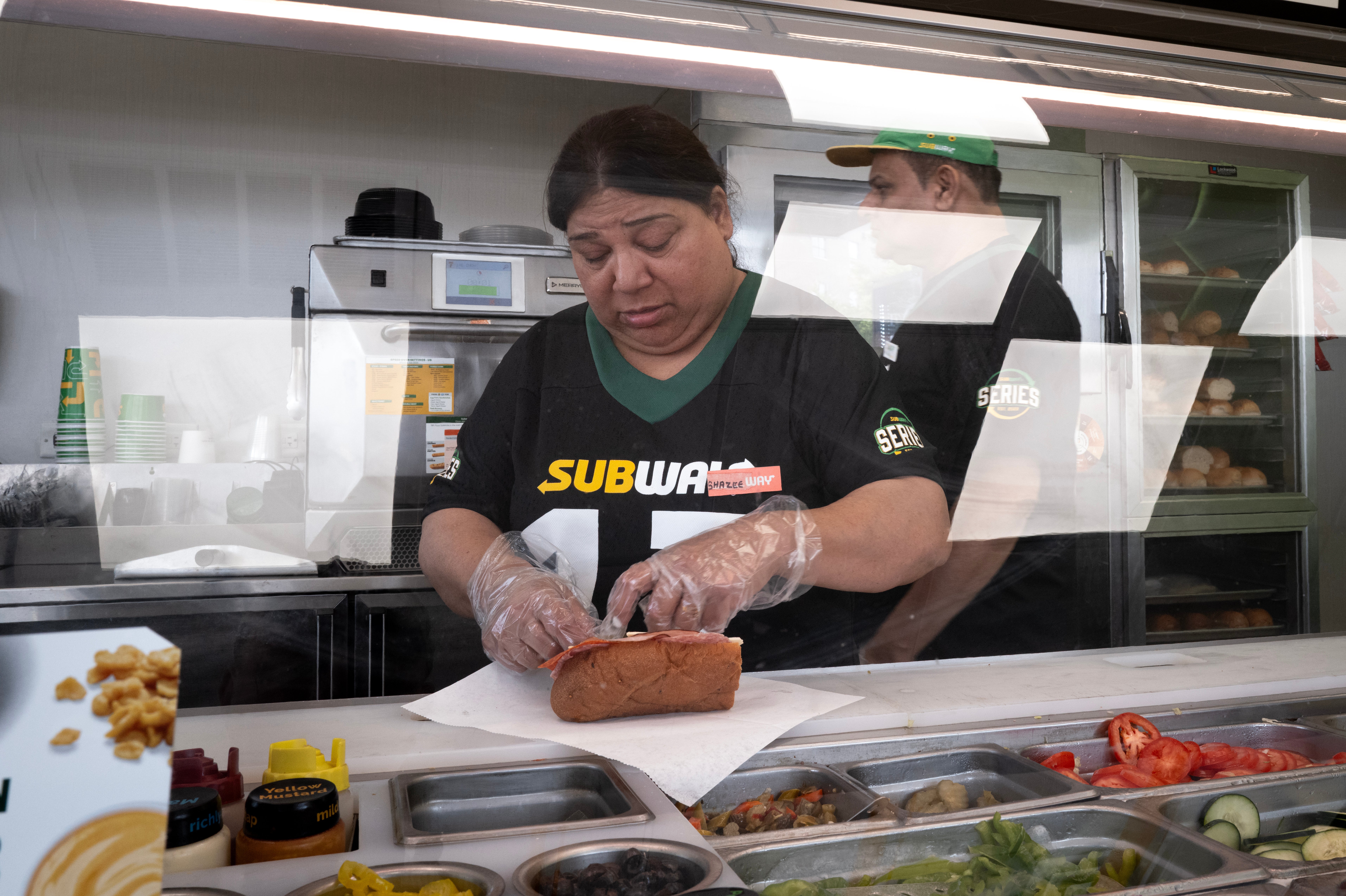
So powerful, in fact, that it can change the fortunes of individual stores and chains. Stuart Frankel, then-owner of two Subway stores in a Miami hospital, came up with the $5 foot-long price strategy in 2004, Psychology Today noted.
Looking for a way to boost weekend sales, the franchiser offered foot-long sandwiches for $5 on the weekends.
“Once the promotion started in the two Miami Subways, sales took off,” the magazine wrote. “From stores that were deserted on weekends a few weeks earlier, customer lines extended beyond the doors, people drawn irresistibly to their favorite Subway foot-longs by the deal.”
Frankel’s sales rose by double digits, according to a 2009 NBC News article, and Subway made $3.8 billion from the idea the first year it ran the $5 foot-long promotion companywide.