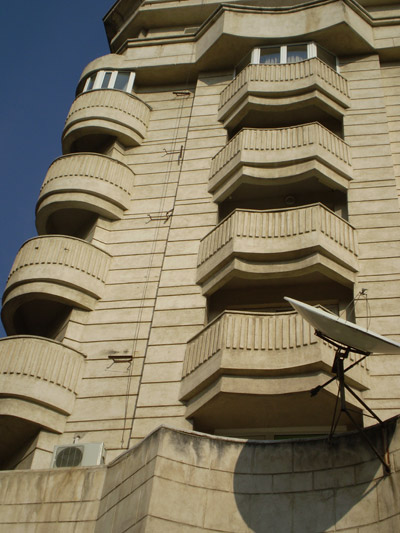
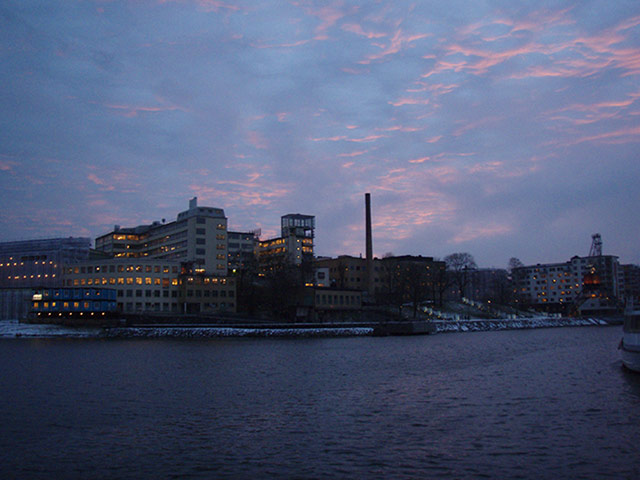
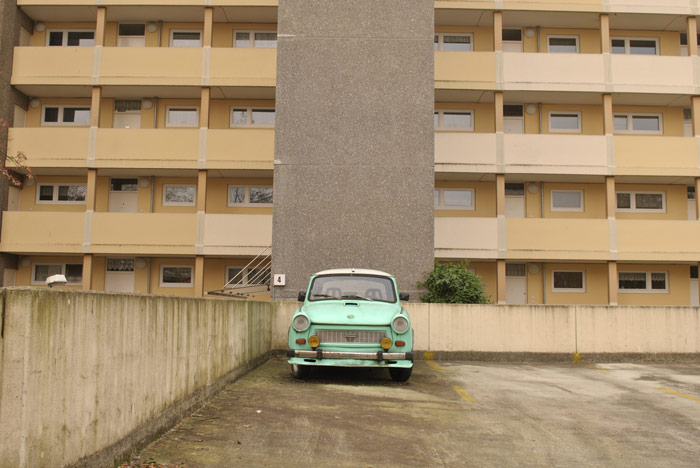
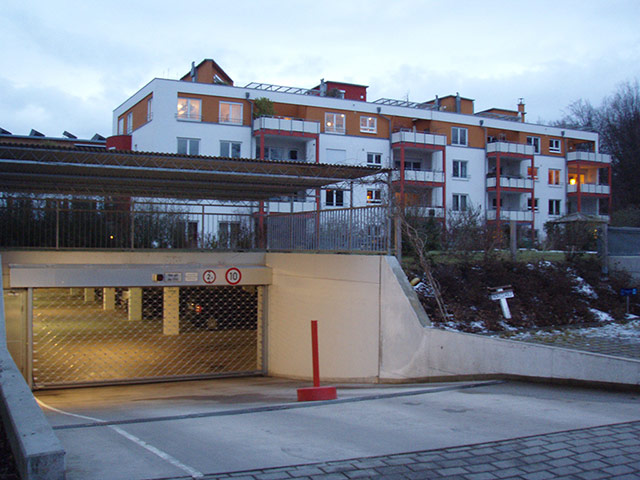
Hannah Fearn: "Property in the centre of Bucharest, the capital city of Romania, is the lasting legacy of former dictator Nicolae Ceaușescu's mass development programme. The city's historic housing was demolished and replaced with high rise, community apartment blocks, inspired by the brutalist architectural movement. Still standing today, signs of wear and tear stand as a reminder of the failure of the communist utopian project."Photograph: Hannah Fearn/Staff and agenciesMark Wright: "In Stockholm, the Hammarby Sjostad development reclaimed a former industrial area of the city that surrounded Hammarby Lake. Captured from the free ferry service that crosses the water, this picture is of the former Luma light-bulb factory – one of the very few elements of the original development retained in the regeneration process. This area was proposed as part of the Stockholm bid for the 2004 Olympics, eventually be awarded to Athens, Greece. Although it is promoted as a very green development, real estate values are obviously very high, and the well-off residents express or demonstrate little concern for the environment. This left me wondering whether measures to reduce environmental impact was actually being offset by the profligacy of the population."Photograph: Mark Wright/PRAmanda Vincent-Rous: "This image was taken in the Mummelmannsberg district of south-east Hamburg, Germany. It is very characteristic of the many 'wohnblocks' in Germany – geometric and in pastel shades or bright colour cladding. The old, pastel-green car made this shot for me." (Flickr)Photograph: Amanda Vincent-Rous/PR
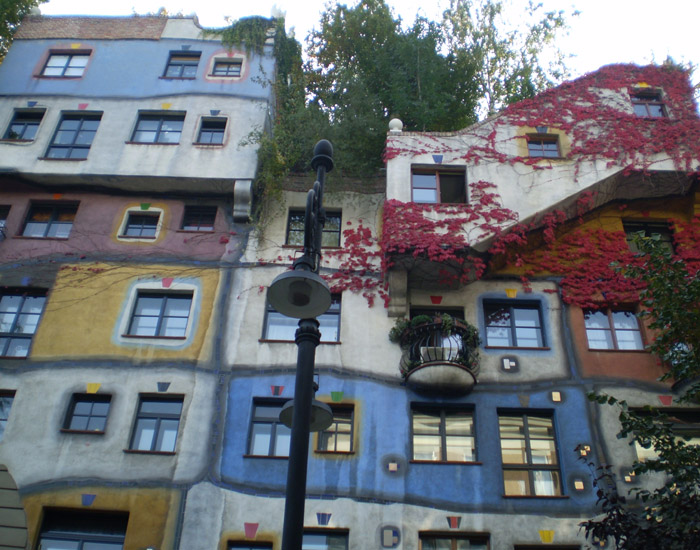
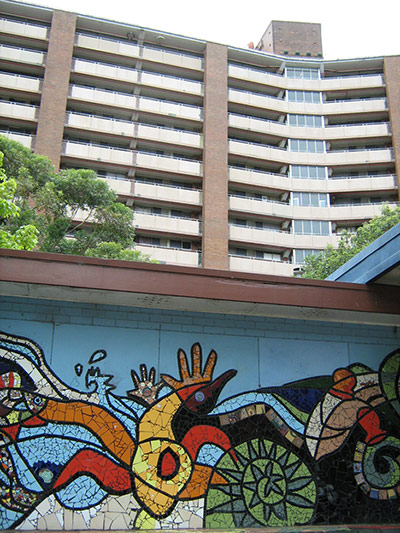
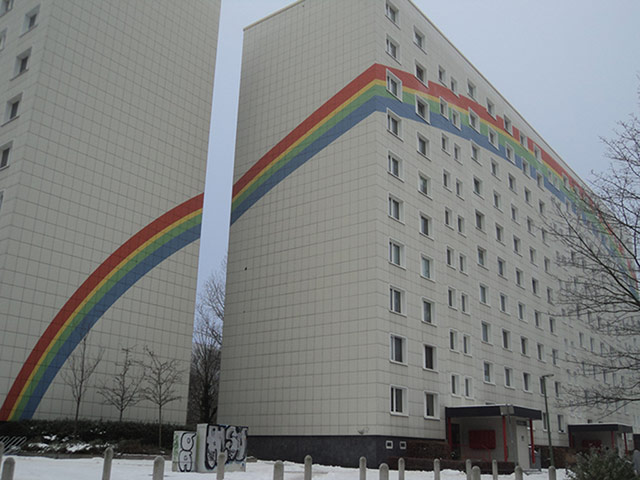
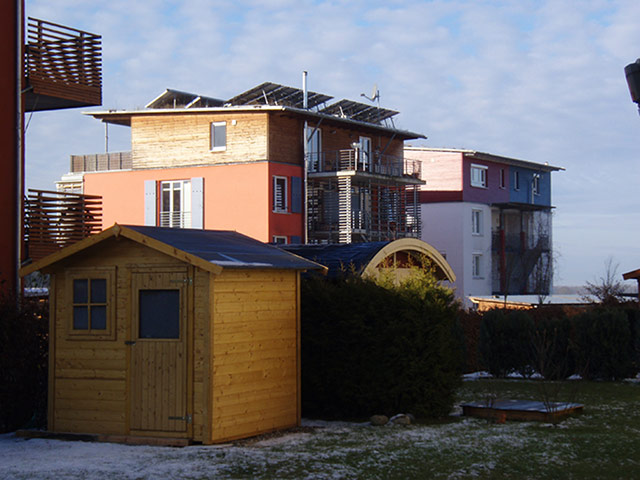
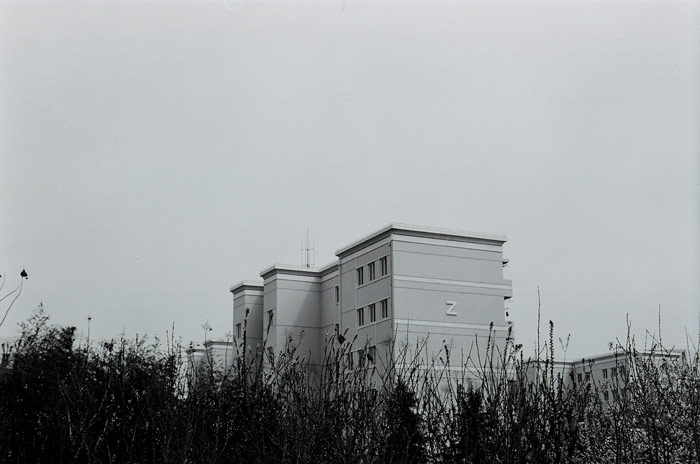
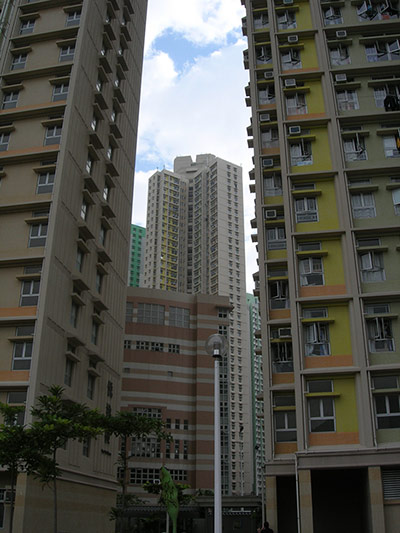
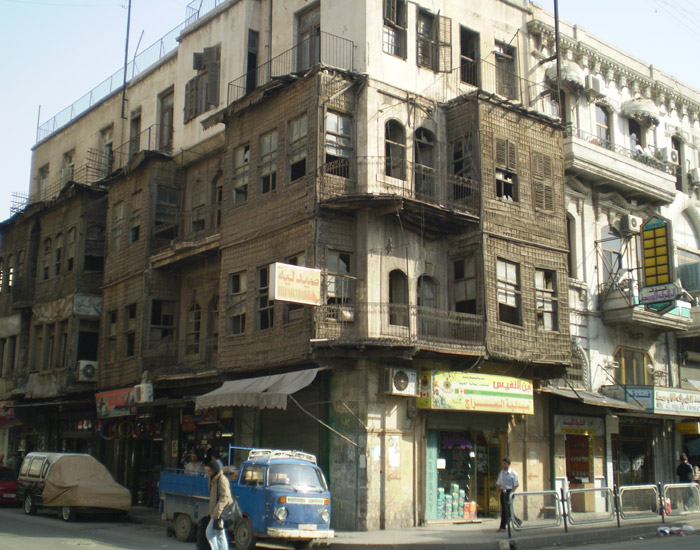
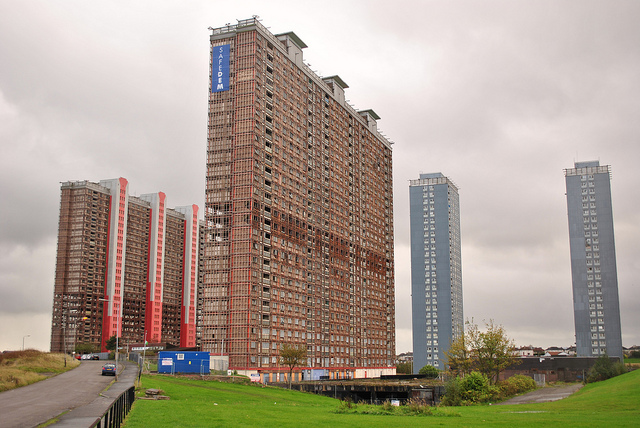
Hannah Fearn: "Hundertwasserhaus in Vienna is the vision of Austrian artist and architect Friedensreich Hundertwasser. He believed that if social tenants were inspired by their surroundings they would take pride in their neighbourhood, and his work tried to show that the practical could also be beautiful. Opened in 1986, the architect described it as a 'high rise meadow house'."Photograph: Hannah Fearn/Staff and agenciesJacqui Swinburne: "A colourful mural creates the foreground for the Northcott housing complex in Surry Hills, Sydney, Australia."Photograph: Jacqui Swinburne/PRAmanda Vincent-Rous: "Social housing in the Lichtenberg district of East Berlin, Germany. I believe this has been re-clad but many examples of social housing in the former GDR/DDR exist still complete with murals and mosaics depicting scenes of a glorious socialist republic. This picture was taken because of the design of a rainbow spread across two blocks in a very desolate, grey area of the city." (Flickr)Photograph: Amanda Vincent-rous/PRMark Wright: "In Rieselfeld Quarter in Freiburg, Germany, there is no planning ordinance governing the style and appearance of the buildings. My impression speaking to people was that this was to allow flexibility for self-builders, although the majority of the plots have been developed speculatively by a handful of developers – one of whom infuriates some of the residents by building in an extraordinary mock Mediterranean idiom. These ostensibly identical buildings shows some very marked differences in approach. On the right of the photo, an austere façade compares with a next door property with solar panels, biomass heating, a green roof and heat-exchange ventilation, and considerable effort given over to architectural detailing."Photograph: Mark Wright/PRVerity-Jane Keefe: "This is within the campus of Shanghai University in China, which itself is the size of a small town. The housing block was one of 26, an alphabet of blocks, painted pastel pink and white. I was in Shanghai working on an art project which was set within a social housing district but staying among these elegant buildings."Photograph: Verity-Jane Keefe/PRMark Wright: "At Vauban Quater in Freiburg, Germany, no parking is permitted on private land, with the aim of producing a virtually car-free environment. Some parking is provided at the periphery of the development, at an annual cost of nearly €20,000. The facility seemed well used, which is a little surprising considering the annual charge is more than the value of some of the cars parked in it. If it was intended as a spearheading exemplar, the radical 'greenism' in Vauban does not seem to have garnered the support of the population. Some residents have compared Vauban's residents to members of the former National Socialist German Workers' Party."Photograph: Mark Wright/PRJanet Hale sent in this image of high rise housing in Hong Kong. More than seven million people live in the principality, which covers just over 1,000 square kilometres - making it one of the most densely populated areas in the world. Space in the city carries a premium, and housing is notoriously expensive for residents. Photograph: Janet Hale/PRHannah Fearn: "Residents in Aleppo, Syria's second city, live in homes stacked above one another, built and expanded over generations. Many business people and shopkeepers live above their trading posts, as seen here on this busy market street on a working day."Photograph: Hannah Fearn/Staff and agenciesAmanda Vincent-Rous: "This image captures the standing skeletons of the Red Road flats in the Petershill area of Glasgow. Housing schemes thrown up in the 1960s and 70s – with all their modernist, utopian visions of villages in the sky – have inevitably fallen out of favour and into serious disrepair through neglect, under-investment and that 'caged up' feeling you get when a local authority decides to house people in an area that had no local amenities. (Flickr)Photograph: Amanda Vincent-Rous/PR
Sign up to read this article
Read news from 100’s of titles, curated specifically for you.