Internal party fractures were laid bare over the last few months, but House Republicans finally rallied on Tuesday to advance a $70 billion (£52.31 billion) immigration enforcement package straight to President Donald Trump for his signature.
This decision guarantees total financial backing for the Department of Homeland Security through the remainder of Trump's second term, explicitly protecting budgets for both ICE and Border Patrol.
Republicans elevated this funding package to the very top of their spring agenda, reacting to a successful Democratic blockade that completely froze cash flow for ICE and border security following the fatal shooting of two American citizens by federal officers in Minnesota.
A Rocky Road to Agreement
Getting here was a rocky road, with the top two GOP leaders locked in intense, public disagreements over how to handle the shutdown strategy. The legislation almost fell apart entirely in the Senate when several conservative lawmakers revolted against the President's demand for a Justice Department settlement pool—a provision opponents blasted as a slush fund for his inner circle.
BREAKING: Republicans’ sweeping immigration enforcement and border security package cleared the House, ending a months-long standoff with Democrats over funding Trump's immigration crackdown agenda.
— Charlie Ward (@CharlieWarj5ddC) June 10, 2026
The $70 billion measure passed 214-212 along party lines and now.. pic.twitter.com/61sVtPX7op
Right up until Tuesday's decisive vote, last-minute chaos gripped the House floor when right-wing stalwarts refused to budge until leadership guaranteed a future vote on an even harsher border enforcement bill, ignoring the fact that many within their own slim majority firmly oppose it, CNN reported.
Defections and a Narrow Victory
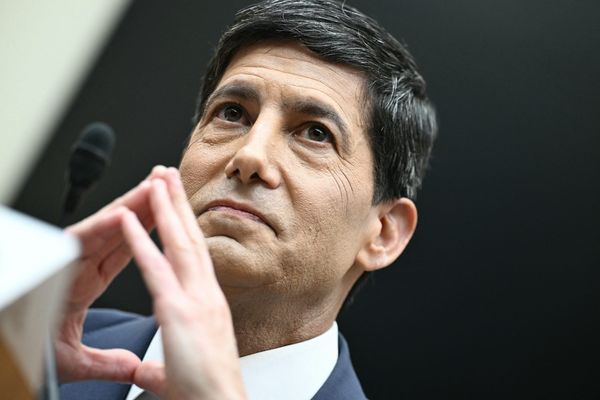
Squeaking through the chamber on a razor-thin 214-212 margin, the legislation split almost entirely along party lines, though California independent Representative Kevin Kiley broke ranks to oppose it.
Explaining his defection from the main conservative voting bloc, Kiley pointed to the absence of accountability guardrails for border personnel, alongside his deep frustration over the procedural tactics used to rush the package forward.
'We didn't see that: body cameras, training, identification, judicial warrants to enter homes, not enforcement zones around schools,' he said. 'I think the vast majority of Americans support this.'
The California lawmaker also highlighted that rather than using standard funding channels to clear the cash, colleagues resorted to a legislative loophole known as budget reconciliation. 'Polarization in Congress is at an all-time high right now, and I think that this is going to make things worse,' he warned.
The legislation finally crossed the finish line even though a steady stream of rank-and-file lawmakers chose to desert the party line over the last few weeks. This gruelling period of gridlock and internal friction highlighted just how precarious the GOP control really is, catching politicians at a moment when underwater presidential poll numbers have them deeply anxious about holding onto their seats in the next election.
Trump Wins Big on Funding
When all is said and done, the President is walking away with almost every single concession he originally demanded. Republicans are rubber-stamping the billions for ICE without attaching any fresh accountability guidelines or structural reforms, despite the agency facing intense public backlash following the recent deadly shootings.
'This bill breaks the Democrats' stranglehold over ICE and CBP funding,' GOP Rep. Tom McClintock of California said on the House floor.
In the end, Republicans failed to include any provisions to dismantle the president's 'anti-weaponization' fund, despite warnings from within their own ranks that the money could end up compensating rioters who assaulted law enforcement during the 6 January 2021 attack on the US Capitol.
Though Acting Attorney General Todd Blanche assured lawmakers that the program would be abandoned, a handful of Senate Republicans had still pushed to write a definitive ban directly into the final text of the bill.
Republicans want to hand over another $70 BILLION to ICE and CBP with zero meaningful guardrails or reforms.
— Rep. Pramila Jayapal (@RepJayapal) June 9, 2026
This bill is a sham and does absolutely nothing to address the real issues Americans are facing. I’m a NO. pic.twitter.com/mpOwPAmMpS
Washington Representative Pramila Jayapal, a veteran immigration rights activist, slammed Republicans for passing a package with 'no guardrails' while handing an extra $70 billion (£52.31 billion) over to ICE. 'With $70 billion (£52.31 billion), we could end homelessness in America,' said Democratic Rep. Morgan McGarvey of Kentucky. 'Just about anything would be better than giving it to ICE.'
Ballroom Project Dropped From Bill
However, one major priority for Trump was ultimately abandoned: his request for $1 billion (£0.75 billion) to fund White House security enhancements, which featured a $200 million (£149.45 million) allocation for his East Wing ballroom development.
The initial Senate Republican draft slated nearly $1 billion (£0.75 billion) for White House ballroom and security upgrades following a spring shooting at the Correspondents' Dinner. Officials noted only $200 million (£149.45 million) could fund the East Wing project, leaving the remainder for general security. However, multiple Senate Republicans opposed the plan, which the chamber's parliamentarian ultimately rejected.
Last-Minute Drama in Both Chambers
Last-minute drama gripped both chambers as Republican holdouts delayed the vote to demand final concessions on the deal. Several Republican senators blocked the bill over Trump's 'anti-weaponization' fund before ultimately backing down to vote in favour. Ultimately, Alaska Senator Lisa Murkowski was the sole Republican to vote against the bill.
On Tuesday, over twelve Republican hardliners blocked an essential procedural vote in a final attempt to win concessions. However, they also backed down in the end.
According to two sources familiar with the talks, these hardliners blocked all floor action on the $70 billion (£52.31 billion) package to demand a separate vote on their own strict immigration bill. It remains uncertain if they actually won that commitment, especially since the hard-line immigration measure faces nearly certain defeat if it ever reaches a vote.