The average house price across the UK experienced a modest 1.2 per cent annual increase in February, pushing the national average to £268,000.
This slight uptick, reported by the Office for National Statistics (ONS), follows a 1.0 per cent rise recorded in January.
England's average prices climbed to £290,000, representing 0.8 per cent annual growth.
Wales saw a more significant 2.5 per cent increase, with average properties reaching £210,000, while Scotland recorded a 2.3 per cent rise to £187,000.
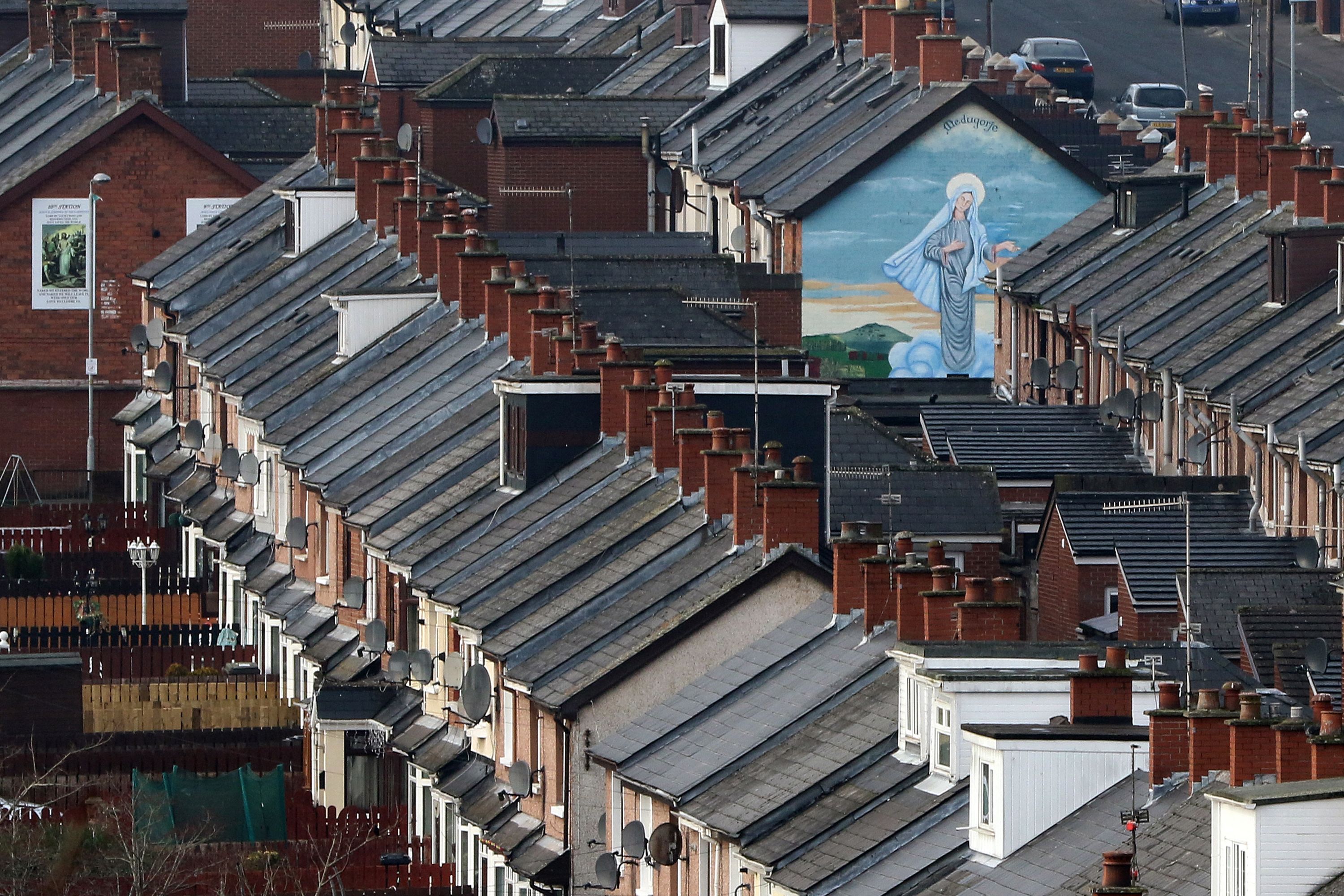
Northern Ireland reported a 7.5 per cent annual increase, with average prices at £196,000 in the fourth quarter of 2025.
Within England, Yorkshire and the Humber led all regions with 3.9 per cent inflation over the 12 months to February.
Conversely, London's property market continued its decline, with average values falling 3.3 per cent annually in February. This marks the capital's seventh consecutive monthly fall and its weakest annual change since January 2024, when prices dropped 3.5 per cent.
The report was released as the ONS said the rate of Consumer Prices Index (CPI) inflation increased to 3.3 per cent in March, from 3 per cent in February.
The increase was in line with predictions from economists, with the conflict in the Middle East pushing up price rise expectations.
Many lenders have cut the fixed mortgage rates they are offering in recent days, as swap rates, which are used by lenders to price mortgages, have eased.
David Hollingworth, associate director at L&C Mortgages, said a “growing number of lenders” have been trimming fixed rates, adding: “Today’s news shouldn’t disrupt that trend for now and homeowners will be turning their attention to the Bank of England’s interest decision next week, hoping for clues on the direction of travel for base rate.
“Higher inflation typically leads to higher interest rates, but if a resolution can be found and inflation peaks at a lower level than originally feared, it could calm the need for base rate hikes.
“That would see fixed rates continue to fall, but there’s still a substantial number of ‘ifs, buts and maybes’ at play.”
Mark Harris, chief executive of mortgage broker SPF Private Clients, said: “Affordability concerns are once again an issue for borrowers, as mortgage rates headed upwards on the back of expectations that interest rates would stay higher for longer.
“However, in recent days there has been some relief as a number of lenders have reduced their fixed-rate mortgages, including Santander, HSBC and Skipton – a trend we hope to see continue in coming days.”
Nicky Stevenson, managing director at Fine & Country, said: “These figures relate to a period before some of the more recent cost pressures and volatility in everyday bills fed into household budgets, so it will be important to see how the next few months play out for confidence and affordability.
“Activity is improving now that we are firmly into spring, but it is still a market where buyers can take their time, compare options and negotiate.”
Looking at the rental market, the ONS said average UK monthly private rents increased by 3.4 per cent annually to £1,377 per month in March.
The annual growth rate eased from 3.6 per cent in the 12 months to February.
Average UK house prices increased by 1.2% (provisional estimate) to £268,000, in the 12 months to February 2026. This annual growth was up from 1.0% in the 12 months to January 2026. pic.twitter.com/06BJm7vR8c
— Office for National Statistics (ONS) (@ONS) April 22, 2026
Average rents in March increased to £1,434 (3.4 per cent annual growth) in England, £830 (4.8 per cent) in Wales, and £1,022 (2.1 per cent) in Scotland.
In England, private rents annual inflation was highest in the North East (6.5 per cent), and lowest in London (1.7 per cent), in the 12 months to March.
In Northern Ireland, average rents increased to £880 in January, marking a 5.0 per cent increase over the year.
Richard Donnell, executive director of research at Zoopla, said: “Sellers have to be realistic on price, which they are currently, explaining why prices are only rising at 1.2 per cent.
“Low investment in growing the stock of rented homes is supporting rents rising faster than house prices. Policies to grow the supply of rented homes are needed to moderate rental inflation and ease cost-of-living pressure on renters.”
Ian Futcher, a financial planner at wealth manager Quilter, said: “Changes in mortgage costs do not feed through to house prices immediately.
“The sharp rise in borrowing costs seen after February is more likely to weigh on activity and sentiment in the spring and early summer data, particularly among first‑time buyers and more rate‑sensitive parts of the market.
“Looking ahead, the outlook for house prices will depend largely on how geopolitical risks evolve.
“If tensions ease further and energy‑driven inflation pressures recede, mortgage rates could continue to edge lower, supporting broadly flat prices rather than a sharp correction.”
Iran war drives UK inflation up to 3.3% in major blow for Reeves
What rising inflation rate means for your money
Amateur fossil hunter uncovers rare chunk of world’s oldest sea crocodile
Swinney skipping TV debate to avoid it being ‘group of blokes talking politics’
Households urged to make HMRC checks as over 730,000 tax refunds go unclaimed
Onlookers urged to give walrus spotted in harbour space to rest