The sudden and wide spread of the coronavirus outbreak created an unprecedented opaqueness on situations inside the families. Child consultation centers across the nation and other organizations continue making efforts to reverse this must continue to protect the lives of the young and vulnerable.
--'I love my child but ... '
Late one night in late June, a message from a young mother living in the Kyushu region reached Your Place, a website where people can seek counseling anonymously around the clock.
"I cannot help hitting my child."
Due to impacts from the coronavirus outbreak, the caller could find neither find a job nor child care for her infant, who is less than a year old. Within about 20 minutes, she filled in, bit by bit, her reasons for her "abusing" the baby, and her worries about their daily life. Before long, however, the communications ended.
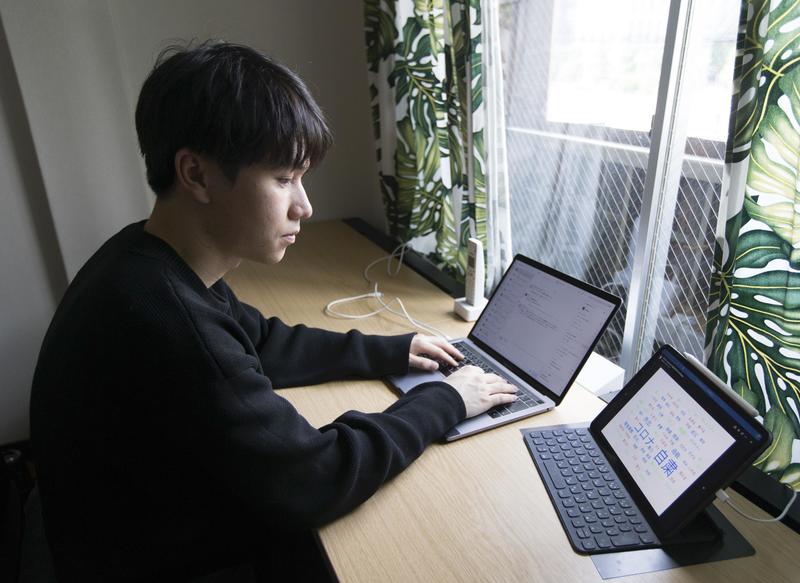
This website, which the Health, Labor and Welfare Ministry introduces to people as a window offering consultation services for people in distress, respond on an online chat all day long. The site is run by Koki Ozora, a 21-year-old junior at Keio University, who has experienced in-home trouble and school truancy. He realized the importance of a "trustworthy place to seek advice." Medical practitioners and public health wokers act as voluntary counselors.
During the nationwide state of emergency in place in April and May, about 200 requests were received each day by the website. Nearly 90% were from people in distress over matters related to the coronavirus outbreak, including the abuse of their children, laying bare their pent-up feelings. Another parent said, "I adore my daughter, but for some reason or other, I get annoyed by her."
"The tears won't stop flowing. I will die soon." This was a message sent by a junior high school girl from the Tohoku region together with a picture of a kitchen knife. In her message, she complained that her mother's physical and verbal violence had become more intense as the girl stayed at home because of the closure of her school.
Ozora, who the girl sought out to give her advice, obtained her contact address and asked police to protect her. Those days, almost every week, there are cases like this girl's, in which Ozora has notified the police or child consultation centers, saying there was an imminent danger of someone's life.
Since June, when most schools reopened across the country, the number of cases seeking advice has dropped to 40 to 60 a day. But there has been no end to the anguish over child abuse, mainly among those parents with preschool children and the like.
Ozora feels that since the nationwide state of emergency was lifted, the state of affairs has entered a new phase. "With people's tenseness apparently eased, there are many of those who would complain about their fatigue or about their physical or mental condition. There seems to be not a few of those parents who feel a sense of danger within themselves as they vent out their stress on their children."
--Cases latent during school closure?
In early June, at the central child consultation center of Saitama Prefecture, in Ageo, about 40 staff members, all wearing face masks, were seen checking relevant materials or responding to phone calls. Inside the center, it then appeared a bit "crowded with many people nearby." During a visit to the center one month later, it looked as if there were many vacant seats.
Tatsuo Nishikawa, 60, director of the center, explained that "Caseworkers [child welfare commissioners] have gone out to deal with the child abuse cases. At last, the atmosphere here has returned to normal."
Since March, there had been cases in which staff members of the center were refused their meeting with the family on the grounds that there was a "fear of infection," as they visited those families with the possibility of child abuse. The center, for its part, narrowed down the hours of such meetings and the number of staff members making such visits as much as possible, so as to prevent these staff members from being infected.
To the central child consultation center, which is in charge of areas with a combined population of about 800,000, there were 427 reports of possible child abuse cases made between March and May, when local schools were closed all together. The number was about 10% fewer than the corresponding period last year, with such reports from schools dropping to 6 from 45 made a year earlier.
Teachers who meet face to face with students from day to day are apt to notice signs of child abuse such as bruises on their body or stains on their clothing. Due to school closures, however, such opportunities were lost. In June when the students resumed attending classes, reports from schools increased to 11, according to the center.
"Child abuse cases may have become latent, rather than decreased. Even so, we cannot come off with saying, 'We couldn't notice child abuse cases because of the spread of coronavirus infections,'" said Nishikawa, with a growing sense of alarm.
The Saitama prefectural government will also accept, starting in autumn, requests for advice on child abuse cases from both children and parents via LINE in addition to requests over the telephone.
Read more from The Japan News at https://japannews.yomiuri.co.jp/