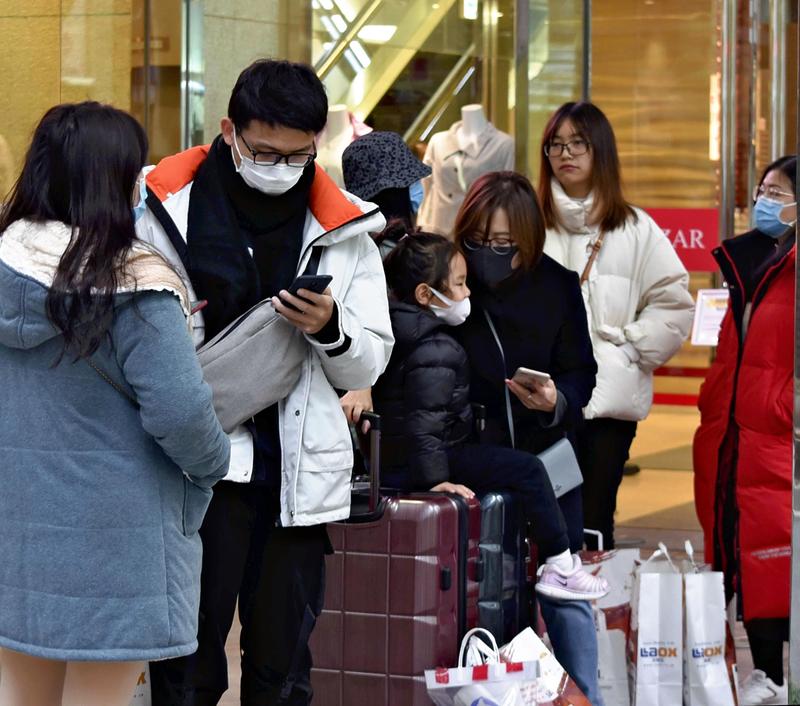
Amid the fear and uncertainty over the outbreak of the new coronavirus, hotels and ryokan inns across the country have been inundated with phone calls asking whether they have any Chinese guests or reservations for Chinese.
There have even been cancellations, leading them to struggle with a way to best respond to such inquiries.
"Such an act is rooted in discrimination or prejudice," an expert said. "[The accommodations] should respond with calmness."
A ryokan in Nasu Shiobara, Tochigi Prefecture, said it received a call earlier this month from a guest who had already booked a room, asking, "Do you have any reservations from Chinese guests?"
When the inn employee in charge said, "Not at the moment," the caller asked, "If a Chinese person wants to make a reservation, will you refuse them?"
When the employee answered, "We can't refuse them without a well-grounded reason," the caller promptly canceled their reservation.
The Inns and Hotels Law stipulates that hotel operators cannot refuse overnight guests except for specified cases, such as when it can confirmed that a guest has a contagious disease, or when it is suspected the guest may commit illegal acts such as gambling or do something to disturb public morals.
The Nasu Shiobara ryokan said it had received two similar phone inquiries.
"We never expected it to have this kind of effect," said the 61-year-old inn president.
The local Shiobara hot spring resort tourist association said many such calls have been received at other ryokans in the area.
At the beginning of this month, a pair of elderly men visited the office of the Cooperative Kusatsu Onsen Ryokan, a trade group in the well-known onsen hot spring resort of Kusatsu, Gunma Prefecture, to ask, "Is there an inn that does not have any reservations from Chinese people?"
In addition, a hotel by Lake Kawaguchi in Yamanashi Prefecture has received dozens of inquiries since late January from Japanese customers on whether it has Chinese guests or about concerns over the spread of the virus.
While responding that it has Chinese guests, the hotel also informs callers that it has taken preventative measures such as having employees wear surgical masks and placing alcohol disinfectant dispensers throughout the facility.
Even so, in many cases, the callers refrain from making a reservation, or those with reservations, such as families with children or the elderly, cancel them.
"People have a tendency to react excessively when they feel endangered by a crisis that cannot be seen, such as an infectious disease," said Hirotada Hirose, a professor emeritus of Tokyo Women's Christian University and an expert in disaster and risk psychology. "That raises the risk of fomenting discrimination and prejudice."
Hirose also stressed, "The government needs to repeatedly deliver accurate information, and those who receive it need to act in a calm manner."
Read more from The Japan News at https://japannews.yomiuri.co.jp/