As hotels suffer from a sharp drop in guests due to the coronavirus pandemic, those in Tokyo are trying to survive by offering various new services to create demand.
Such services -- including long-stay plans and rooms for teleworking -- are being launched by some hotels to address a significant decrease in the number of both overseas and domestic guests, the latter due to locals refraining from going out.
-- Sold out in 2-1/2 hours
Keio Plaza Hotel Tokyo in Shinjuku Ward, Tokyo, began offering a long-term accommodation plan called "Kurasu @ the HOTEL" (Living in the hotel) on Feb. 22. Sixteen rooms are allocated to the plan, with room rates starting from 210,000 yen for 30 nights with breakfast.
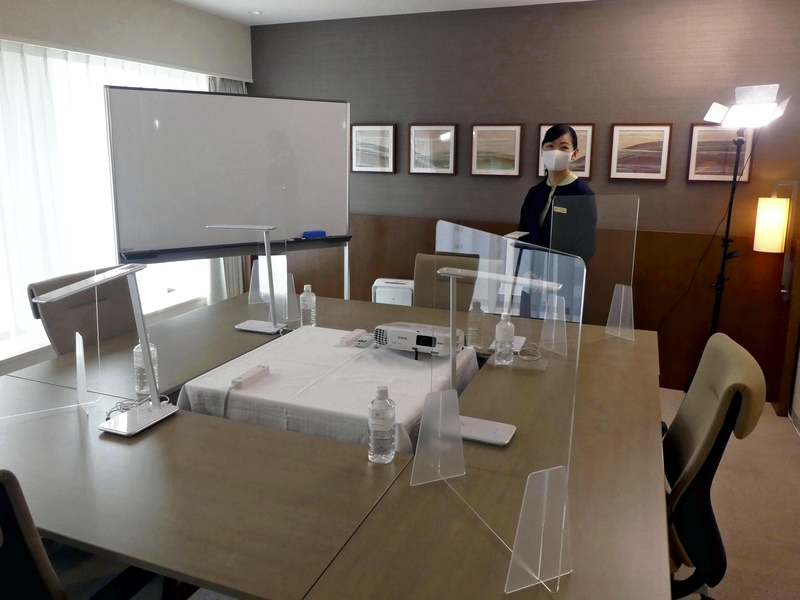
On this plan, hotel toiletries such as shampoo and toothbrushes are provided only on the first day and room cleaning and towel changing services are provided twice a week. Guests using this plan can also use a meeting room for up to two hours a day. The meeting rooms, which are hotel rooms with the beds removed, are equipped with desks, chairs, a whiteboard, a projector and like.
As there is no expectation of foreigners visiting Japan for the time being due to the pandemic, the hotel operator said it began considering the long-term stay plan in summer last year in an attempt to create new demand.
"Shinjuku is easily accessible [to many places] and we hear many people saying that they want to make it a base for their daily life and business," said a person in charge of public relations at the hotel. "Unlike rental properties, [this long-stay plan] allows you to easily live in the city center without having to pay move-in fees, such as a deposit and key money [that goes to your landlord]."
The plan, which will be offered until May 15, sold out in 2-1/2 hours when it was launched.
For day-use guests, the hotel offers rooms for teleworking. Such rooms are equipped with desks for work and printers and the hotel accept reservations for a minimum of two hours.
-- Imperial Hotel joins in
The Imperial Hotel in Chiyoda Ward, Tokyo, will launch a serviced apartment plan for long-term stays from March 15.
For the new business, three floors of its tower building were renovated to create 99 rooms, which account for about 10% of total guest rooms at the hotel. The monthly rent for 30 nights starts from 360,000 yen. The plan, which allows guests to stay until July 15, sold out on the first day reservations were accepted.
As part of this service, bread for breakfast will be provided free of charge in the apartments' communal space. Guests are also able to use laundry machines and microwaves freely, in addition to training machines and the hotel pool.
The hotel posted a net loss of 8.6 billion yen in its consolidated results between April and December last year, a huge loss compared with the 3 billion yen profit it logged the previous year. Net sales fell by 61.6% year on year to 16.6 billion yen. The room occupancy rate has dropped and remains around 10%.
"You can lead a comfortable life by using the distinctive services provided by the hotel," said a person in charge. "We're expecting demand for teleworking and using it as a second home."
-- Check-in at all hours
Prince Hotels, headquartered in Toshima Ward, Tokyo, is offering a plan to fit the behavioral changes caused by the coronavirus pandemic. The plan, which is offered at its eight hotels in Tokyo, allows guests to check in at any hour of the day or night and stay for up to 10 hours.
After launching the plan in January, the hotel had received bookings for about 3,300 rooms by Feb. 22.
The plan is especially popular among workers, including those working remotely who use it from the morning. It is also popular among those who miss the last train because railway companies are moving up the times, according to a person in charge at the hotel operator.
Read more from The Japan News at https://japannews.yomiuri.co.jp/