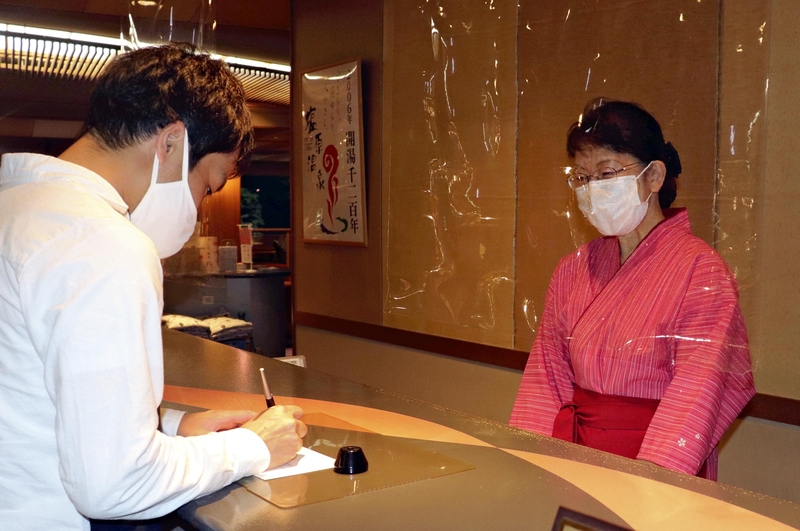
NASUSHIOBARA, Tochigi -- About 600 employees of inns and hotels at hot spring resorts in Nasushiobara, Tochigi Prefecture, will start taking monthly tests for the novel coronavirus in an effort to promote the city as a safe tourist destination.
The Nasushiobara city government, which will conduct the tests, hopes the efforts will help bring visitors back to the city. It is the first case in Japan of hot spring resorts as a whole tackling the situation in this way, according to the All Japan Ryokan Hotel Association in Chiyoda Ward, Tokyo.
-- Bath tax as resource
Those subject to the monthly PCR (polymerase chain reaction) test will be employees in charge of customer service and reception at the 86 inns and hotels belonging to the hotel associations of the Shiobara and Itamuro hot spring resorts, both located in the city.
The cost of a single test ranges from 15,000 yen to 20,000 yen. Test-takers will bear 3,000 yen of that cost, while the rest will be subsidized by the city. The subsidy will be funded by raising the bathing tax collected from tourists.
On Monday, the regular city assembly for September passed a bill to revise the ordinance to raise the tax -- currently set at 150 yen per night -- by 50 yen to 200, yen depending on the cost of lodging. The increased tax rates will be applied to overnight guests, not including city residents, for a limited period starting from December.
About 915,000 people from the Tokyo metropolitan area and other places visited the city's hot spring resorts last year, but the number by the end of June this year totaled only about 200,000, dropped to 48.5% from the same period last year.
With trips to and from Tokyo added to the government's Go To Travel tourism campaign from October, Nasushiobara Mayor Michitaro Watanabe said, "We want to dispel the fear [of virus infections] and show that we are Japan's top tourist destination for measures against the coronavirus."
There have been objections to the regular testing of workers over fears that the image of the resorts could be harmed if an infection is confirmed, while the burden on both accommodation operators and tourists may increase.
However, with a flood of bookings already made by visitors from Tokyo, the competition among hot spring resorts is intensifying.
"To remain the hot spring resort of choice, it is necessary for us to make our place safe and free of anxiety by conducting PCR tests [on our employees]," said Takayuki Muroi, 51, head of the Itamuro hot spring hotel association.
Read more from The Japan News at https://japannews.yomiuri.co.jp/