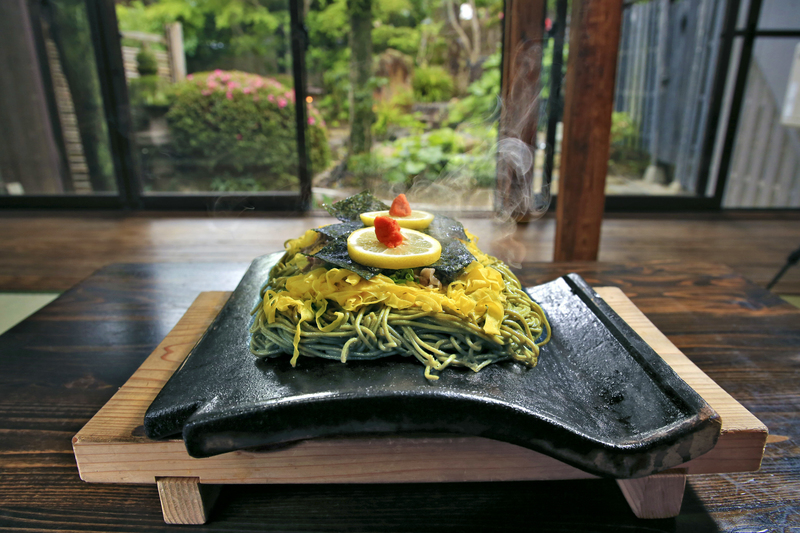
SHIMONOSEKI, Yamaguchi -- In a room within an elegant Japanese-style building built about 100 years ago, my stir-fried green tea-flavored soba noodles, with colorful toppings such as meat and seaweed, was served not on a plate, but on a black kawara roof tile heated to a burning hot temperature.
I was told that this is a local specialty in Yamaguchi Prefecture, but from the looks of it, something didn't feel quite right.
I dipped the noodles and the meat in a hot sweet broth. The soft cooked noodles were delicious as they went well with the broth, while those that were browned on the burned tile also had a savory aroma. The toppings included momiji oroshi (a mixture of grated daikon radish and carrots), and it was also good to eat the noodles with some of this condiment. In this way, one dish can be enjoyed in various ways.
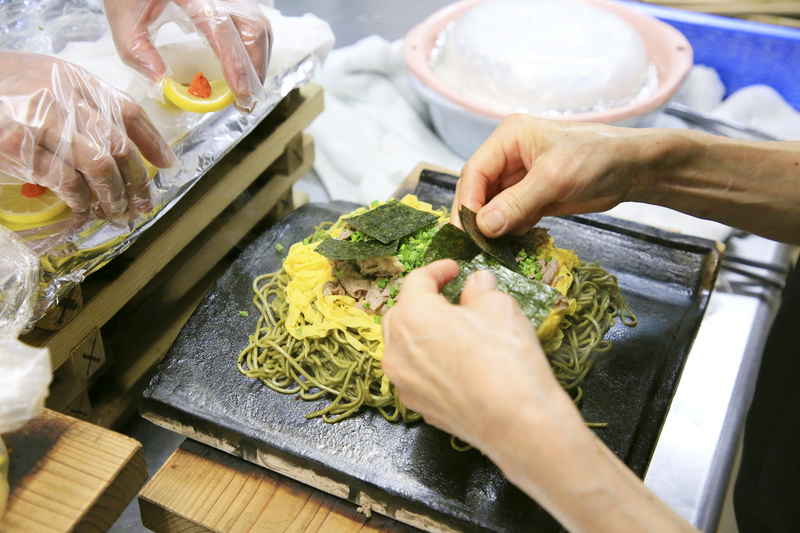
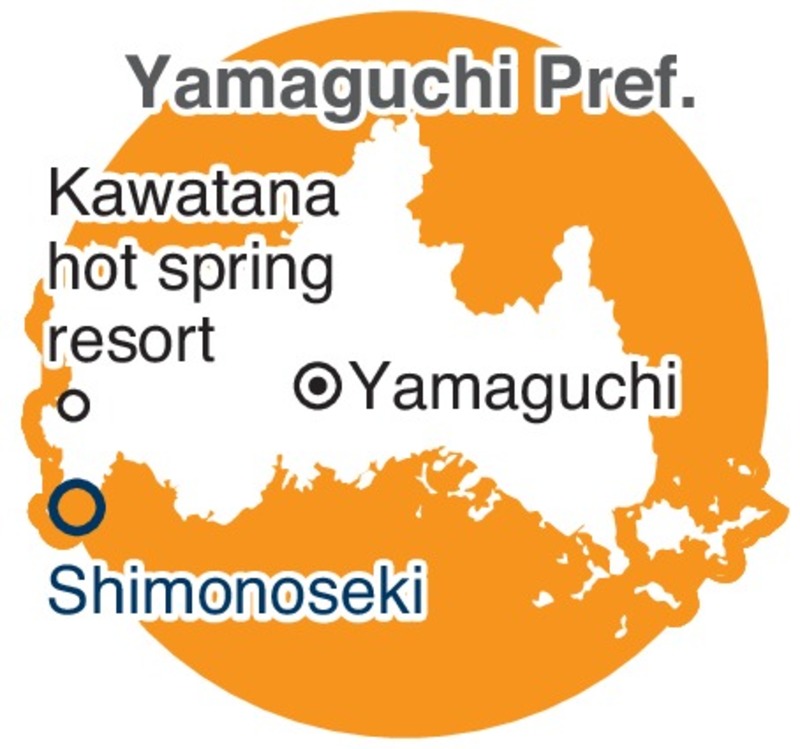
The dish, called kawara-soba, was devised in 1962 by Ganso Kawara-soba Takase, a restaurant in the Kawatana hot spring resort in a mountainous area of Shimonoseki, Yamaguchi Prefecture. This specialty is currently available for 1,188 yen.
During the Edo period (1603-1867), Kawatana was the only hot spring resort for the Chofu domain, a branch of the Choshu domain that ruled present-day Yamaguchi Prefecture. While the hot spring resort prospered in the post-World War II period, Kawatana started to slide into obsolescence when its small-scale ryokan inns could not accommodate the large number of visitors on numerous company group tours and other tour groups that increased in the late 1950s.
At that time, Ganso Kawara-soba Takase was a ryokan operated by the late Shinichi Takase. He came up with the idea of serving pan-fried noodles on roof tiles as he was inspired by an old story dating back to the Seinan War in the early years of the Meiji era (1868-1912). While laying siege to Kumamoto Castle, soldiers from the Satsuma domain, an area that roughly corresponds to today's Kagoshima Prefecture, cooked meat and wild grass on kawara roof tiles to eat in between battles.
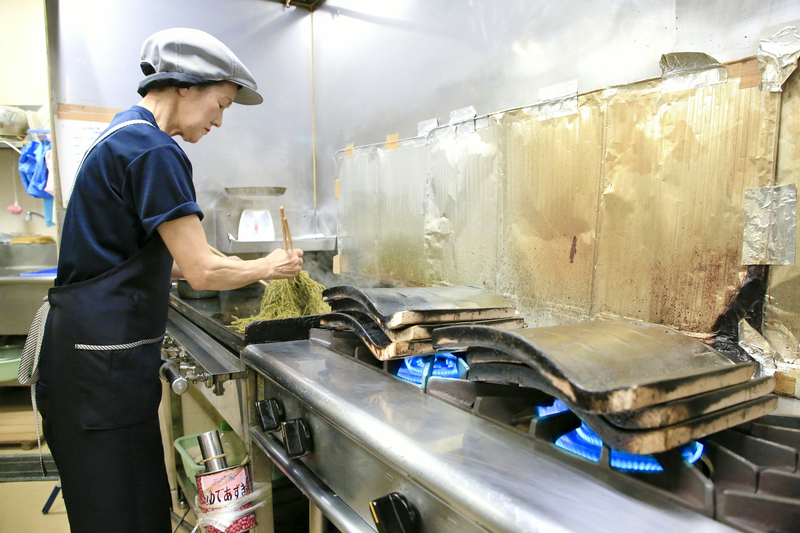
"The idea of pan-frying green tea-flavored soba and serving them on black roof tiles was innovative," said Yukiya Yamamoto, 46, a senior official of the restaurant. "Takase is said to have aimed to revitalize the hot spring resort by developing a specialty dish that could become as famous as Shimonoseki's fugu blowfish."
Takase took great pains to develop the recipe and eventually decided to use matcha green tea powder produced in Uji, Kyoto Prefecture, and buckwheat flour produced in Hokkaido for the noodles. It was easy for him to obtain the ingredients for the momiji oroshi condiment and long green onions in Shimonoseki because they are also used for fugu dishes.
When it came to the kawara roof tiles, Takase initially used for his dish some old roof tiles abandoned by neighbors. However, many of these tiles would break after a while from being burned over and over. As kawara-soba became a popular dish, the problem for Takase was how to secure an abundant supply of roof tiles.
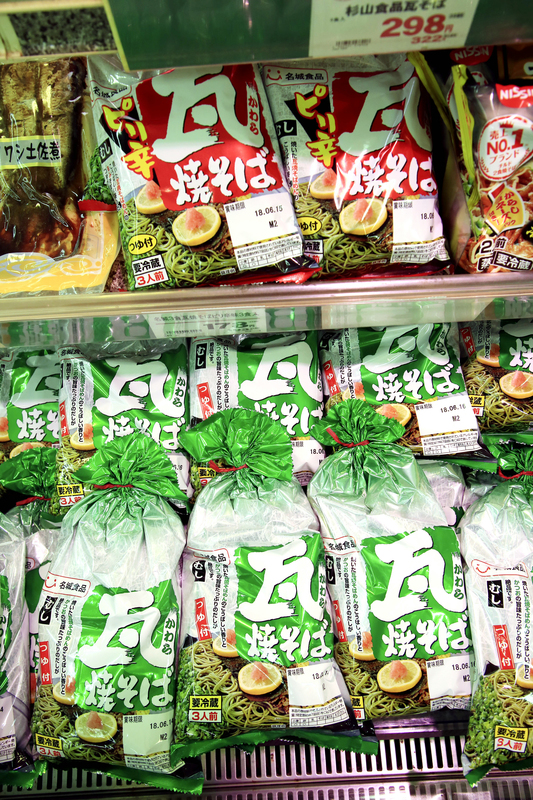
Today, Ganso Kawara-soba Takase orders its cooking-use kawara roof tiles that are resistant to breaking in high heat from a ceramic maker in Shimane Prefecture.
But, why did the Kawatana hot spring resort have so many kawara roof tiles for Takase to use in the dish? Shigekazu Ueda, 43, the secretary general of a company that aims to revitalize Kawatana, believes that the answer lies in the fact that the local domain lords and samurai often visited the hot springs to recuperate during the Edo period.
"At a time when luxury was banned, houses for commoners usually had thatched roofs, but those along highways were allowed to use kawara roof tiles as they were fireproof and gave the buildings a good look," he said. "Abandoned roof tiles used to be piled up in various parts of the hot spring resort after being replaced by new ones, and such scenes apparently inspired Takase to use them for the dish."
Read more from The Japan News at https://japannews.yomiuri.co.jp/