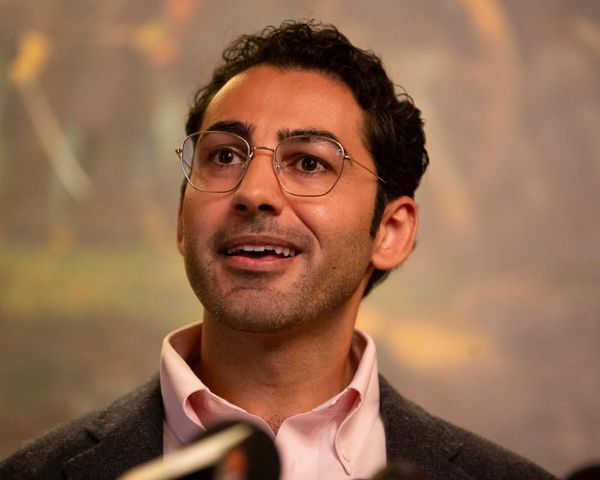

The Listening Post sat down with prominent Iranian blogger Hossein Derakhshan last week at the International Journalism Festival in Perugia, Italy, to discuss the demise of the blogosphere, what has replaced it and the current state of freedom of expression in Iran.
Back in 2007, Derakhshan was known as the father of the Iranian blogosphere.
As a dual Iranian-Canadian citizen, Derakhshan was blogging from outside the country, saying the kinds of things on politics Iranians would rarely see in the country's government-approved media outlets. He was widely read and influential.
He returned to Iran's capital, Tehran, kept writing and in 2008 was sentenced to almost 20 years in prison for his activities online.
Derakhshan was pardoned in 2014 after serving six years in jail, and emerged from prison to discover that the internet had become a very different place during his time behind bars.
Gone was what he saw as the "open web" - a decentralised space that led web users to a variety of opinions, including reformist voices in Iran, operating in the blogosphere.
It had been replaced with social media platforms like Facebook as the main hub, producing something that he says looks more like television, much more focused on images than text, built around the things we like - approve of - rather than the things people need to know.
And just like TV, the social web is more entertaining than it is educational.
According to Deraskhan, today's user experience is impacted by the "dominance of visuals, especially pictures, and videos, and the fact that they're replacing typography, in many ways".
He explains: "When the internet emerged, it was text-centred, it was a decentralised space, it was a very active communication, in that it wasn't as passive as television. It was also very non-linear because you would always be able to browse things and at the same time hyperlinks were at the centre of this shift because they enabled you to start from somewhere and end up from somewhere completely different from where you started."
However, "this is all gone now," he says. "You only get to see one mobile app - like Facebook, and then you would only scroll. You don't click that much on the links and you're not going to suprising places anymore."
Since his release from prison, Derakhshan has decided to remain in Iran "to contribute positively". He describes Iran as an "interesting, vibrant place to be" and acknowledged the existing limitations of what he can publish.
But, he says, "it's not as black and white as you would probably think from the outside ... I can even approach some sensitive topics, but with a softer language and an indirectness that wouldn't antagonise anyone".
He says the Iranian government has matured in its understanding of how the media works.
"They've constantly improved in their understanding of media, and its impact on society, especially since the foreign-based satellite televisions have started - the BBC Persian, and others. They have grown really worried that, if they keep the internal space too closed, and too limited, then people wouldn't watch, or wouldn't read, or wouldn't trust that they see."




.jpg?w=600)