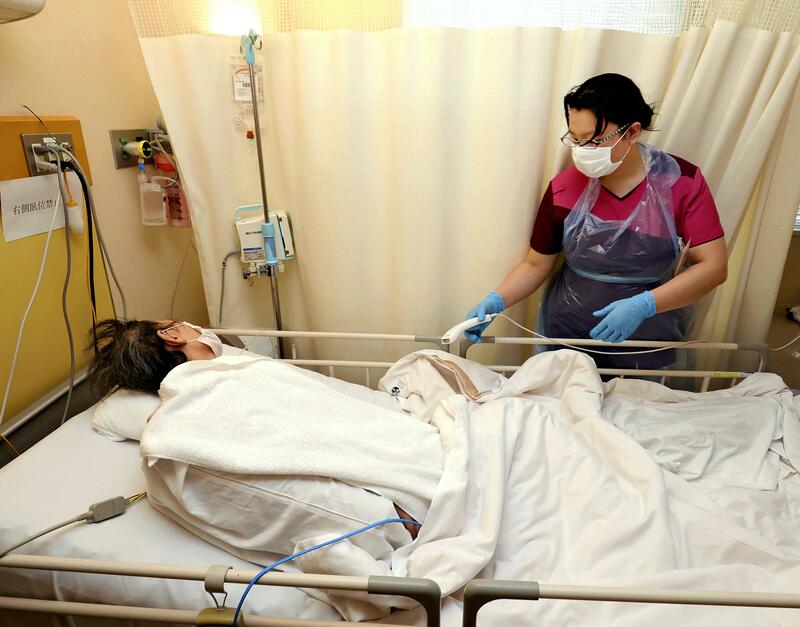
As many hospitals scramble to locate enough beds to treat patients infected with the novel coronavirus, the approach taken by Sumida Ward, Tokyo, could become a widescale blueprint in getting people the care they need.
On Jan. 25, the ward introduced a system for coordinating patient transfers between hospitals. The result has been striking: Since Jan. 28 -- only three days later -- the ward has had zero patients waiting to be admitted to a hospital.
The "third wave" of coronavirus infections that swept across Japan late last year had hospitals in Sumida Ward running short of beds for COVID-19 patients.
At Tokyo Metropolitan Bokutoh Hospital, a designated medical institution for treating infectious diseases, some patients who had recovered after being seriously ill had to remain in critical care beds because the hospital could not find another facility that would accommodate them. This led to Bokutoh Hospital not having enough beds to accept new seriously ill patients.
As a result, patients staying at hospitals treating those with mild or moderate symptoms that later deteriorated could not be transferred to Bokutoh Hospital as it was already at capacity. Under such conditions, matters were made worse when some hospitals become reluctant to admit patients who were at high risk of developing severe symptoms.
As a way out of this predicament, the ward's public health center turned to available beds in general hospitals. "If patients who have recovered and become less infectious could be transferred to these beds, it would free up beds for more coronavirus patients," Itaru Nishizuka, head of the center, said.
The center made arrangements to have seven hospitals in Sumida Ward accept recovering patients from Bokutoh Hospital. Four of these facilities were general hospitals that didn't have beds set aside for coronavirus patients. In exchange for providing at least two beds for one year, the ward will allot each of these seven hospitals 10 million yen in financial support
This system has enabled a faster turnover of patients in the ward. Previously, at least 10 people each day were waiting to be admitted to hospital -- that figure has been reduced to zero.
This transfer of patients has proceeded smoothly thanks to the financial assistance and also the use of central government criteria for discharging people from hospitals.
-- Regional approaches popping up
In June 2020, the Health, Labor and Welfare Ministry revised the discharge criteria for novel coronavirus patients. Under these changes, patients could leave hospital without taking a PCR test if 10 days had passed since the onset of symptoms and three days had passed since symptoms had cleared up. Patients needing hospitalization for underlying conditions or other reasons are able to be moved to general hospitals, but these facilities have at times been reluctant in accepting them out of concerns surrounding the risks of spreading the virus.
An official at Sumida's public health center explained to each hospital that the risk of infection was extremely low and persuaded them to take in patients. Ayumi Sakuma, 47, head of the nursing department at Tokyo Saiseikei Mukojima Hospital, said the system involving cooperative hospitals benefits both sides. "In return for taking patients who have recovered at Bokutoh Hospital, we can transfer to Bokutoh any patient whose condition has worsened. We can care for our patients with peace of mind," Sakuma said.
Fukumi Nakamura, head of Bokutoh Hospital's Infectious Diseases Department, also lauded the cooperative approach. "We're now able to better provide regular medical treatment aside from COVID-19 cases," said Nakamura, 48.
The central government has pressed prefectural governments to establish a system for coordinating the transfer of coronavirus patients whose symptoms have improved. However, many prefectural authorities have made little progress on this issue. Consequently, some municipalities have taken the initiative in forming their own hospital networks that help each other when needed.
In Itabashi Ward, Tokyo, the ward's medical association has taken on a coordinating role. After receiving a request from a hospital that wants to transfer a patient, the association contacts 14 hospitals in the ward that have declared they will take in patients and then makes the necessary arrangements for the transfer. The ward's government provides these hospitals with up to 700,000 yen per patient they receive and also covers the cost of patient transfer.
Three cities and one town in southern Chiba Prefecture have formed the Awa public health and medical care bloc in which hospitals, centering on a major regional hospital, coordinate among them the transfer of patients. The hospitals also have designated roles. Kameda General Hospital in Kamogawa, Chiba Prefecture, a central facility for medical services in the area, has been handling patients with severe and mid-level coronavirus cases. Public hospitals in the Awa area have been caring for patients ranging from mid-level to recovering cases, and private hospitals have been assigned to handle emergency situations outside of COVID-related cases.
University of Occupational and Environmental Health Prof. Shinya Matsuda, an expert on Japan's health care system, said more such initiatives were necessary.
"Prefectural governments and other administrative authorities need to be heavily involved in promoting the division of roles among hospitals," Matsuda said. "Generous financial support will be essential in any such cases."
Read more from The Japan News at https://japannews.yomiuri.co.jp/