A series of mass infections suspected to have been spread in hospitals have been reported in various parts of the country amid the outbreak of the new coronavirus.
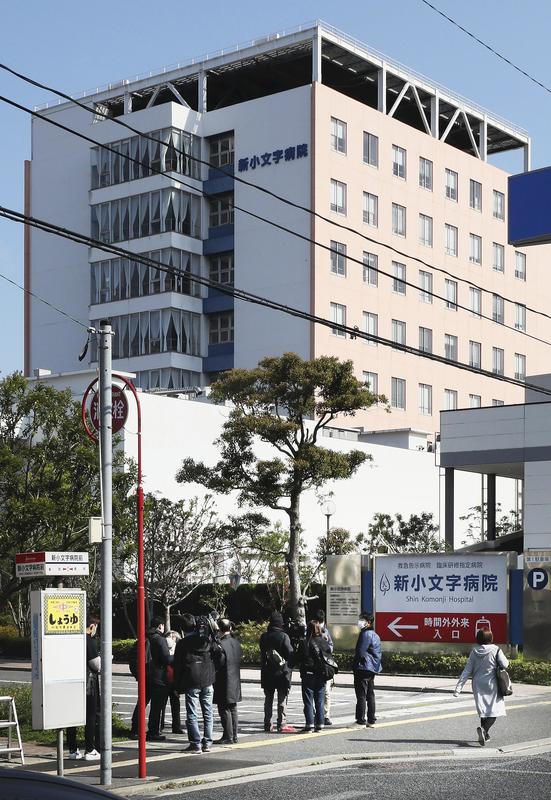
On Wednesday, 17 members of the medical staff at Shin Komonji Hospital in Kitakyushu tested positive for the virus. Local governments and medical institutions are becoming increasingly cautious as nosocomial or in-hospital infections can interfere with medical treatment and also cause the collapse of medical services.
The day after the outbreak was discovered at the hospital, director Hidenobu Kai responded to reporters in writing. "'It's unbelievable' is my honest reaction. The incident has put the whole hospital into a panic," he wrote.
The director was scheduled to hold a press conference in the afternoon on Thursday. However, the director himself decided to be tested for the virus, and the press conference was canceled at very short notice. About 800 people, including 183 inpatients and all staff members, will undergo testing. The infection was first discovered when a man in his 80s, who had been sent to the hospital by ambulance after falling at home in mid-March, tested positive on March 31.
Mass infections believed to be nosocomial infections have occurred at core hospitals in various parts of the country since February.
At Eiju General Hospital in Taito Ward, Tokyo, the number of patients infected with the coronavirus has exceeded 100 and continues to grow. It started when two hospitalized men were found to be infected with the virus.
The infection also spread to Keio University Hospital in Shinjuku Ward, Tokyo. In addition to patients who were transferred from Eiju General Hospital, three other patients in the same room were found to have been infected with the virus. Patients in other rooms and medical staff there were also confirmed to be infected.
At the National Hospital Organization Oita Medical Center in Oita City, the virus was carried from the center to Oita Prefectural Hospital, where it spread. The virus was possibly spread at the center through tablets shared by its staff.
Medical staff can be spreaders, too. At Fukuchiyama City Hospital in Kyoto Prefecture, a certified care worker had visited a live music club in Osaka Prefecture where a cluster of infections was found.
The initial symptoms of this illness, such as fever and cough, are indistinguishable from the common cold and infected people can even be asymptomatic. Because of this, some people go to hospitals to get treated for other diseases or injuries or keep working at hospitals, unaware they are infected.
The central government is currently urging people suspected of being infected with the coronavirus to first contact a consultation center set up by a public health center and then go to a special outpatient clinic. Under these circumstances, only a small number of people, including those suspected of having pneumonia, are being tested.
Expanding opportunities for the public to be tested would help reduce the spread caused by asymptomatic people carrying the virus to hospitals. But some experts are concerned it would then boost the number of inpatients with mild symptoms who do not need careful treatment, causing a shortage of hospital beds.
Such concern stems from the Infectious Diseases Control Law, which requires a person who tests positive to be hospitalized. An increase in the number of hospitalized people with mild symptoms may hinder the acceptance of patients with severe symptoms.
Local medical care systems will be seriously damaged if hospitals are forced to suspend outpatient treatment and the acceptance of inpatients.
Associate Prof. Hideaki Oka at Saitama Medical Center's infectious disease department said: "All medical institutions should assume that a virus carrier can visit a hospital. Don't loosen up on infection control."
The mass infection case at Shin Komonji Hospital has motivated another medium-sized hospital in Kitakyushu to ban visits to inpatients in the hospital from Wednesday. Until then, hospitals had allowed visits by family members but has now strengthened its measures. On Thursday, the hospital began checking the temperature of all outpatients at the entrance.
Since March, the Nippon Medical School Tama Nagayama Hospital in Tama, western Tokyo, has separated new patients suspected of being infected with the virus from the other patients based on a initial questionnaire. Patients suspected of being infected are taken to a private room by a nurse who is in charge, where doctors examine them.
Read more from The Japan News at https://japannews.yomiuri.co.jp/