Medical institutions in Japan are being faced with tough calls about whether to report to the government deaths that follow COVID-19 inoculations as suspected of being linked to adverse effects from the vaccine.
In March, a man died one day after receiving a vaccine shot at the Japanese Red Cross Asahikawa Hospital in Asahikawa, Hokkaido. Initially, the hospital did not report it to the government, believing there was no causal relationship between the man's death and the inoculation. However, it reversed the decision last month in response to the wishes of the man's bereaved family.
According to the hospital and others, the man, who was in his 40s, worked in the hospital as an administrative staff member. The inoculation of health care workers at the hospital began March 5.
The man showed no changes in his physical condition on March 19 when he was vaccinated, but his condition suddenly changed on the following day. He was then taken to the hospital, where his death was confirmed. The cause of death was cardiac tamponade, when blood or fluid builds up around the heart, caused by acute aortic dissection (a tear in an arterial wall).
According to the Health, Labor and Welfare Ministry, when side effects suspected to have been caused by vaccinations occur, the doctor or hospital that diagnosed the case must report it to the government in accordance with the Immunization Law.
However, regarding novel coronavirus vaccinations, serious adverse reactions other than anaphylaxis are not clearly known. The reporting criteria set by the ministry stipulate cases are "symptoms that the doctor recognizes as highly related to the vaccination, such as death or functional impairment."
According to the hospital, several doctors in the hospital investigated the relationship between the man's death and the vaccine and reached a conclusion that "there was no causal relationship based on cases, including past incidents associated with vaccinations." The hospital then decided not to report the case to the government.
However, on April 22, the man's bereaved family strongly requested the hospital to report the man's death to the government, so that the case can serve as material for future research. In response, the hospital changed its initial decision and reported it to the government on April 23.
"I don't think we made a wrong decision," said Kenichi Makino, director of the hospital, referring to its initial decision to forgo reporting of the case. "However, this time we respected the wishes of the bereaved family and decided to leave it in the government's hands."
"We leave it up to hospitals regarding whether they make a report on such cases," said a ministry official in charge. "We don't see any problem in having them report relevant cases widely."
By April 27, the ministry had received 19 reports of such deaths, including one case in which a person was found drowning in their bathtub by a family member.
"Since the full picture of side effects [from COVID-19 vaccines] is yet to be known, the government should eventually establish more detailed reporting standards based on the information gathered from hospitals," said Takashi Nakano, professor of infectious diseases at Kawasaki Medical School, expressing his understanding of the hospital's decision. "If a person dies immediately after inoculation, it is only natural that the bereaved family would want to know the truth. Medical institutions need to try to provide careful explanations."
Nakano also serves as acting chairperson of the immunization and vaccination subcommittee of the ministry's Health Sciences Council.
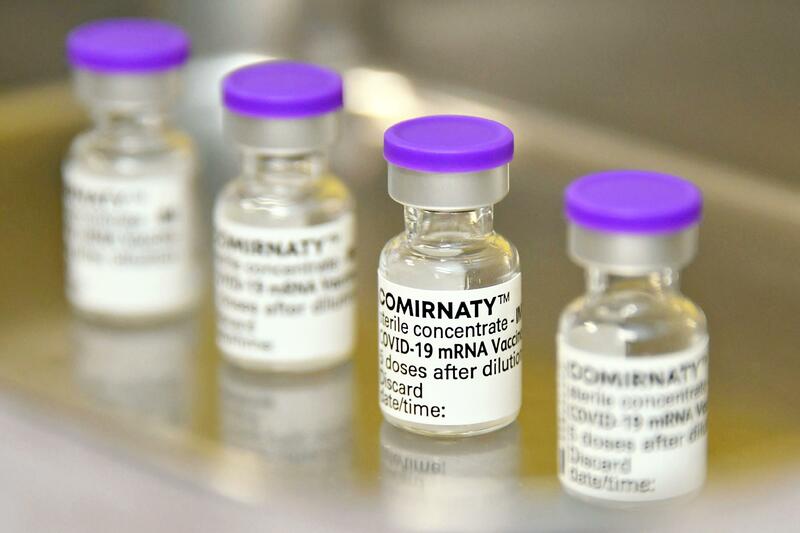
caption
Vials of COVID-19 vaccine that arrived in Iwamizawa, Hokkaido, in February
Read more from The Japan News at https://japannews.yomiuri.co.jp/