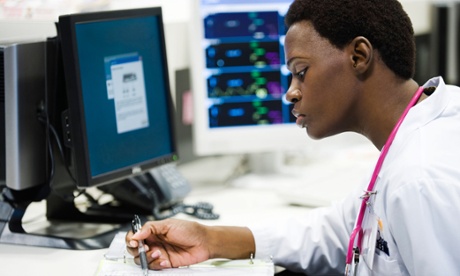
Every hospital and GP surgery in England is likely to start providing free Wi-Fi in a move by the NHS to keep patients entertained and help doctors and nurses use much more technology in their work.
The government’s National Information Board (NIB) has commissioned a feasibility study into the viability of turning the whole NHS estate in the country into a massive free Wi-Fi zone.
It would end the situation by which some hospitals charge patients to access Wi-Fi during their stay, others provide it free, but only in certain wards, and some do not offer the service at all.
NHS England see great advantages for patients and staff in pressing ahead with the change. Senior figures there believe it could revolutionise NHS services, with staff then able to use many more devices, such as skin sensors and other “wearable” devices, to remotely monitor the health of people with long-term conditions such as asthma and diabetes, which could help ease the NHS’s chronic staffing problems.
Hospitals and GP practices which have already introduced free Wi-Fi for everyone on the premises have found it very popular. At the College Road GP surgery in Birmingham, for example, a recent three-month trial let patients use its website to book appointments and repeat prescriptions and to access their medical records and NHS Choices website. It has also allowed them to fill in patient surveys, complete the NHS-wide friends and family test of patient satisfaction and also to leave positive or negative feedback and, if necessary, make a complaint, all while they are there.
Roy Sellarajah, the surgery’s practice manager, said patients felt more engaged and empowered as a result.
The Mount Hospital in Leeds is about to start offering not only free Wi-Fi to older patients with dementia and mental health problems in four of its wards, but also to provide tablet computers for them and their carers to use to help pass the time.
The NHS has run into major difficulties in the past with huge IT projects. The Connecting for Health programme, which was meant to digitise all patient records and make them available to staff across the NHS, began in 2003 and was expected to cost £2.3bn. But it was scrapped in 2011 by then health secretary Andrew Lansley after costs rose to £12bn, despite modest progress towards its objectives.
Tim Kelsey, NHS England’s national director for patients and information, who chairs the NIB, is keen on the idea. The pan-Whitehall body, hosted by the Department for Health, sets the strategy for transformation. But NHS England was unable to say how much it would cost to implement.
“I recently asked a bunch of junior doctors what single change in hospitals would make their jobs easier. I didn’t expect the answer: Wi-Fi. But it makes sense”, said Prof Sir Bruce Keogh, NHS England’s national medical director.
“Wi-Fi offers the opportunity for remote monitoring of patients along with electronic prescribing through portable devices, bringing clinical information directly to the relevant people. Where used, it dramatically reduces errors and increases efficiency.”
Kelsey added: “We have a huge opportunity here and a moral responsibility to look at how we can improve access to digital health services. Our ambition is to empower citizens to take more control of their health and put patients in the driving seat of their own care.”
Roger Taylor, the ex-director of research at the healthcare information firm Dr Foster and chair of the Open Public Services Network, said: “This is a very good idea. There will be grumbling that the money could be better spent, but I don’t think that’s true. It will improve patient experience.
“As well as improving life for patients, this will improve the ability of doctors and nurses to communicate with each other and with patients by making it easier for everyone to access digital information while on NHS premises.”