
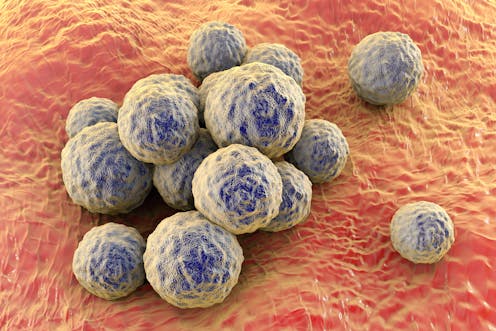
Bacterial resistance to two disinfectants used in large amounts to control the spread of hospital infections is strongly associated with resistance to several antibiotics used to treat common infections, our latest study shows.
Our analysis, published in Nature Microbiology, focused on resistance to disinfectants in Staphylococcus epidermidis. This bacteria is found on the skin of healthy people and usually causes no harm. But it can cause serious blood infections in patients in intensive care units (ICUs), especially those with immune paralysis, where the immune system cannot recover despite bacteria being cleared with antibiotics.
Staphylococcus epidermidis can also transfer genes to a major disease-causing bacteria called Staphylococcus aureus. This gene transfer turns Staphylococcus aureus into MRSA (Methicillin-resistant Staphylococcus aureus), a so-called “superbug” that is resistant to several common antibiotics.
Until now research on antibiotic resistance has largely focused on MRSA with little or no attention paid to Staphylococcus epidermidis. Our study suggests that Staphylococcus epidermidis may also pose a threat. This “harmless” bacteria can develop resistance to drugs commonly used to treat infections in environments with a high concentration of disinfectant, such as ICUs.
We initially looked at resistance in an ICU in Aberdeen, Scotland, but when we analysed the genomes of bacteria from around the world, we found the same trend: a strong association between resistance to disinfectants and resistance to several antibiotics in harmful Staphylococcus epidermidis. These resistant bugs cause around ten to 15 infections a month in individual ICUs, with patients developing multi-drug resistant sepsis.

Common skin bacteria
A large clinical trial in the US in 2013 compared the benefit of disinfecting all patients admitted to an ICU with chlorhexidine (a skin disinfectant) versus just disinfecting patients at risk of serious infections. The findings from this study, published in the New England Journal of Medicine, showed that disinfecting all patients is better at reducing hospital infections than disinfecting selected patients. The authors of the paper encouraged this approach. But the study didn’t look at antimicrobial resistance in Staphylococcus epidermidis. In fact, no studies had.
Disinfecting all ICU patients with chlorhexidine is very effective at controlling a wide range of hospital infections. Still, we believe that a lot more attention needs to be paid to the long-term impact of this practice on the emergence and spread of antimicrobial resistance. Importantly, a major ICU in England (St Thomas’ Hospital in London) adopted the disinfectant octenidine as a replacement for chlorhexidine after a two-year outbreak of MRSA that carried genes for resistance to chlorhexidine following concerns that chlorhexidine may increase antimicrobial resistance.
Our results suggest that we need to change the way we think about using disinfectants, particularly in hospitals. Tackling antimicrobial resistance continues to be a worldwide health priority. Most people know that misusing and overusing antibiotics is causing this problem, but our study suggests that we should also pay attention to the disinfectants used in hospitals, and they should be regulated in the same way that antibiotics are.

Karolin Hijazi does not work for, consult, own shares in or receive funding from any company or organisation that would benefit from this article, and has disclosed no relevant affiliations beyond their academic appointment.
This article was originally published on The Conversation. Read the original article.













