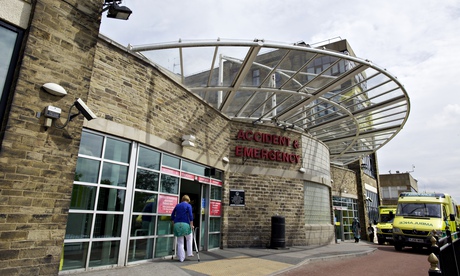
Why have so many hospitals declared “major incidents” in the last few weeks after their A&E departments and wards have been overrun and even closed? Some hospitals have even had to utilise their maternity beds, which has meant that pregnant women have been directed to other units to deliver babies.
There are multiple reasons, including delayed discharges and bed blocking through lack of social care. But when I worked as a doctor on a stroke ward only a few years ago, in a busy city hospital, many of my patients would not be discharged for several months, even though they had completed their rehabilitation, as we waited for social-care packages to be implemented. In contrast, most hospitals now have planning teams, who actively work to facilitate early discharges. So it is much more common to see patients come out after a few days, or even too early which is a “failed discharge”.
The NHS 111 service has had a significant impact on the crisis. I see this on a daily basis through correspondence detailing its contacts with patients. NHS 111 is run by non-clinical staff who use algorithms that often inappropriately recommend that patients contact their GP straight away, attend A&E or urgently call an ambulance.
Some days, home visits for very sick patients go through the roof and GPs from my practice have to send several patients into hospital. Every emergency admission that we make is scrutinised both at practice level, with a discussion around what could have been done differently, and at clinical commissioning group level. We are asked to submit data to local NHS England and CCG groups on our admission and A&E attendance rates, alongside plans on what we aim to do to reduce these. There are huge pressures on us not to refer, and on hospitals to discharge as quickly as they can. It means that we walk a thin line between practising safe medicine and operating within tight NHS resources.
Many doctors practice defensive medicine with over-investigations or too many referrals to secondary care. We could all do more to encourage self-reliance in patients with minor illnesses.
Conversely, I also see those who decline medical intervention, and refuse to go to hospital even when they have significant medical conditions such as cardiac chest pain or an asthma attack. They worry that they might be wasting precious NHS resources or will have to wait for hours. Those who are admitted struggle to get a bed. I ring the hospital to refer a patient who is unwell with pneumonia. The referral is accepted but the patient has to wait somewhere to be seen, as there are no beds on the medical assessment unit and the patient is too frail to wait on the seated assessment area. So they are asked to attend A&E. There is no one to take the patient to the hospital and I arrange an ambulance which is very delayed due to high demand.
Many A&E departments have 24/7 senior cover. Yet there are many more frail elderly patients with complex health needs being admitted to the service because we have too few district nurses, physiotherapists, falls nurses or memory-team staff, leaving these community services oversubscribed.
We have no out-of-hours community phlebotomy or porters to take blood samples to the hospital in Bristol. So we have to take the samples ourselves or ask district nurses to do so, which is not the best use of resources. Most out-of-hours GPs have no access to x-rays outside of A&E settings. So it is no surprise that patients may want to bypass us and attend A&E, if they think they need a wound suturing or an x-ray for a possible fracture.
When I first became a GP eight years ago, we were not doing out of hours work or even extended hours, yet patient demand was nothing like it is today. Is it realistic of the government to think that GPs opening at weekends will solve the crisis? We need to first identify the root causes. I’d suggest that the government investigates NHS 111, increases beds and community-based health services, and helps patients become more self-reliant for minor illness through health promotion campaigns and more use of pharmacies.