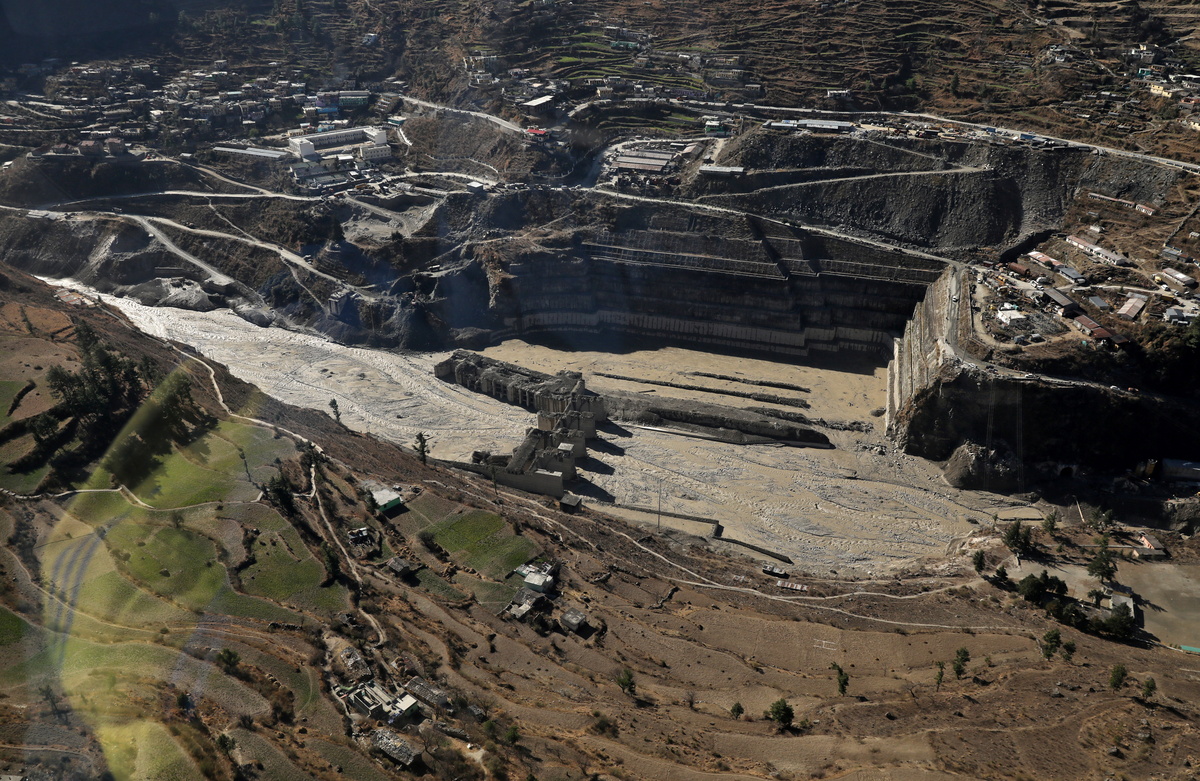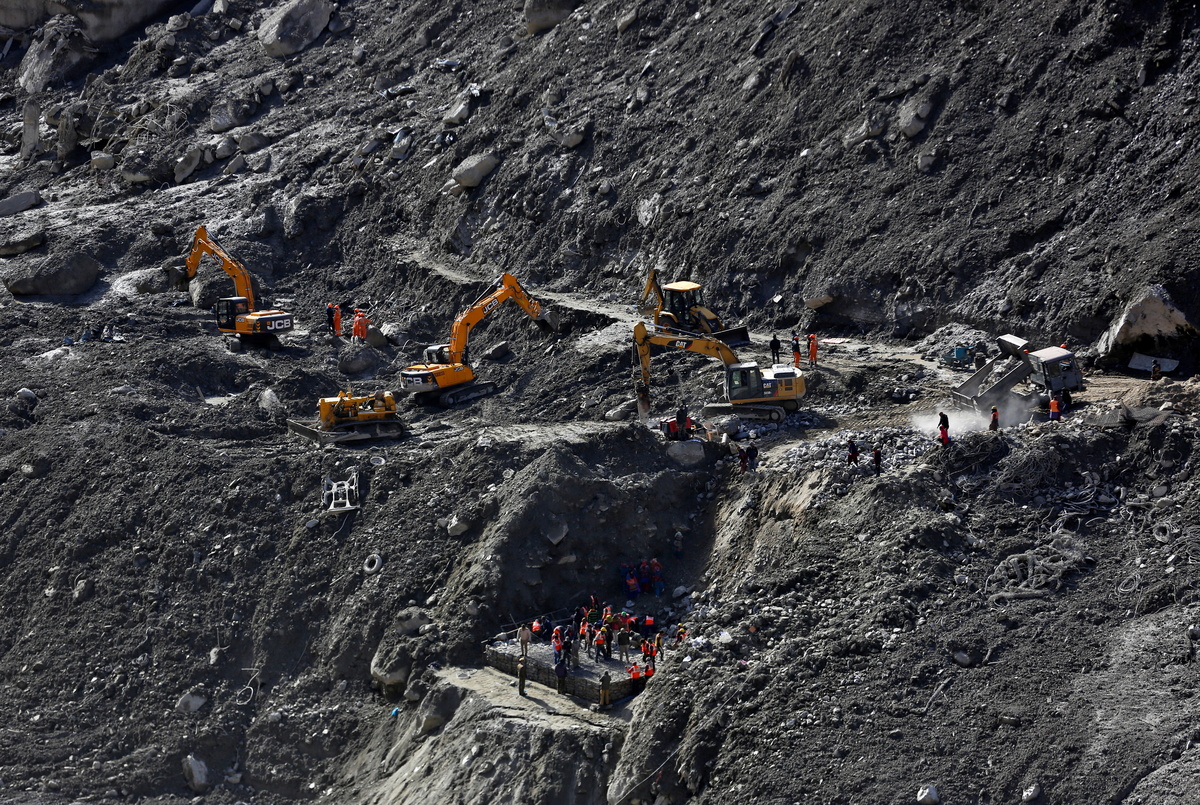
Rescuers used heavy machinery to remove slush clogging a tunnel in the Indian Himalayas on Friday in a search for 35 people missing since a Feb. 7 flash flood, though hopes of finding anyone alive were fading.
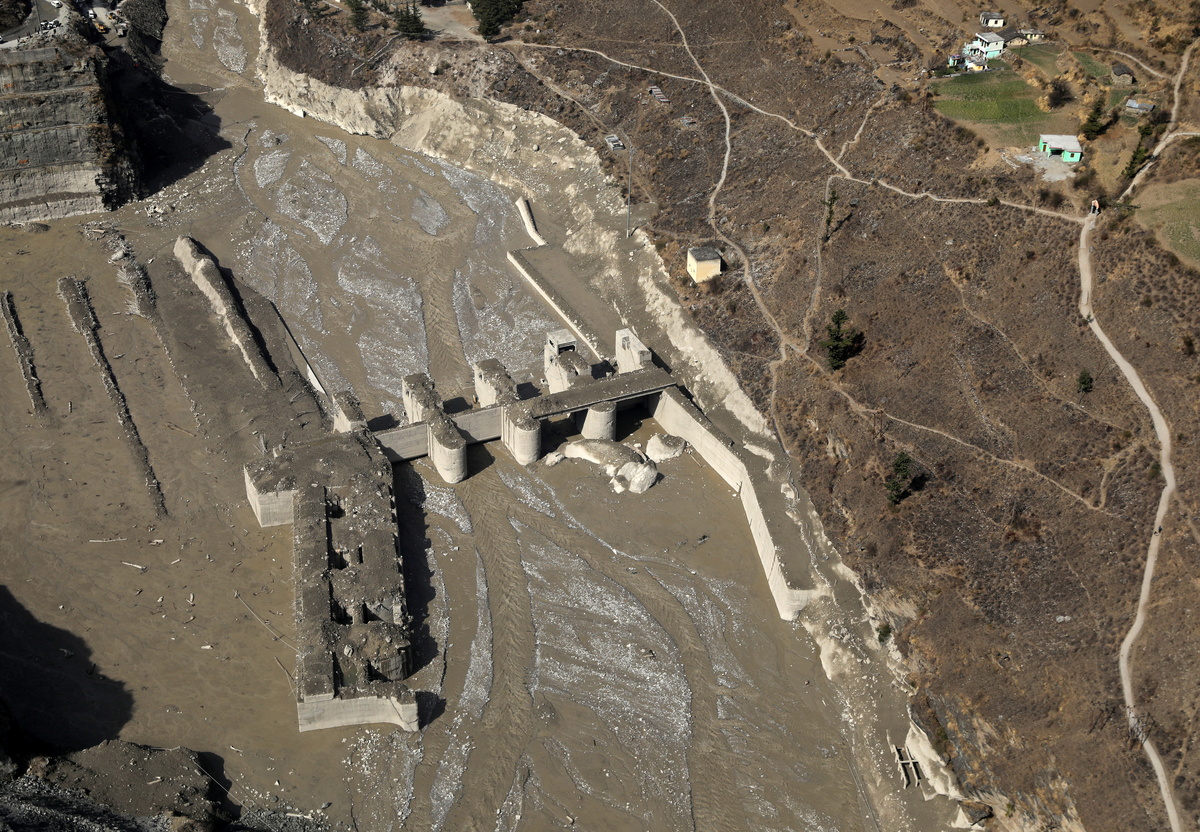
Those trapped in the tunnel in the northern state of Uttarakhand were among 171 people still unaccounted for after water, rocks and debris possibly triggered by an avalanche surged down the Dhauliganga river valley, destroying dams and bridges.
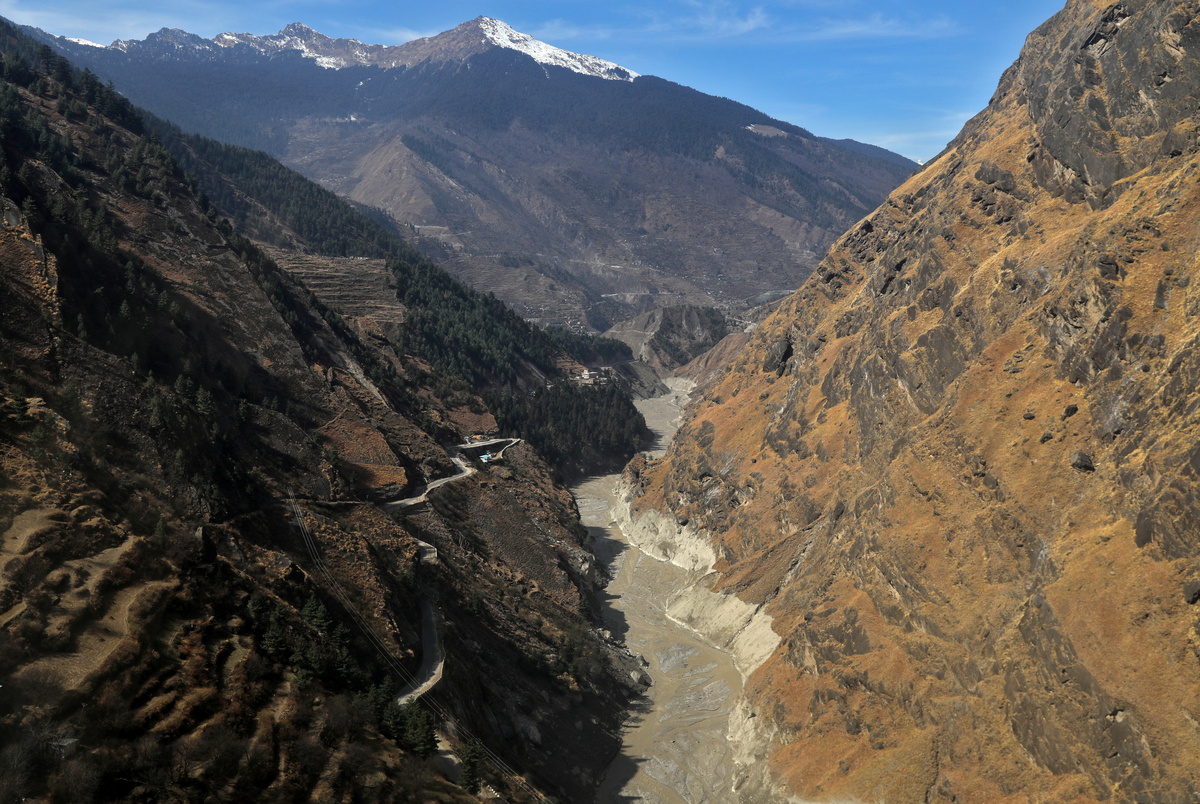
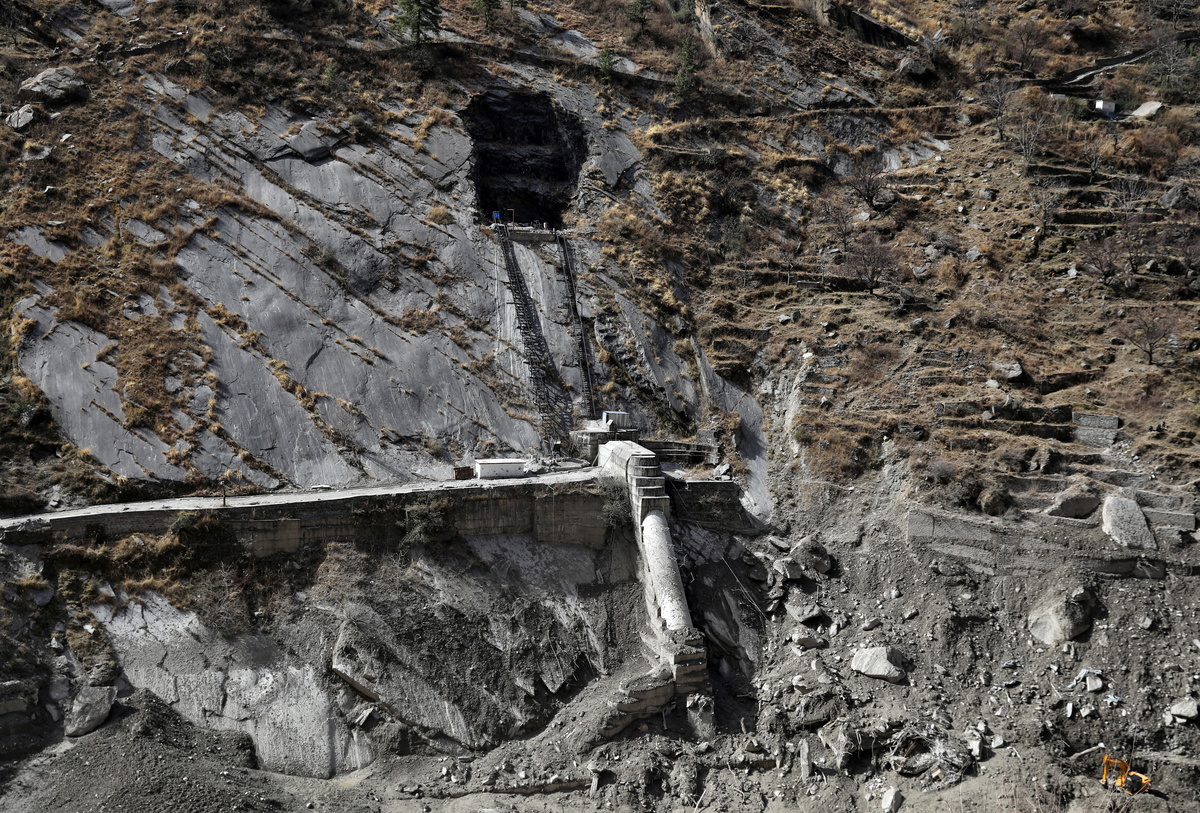
So far authorities have found the bodies of 38 people. While scores are believed to have been swept to their deaths, rescue efforts have focused on finding the men in the tunnel connected to the Tapovan Vishnugad hydroelectric project.
"We have not lost hope. We have been working with full force, all night," said Swati Bhadoriya, the top government official in Chamoli district.
Soldiers deployed to the area have flown a drone inside the tunnel to take pictures and tried to drill a path into it but made little headway. So far there has been no sign of life.
"We cannot give up until we see something. Even if we consider that no one is alive, we have to think of their families and search for the bodies. We would want the bodies recovered," Bhadoriya said.
Scientists now believe the flood, originally thought to have been unleashed by a glacier breaking apart on India's second highest mountain Nanda Devi and crashing into the river, is more likely have been caused by an avalanche.
Experts have cautioned there could be still be huge amounts of rock, debris, ice and water that could be dislodged due to changes in temperatures.
Uttarakhand Chief Minister Trivendra Singh Rawat said he had asked relief workers to be careful after locals reported the formation of a lake near the village of Raini that was hit by the apparent avalanche.
(Reporting by Saurabh Sharma in LUCKNOW; Writing by Neha Arora; Editing by Sanjeev Miglani and Mark Heinrich)