OSAKA -- In keeping with the decline in coronavirus infections, Osaka Prefecture has for the first time in about 11 months completely lifted its requests to restaurants and bars that they shorten their operating hours and restrict the serving of alcoholic beverages.
Will the nightlife in Osaka return to pre-COVID days? Business operators in Osaka's Kitashinchi district, one of the biggest nightlife districts in western Japan and home to about 3,000 bars, clubs and izakaya pubs, have mixed feelings of hope and apprehension.
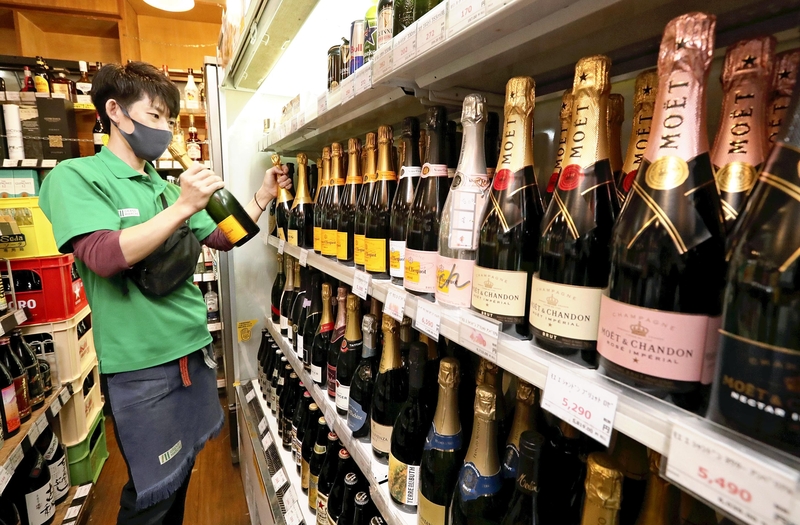
"The restrictions were in place for almost this entire year, so we have high hopes," said Ryota Shimada, the 34-year-old manager of Grand Marche's Kitashinchi store in Kita Ward, Osaka. The store sells alcoholic beverages wholesale to restaurants and bars in Kitashinchi.
During the state of emergency, orders for such expensive champagne as Dom Perignon plunged. In some months, sales dropped as much as 70% from the pre-corona period.
Since the state of emergency concluded at the end of September, Shimada estimates that about 70% of the bars and restaurants in the store's neighborhood have resumed their business. Then came the end of the prefecture's requests.
On Friday night, orders came in from several business clients for the first time in a long while. In anticipation of an increase in the days after Oct. 25, the day Osaka Prefecture lifted its requests, Shimada was busy checking the stock of such expensive items as alcohol fetching nearly 100,000 yen a bottle.
Kitashinchi Hananao is a long-established florist in Kitashinchi that works with bars and clubs -- its signature phalaenopsis, commonly known as moth orchids, are lined up inside.
The store increased its stock for early October, but orders for moth orchids did not go up as much as it had expected with the lifting of the state of emergency. It is therefore hopeful but remaining cautious.
"We can't afford to be overstocked. We're going to wait and see for a while," said president Naoji Tozawa, 68.
70% to forgo parties
According to a survey this month by Tokyo Shoko Research, Ltd., 5,760 companies, or over 70% of the 8,174 that responded, said they would not hold a year-end party or New Year's party.
Out of the 1,229 large companies surveyed, as many as 970, or about 80% of the total, were not planning a party. Among just firms based in Osaka Prefecture, 68.6% said they would dispense with such parties.
A 30-year-old man who works for a leading financial institution in Osaka said, "The infection situation has calmed down now, but people are not yet in the mood to head for Kitashinchi in cheerful groups."
According to Koichi Toshioka, managing director of the Kitashinchi Syakou Ryouin Kyoukai Inc. association comprising about 430 bars and clubs: "Shinchi has close ties with the business sector. For the time being, people are only going to go to their favorite places.
"If the coronavirus subsidies [given to businesses that cooperate with local governments to curb infections] dry up and customers don't come back, more businesses will close."
Read more from The Japan News at https://japannews.yomiuri.co.jp/