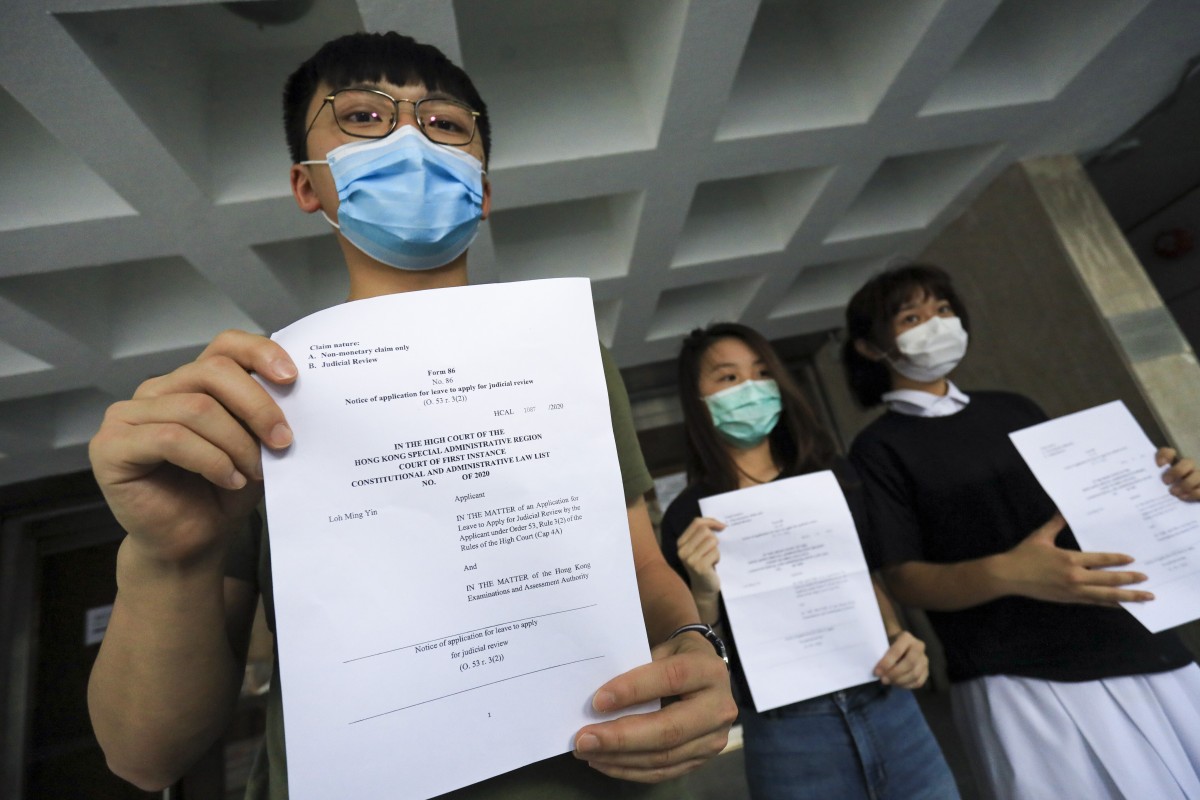
A Hong Kong student has mounted a legal bid to overturn the decision to scrap a controversial exam question on early 20th century China-Japanese relations.
Loh Ming-yin, a candidate in this year’s Diploma of Secondary Education (DSE), on Wednesday applied for a judicial review over the decision by the Hong Kong Examinations and Assessment Authority (HKEAA) to invalidate a compulsory question in his history exam on May 14.
The university entrance exam question asked 5,214 candidates whether they agreed “Japan did more good than harm to China in the period 1900-1945” and drew immediate outrage from Beijing and pro-establishment figures in Hong Kong.
It was scrapped a week later, on May 22, after the Education Bureau made an unprecedented request for the HKEAA to invalidate the question, while the city’s leader, Carrie Lam Cheng Yuet-ngor, said the independent statutory body had made “a professional error”.
The bureau claimed the reference materials provided were biased, while the question was leading and had seriously hurt the feelings of the Chinese people who suffered during Japan’s invasion and occupation of the country between 1937 and 1945.
But Loh’s lawyers said this decision ought to be quashed because the exam authority had bypassed an established mechanism for invalidating questions to make a decision that took irrelevant matters – such as the bureau’s request – into account, and failed to consider its impact on students’ academic freedom.
The lawyers quoted the authority’s former secretary general, Choi Chee-cheong, to explain established procedures that involved examiners analysing the question, including its capacity to discriminate students, and inviting experts of the relevant subject to conduct a review.
Choi said a question would only be sent to the HKEAA Council for approval of invalidation if the experts agreed it was unsatisfactory.
“By its decision to invalidate the question, the HKEAA took it upon itself to indicate that certain academic viewpoints and opinions can no longer be held, expressed or pursued,” the lawyers wrote in an application to the High Court.
“This in turn has a direct or indirect effect on the teaching of the history subject and violates academic freedom.”
Such freedom was guaranteed by Article 34 and 137 of the Basic Law, the city’s mini-constitution, which provided that “residents shall have freedom to engage in academic research” while “educational institutions of all kinds may retain their autonomy and enjoy academic freedom”.
They also argued the decision was illegal because the authority had misinterpreted the History Curriculum and Assessment Guide (Secondary 4-6), which anticipated that “sensitive issues are bound to arise in the teaching of contemporary history”, and stated expectations for students to understand diverse perspectives in representing and interpreting the past.
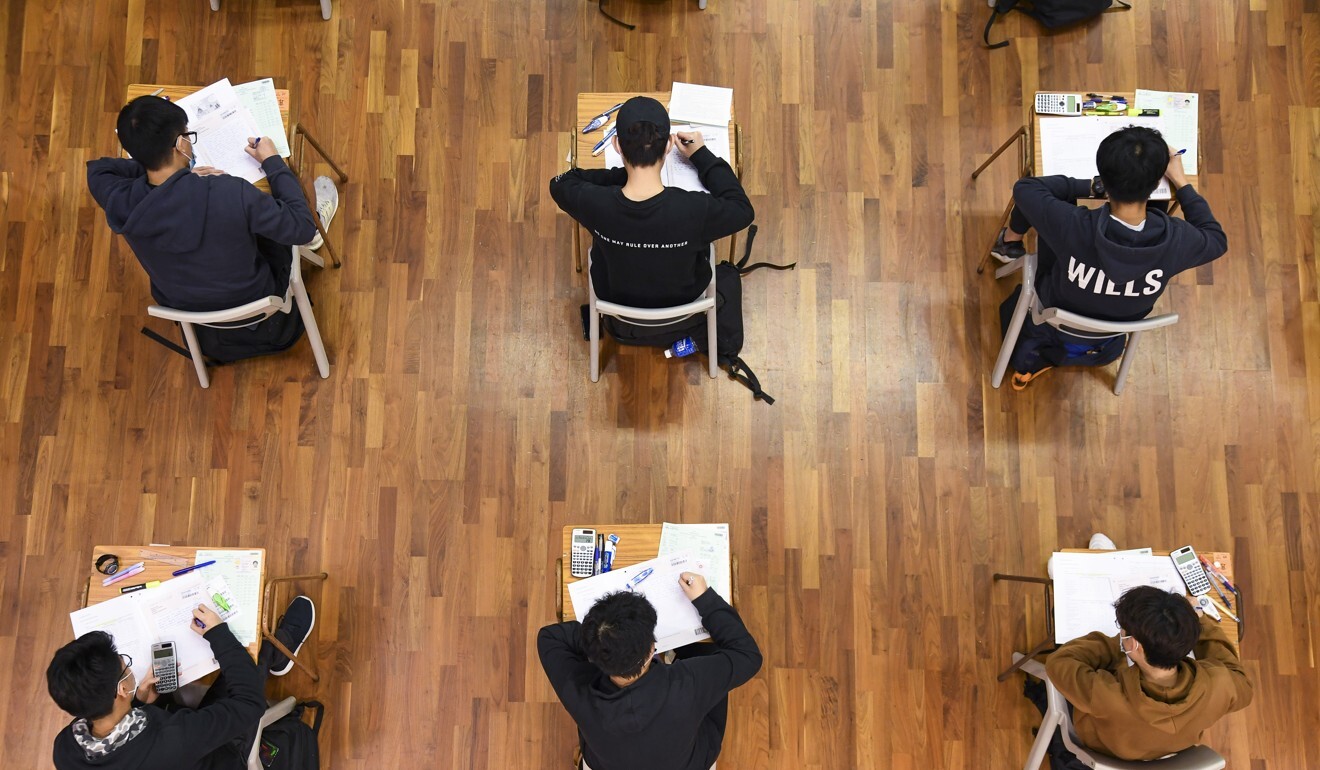
“Asking if a historical actor or event ‘did more good than harm’ was a common device used for decades in Hong Kong’s history exams,” the lawyers continued. “By presenting what may be considered a controversial statement, examiners were seeking to stimulate critical thinking in students and discriminate those with superior critical prowess from the rest.”
They further argued that the decision was tainted with procedural impropriety because the affected candidates were not given a chance to respond before the HKEAA invalidated the question, and introduced problematic methods to impute their scores that were unfair to students.
Karis Wong, speaking for student group, Ideologist, said the legal challenge went beyond the invalidated question as it concerned the credibility of the entrance exams, and the future of Hong Kong’s education system.
Isaac Cheng Ka-long, spokesman for the Hong Kong Secondary School Students Action Platform, of which the applicant was a member, said he hoped the court could reach a decision as soon as possible to safeguard students’ interests, as well as academic freedom in light of political pressure.
A spokesman for the bureau said it understood the exam authority had decided to invalidate the question following detailed discussions, that involved considering the professional views on examination and assessment, the curriculum, and the interests of candidates.
“As the incident has entered legal proceedings, it is not appropriate for the Education Bureau to make further comments,” the spokesman said.