Hong Kong police fire tear gas as protesters hit and run
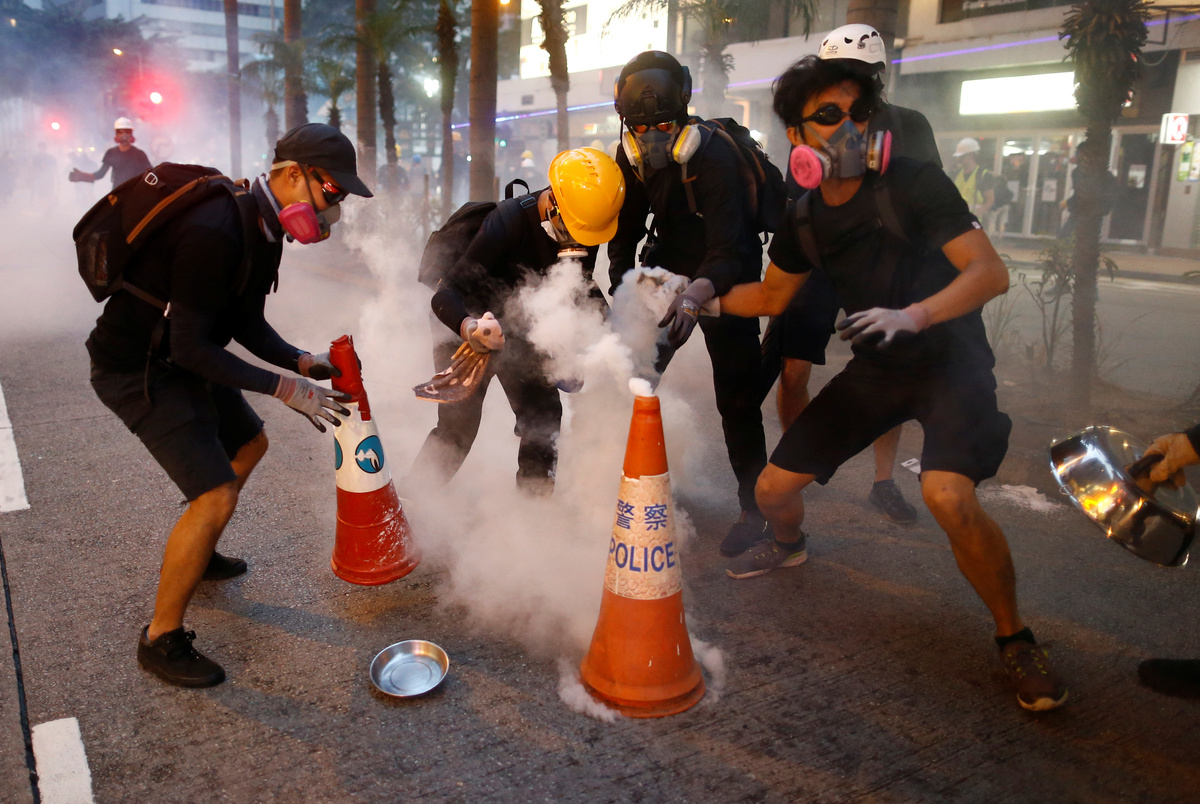
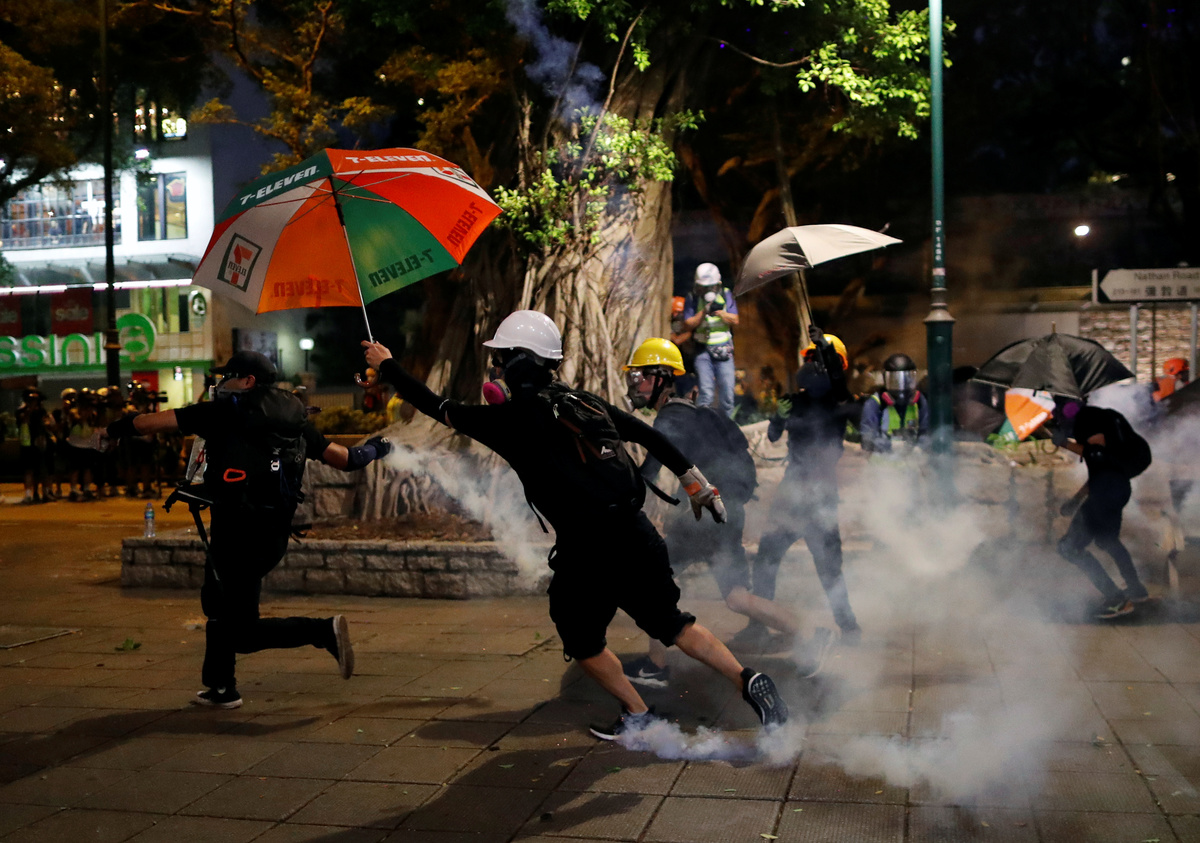
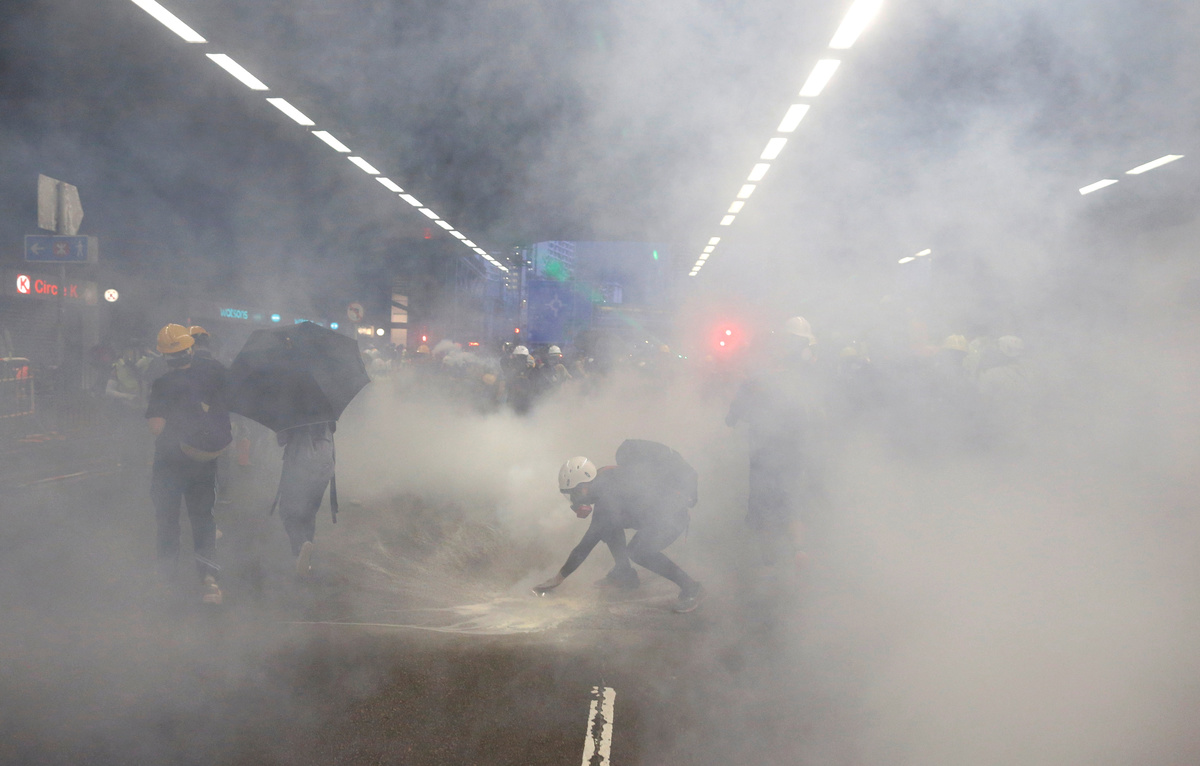
Anti-extradition bill protesters try to extinguish tear gas canisters during a demonstration in Wan Chai neighbourhood in Hong Kong, China, August 11, 2019. REUTERS/Thomas Peter
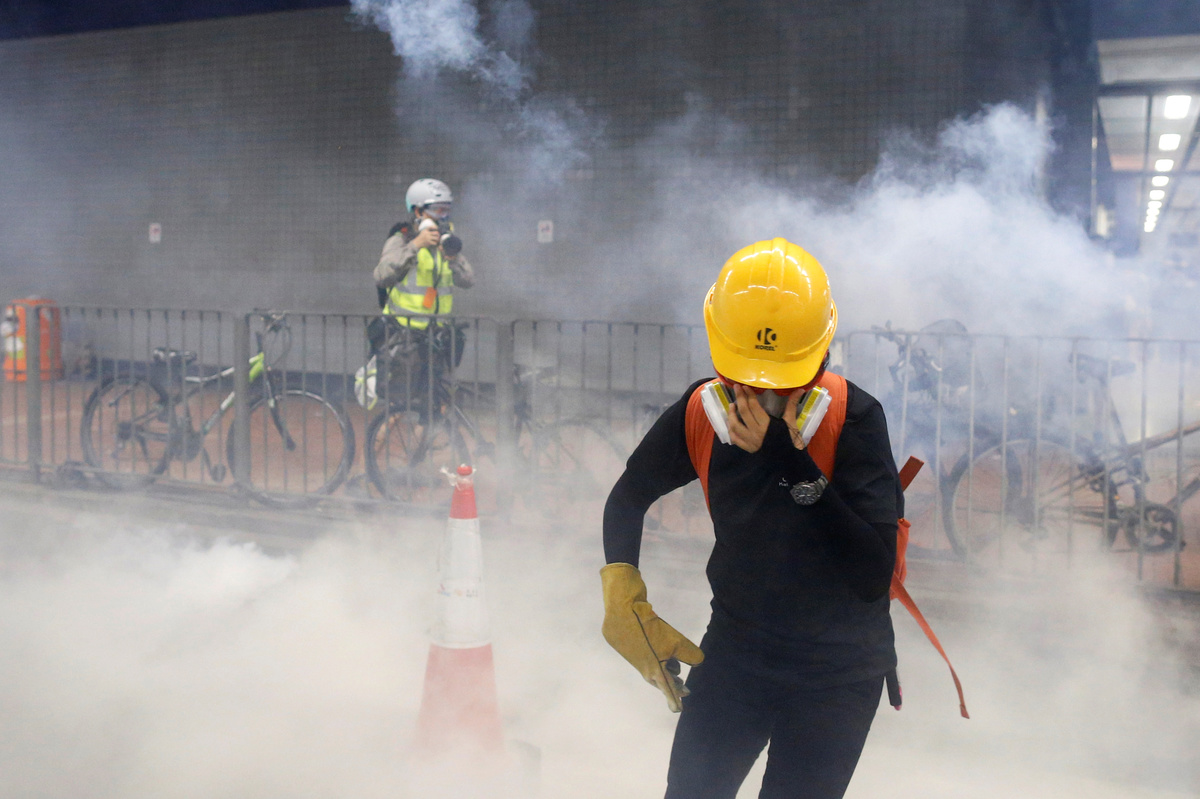
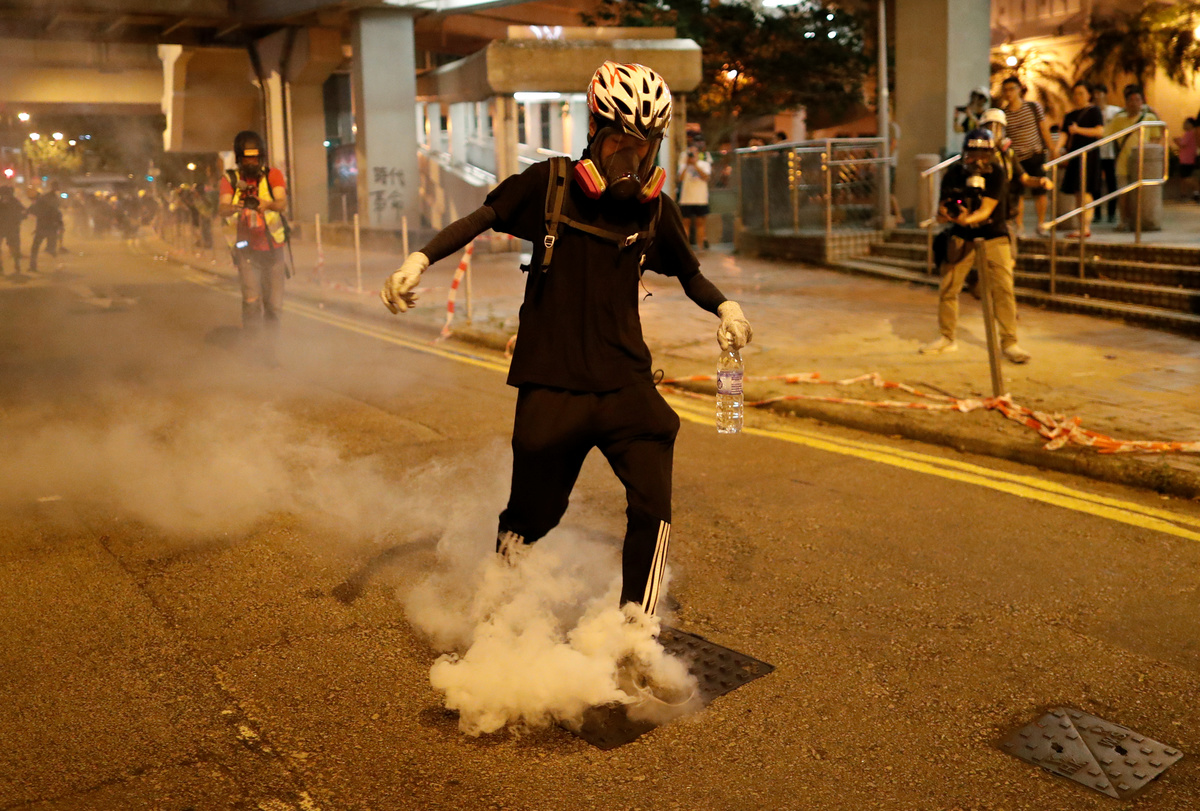
HONG KONG (Reuters) - Hong Kong police fired volleys of tear gas to disperse anti-government protesters on Saturday - sending tourists fleeing weeping in Kowloon - only for demonstrators to regroup and gather elsewhere during another tense, hot and restive weekend.
Weeks of increasingly violent protests have plunged Hong Kong into its biggest political crisis for decades, posing a serious challenge to China's central government in Beijing.
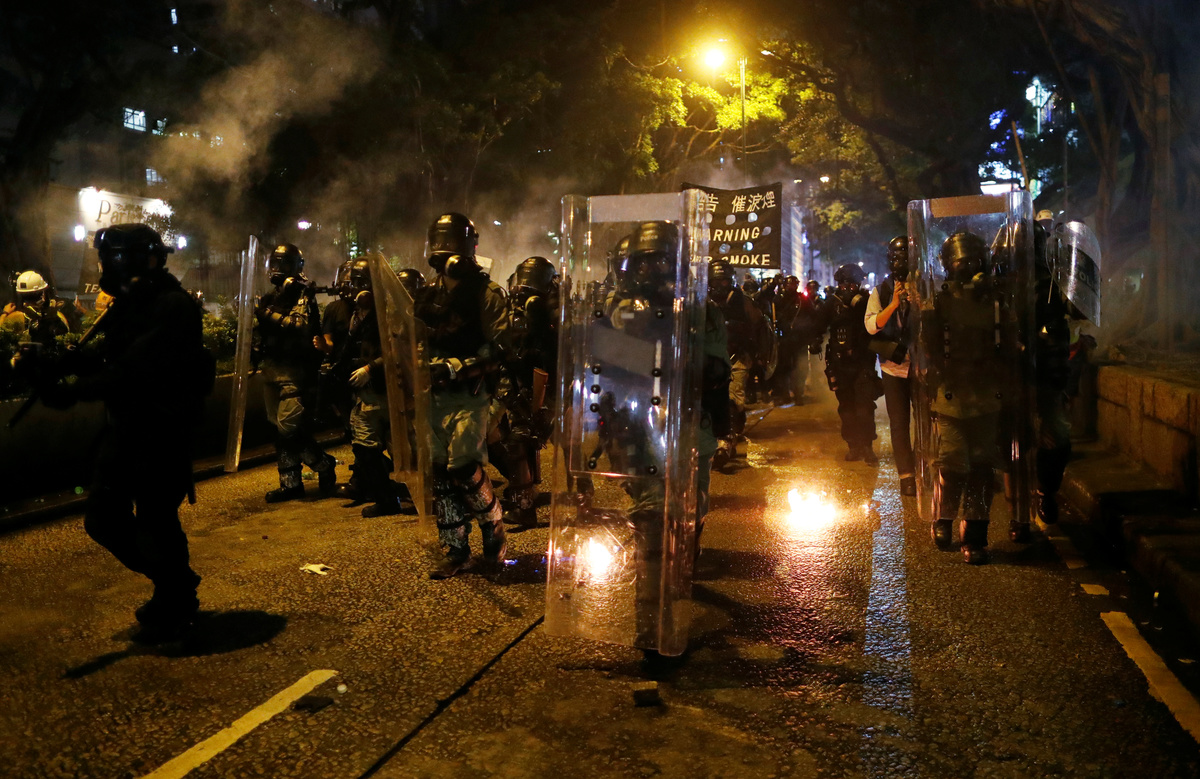
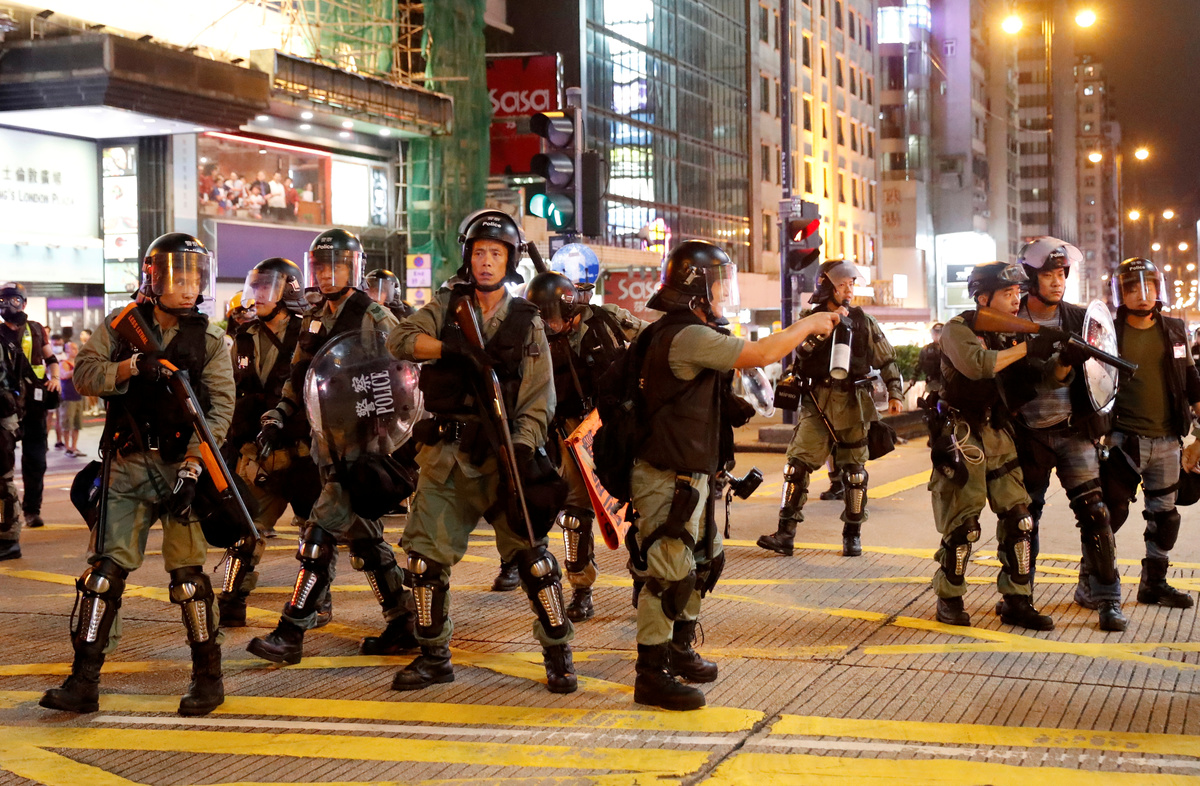
Riot police officers hold their equipment as anti-extradition bill protesters demonstrate in Tsim Sha Tsui neighbourhood in Hong Kong, China, August 11, 2019. REUTERS/Issei Kato
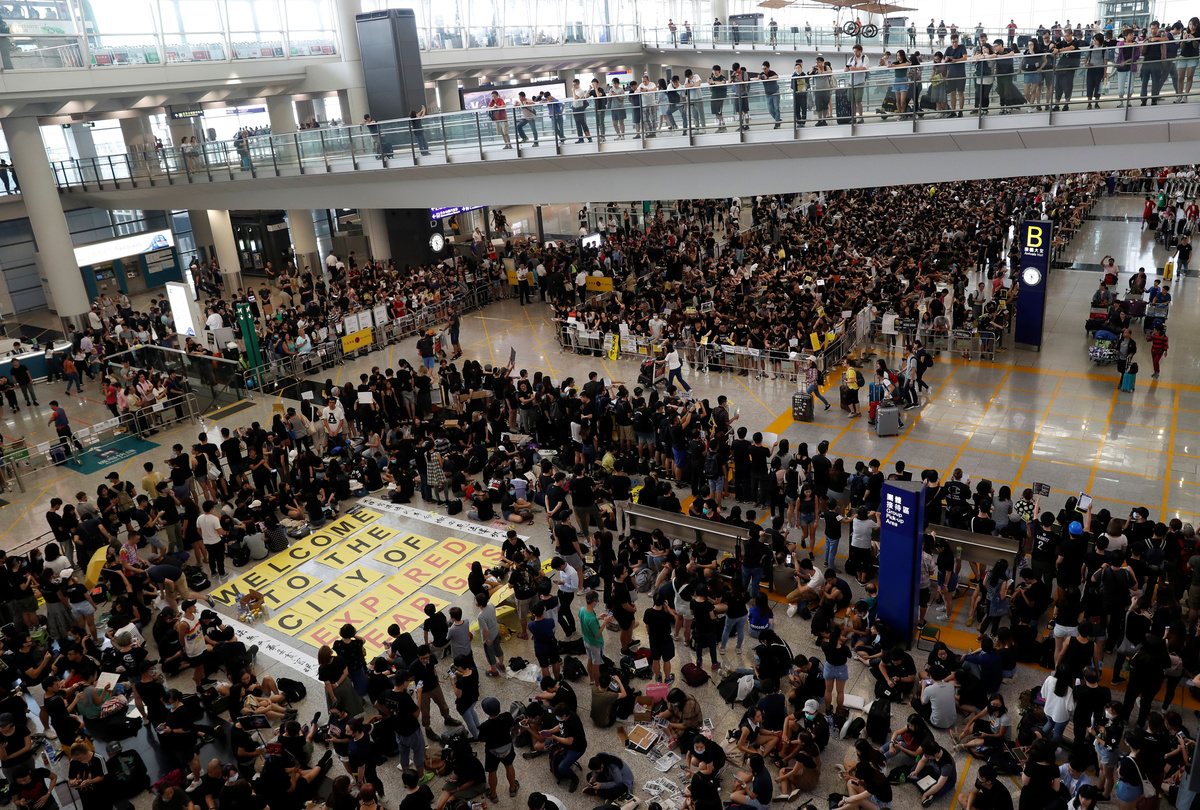
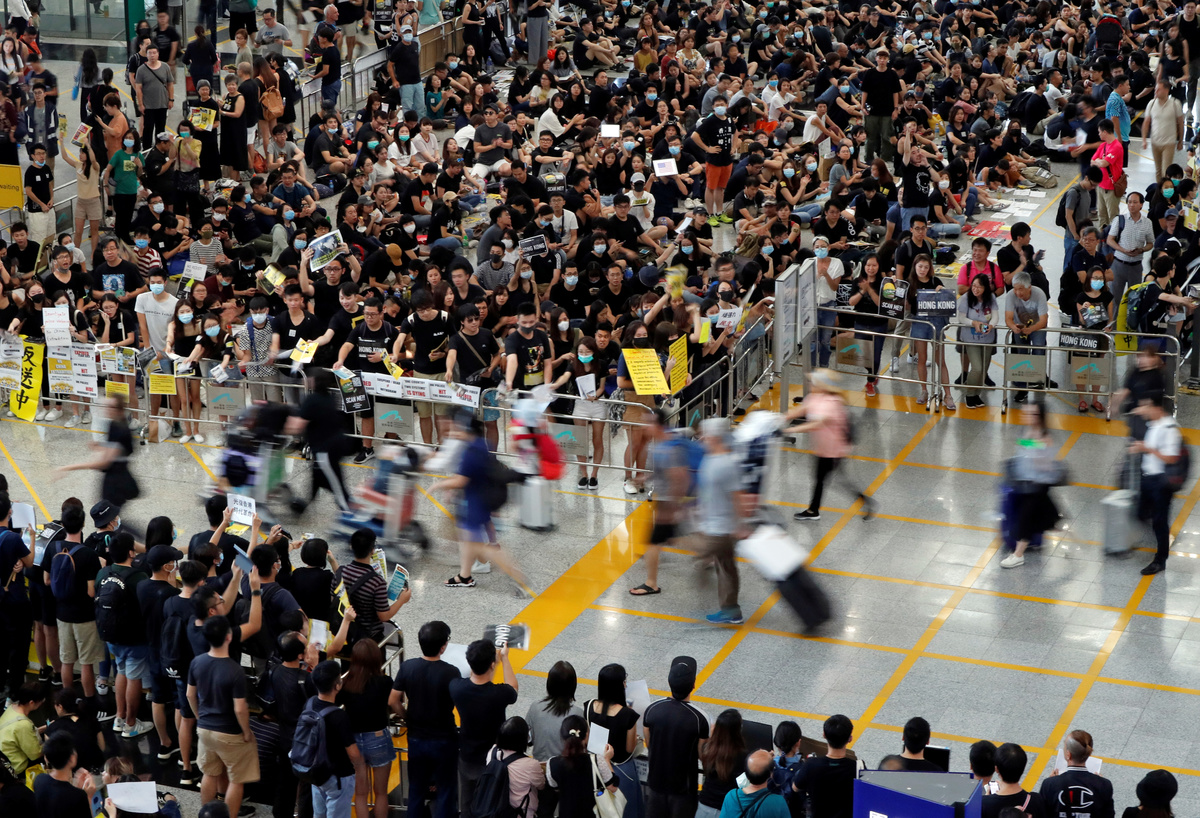
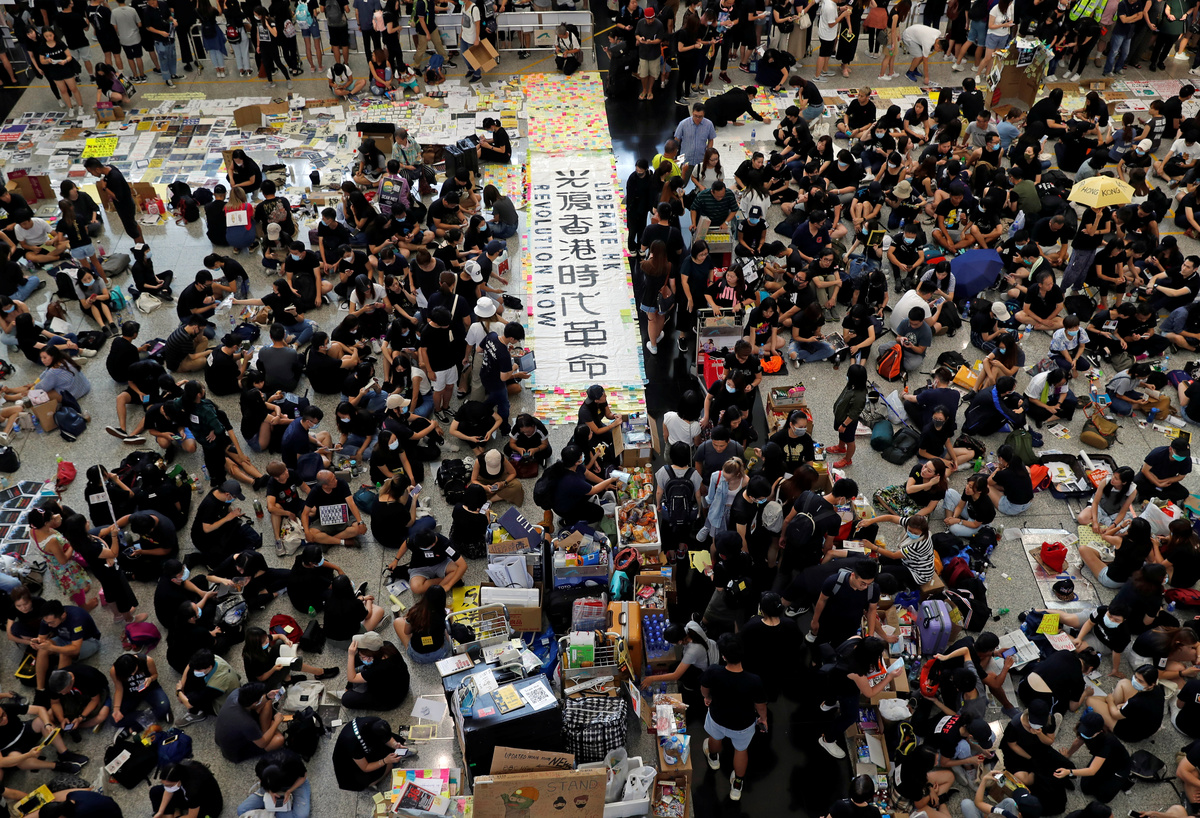
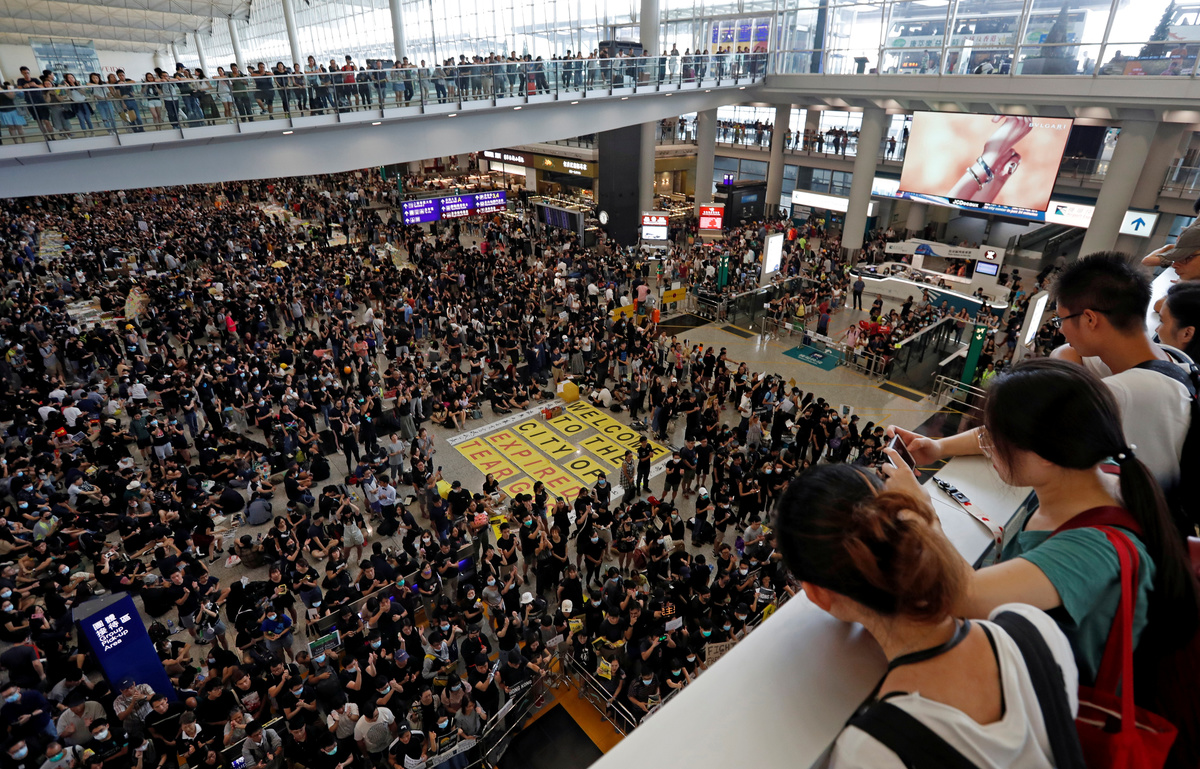
On Saturday activists rallied across the city, with thousands occupying the airport arrivals hall for a second day, while elsewhere police displayed a new willingness to quickly and forcibly clear them from the streets.
That became a cat-and-mouse chase with demonstrators late into the summer night.
Tear gas was used without much warning shortly after several hundred activists who had marched through Tai Po, in the north of the territory, had barricaded an intersection in the Tai Wai neighbourhood around nightfall.
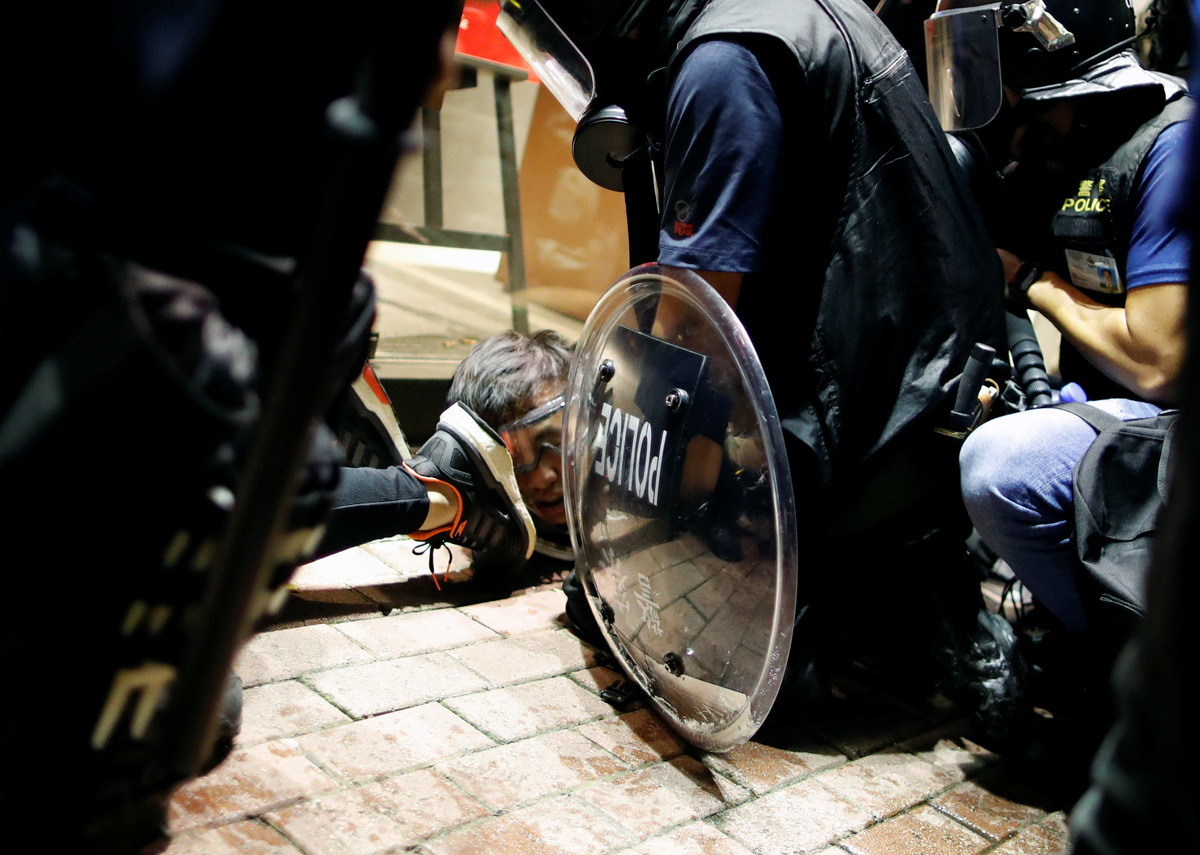
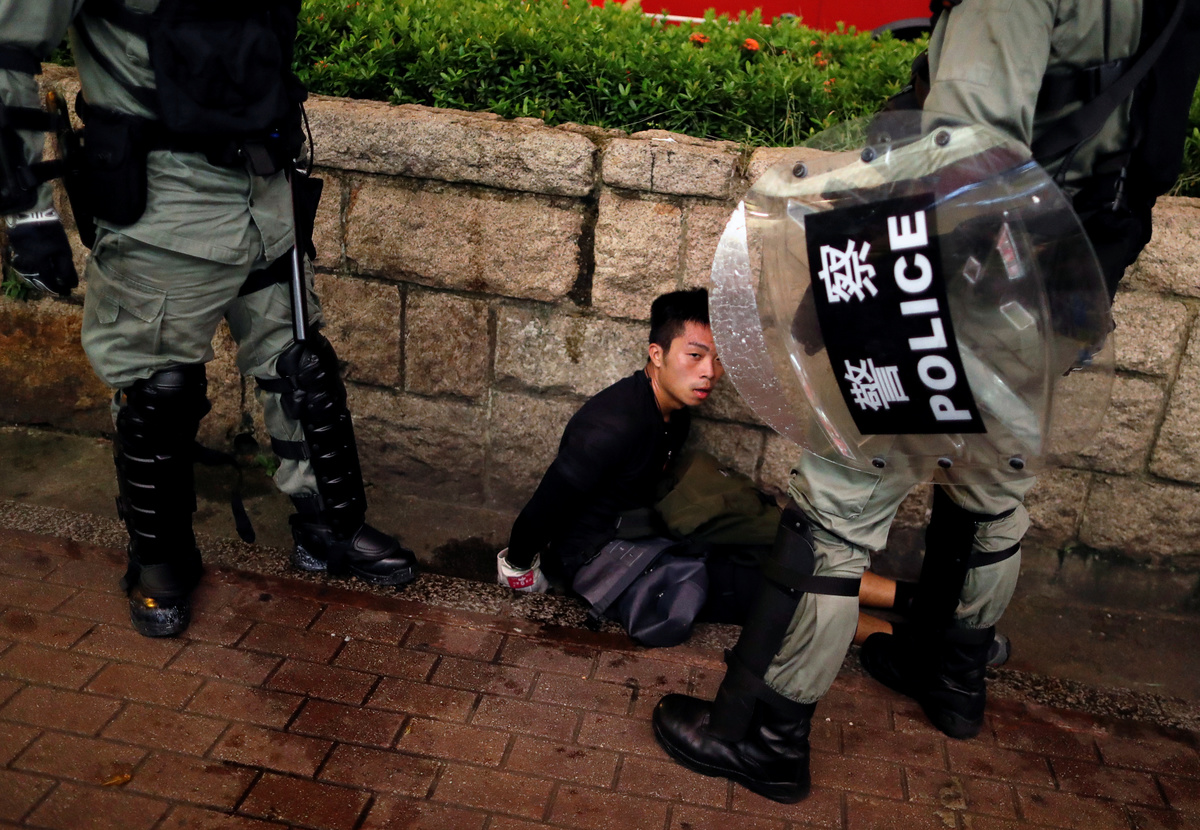
Riot police officers detain an anti-extradition bill protester during a demonstration in Tsim Sha Tsui neighbourhood in Hong Kong, China, August 11, 2019. REUTERS/Issei Kato
They dispersed, as noxious smoke also filled the train station there, bringing train passengers to tears.
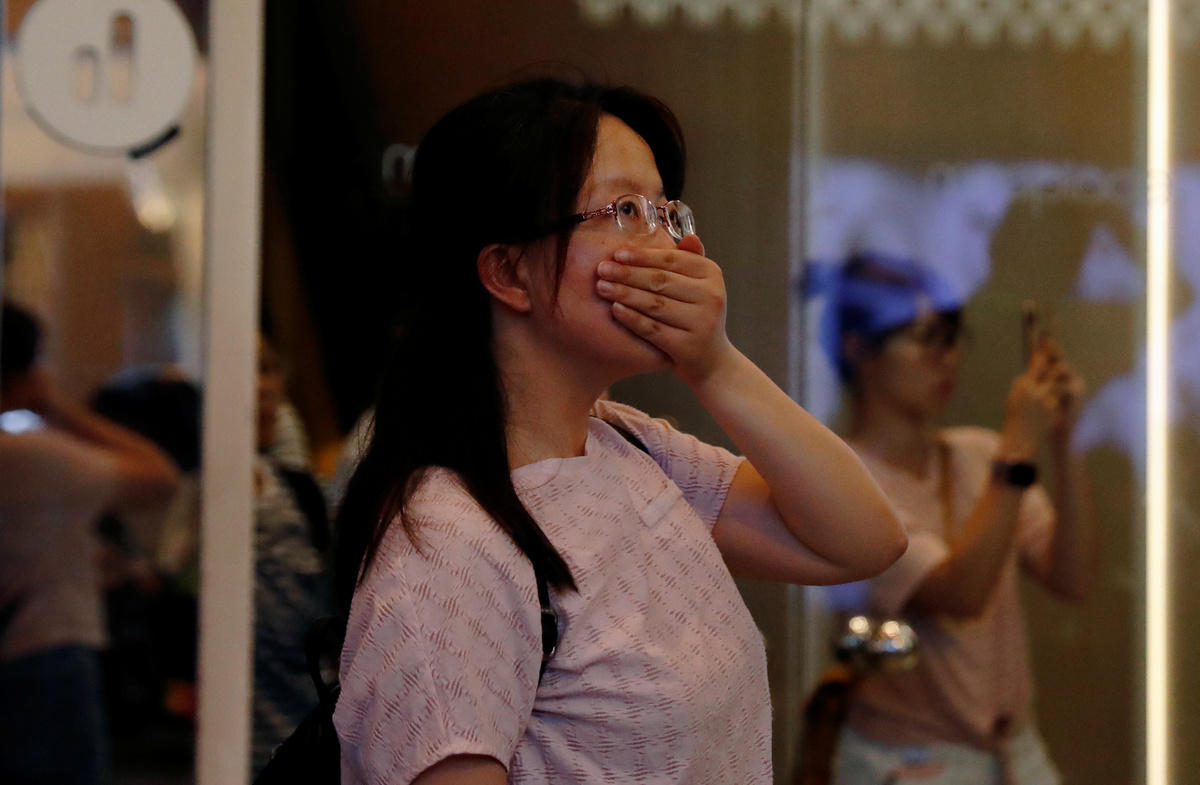
Then demonstrators popped up again in Kowloon, a large urban district on the mainland side of Hong Kong's harbour, only for police to fire another volley of gas from Tsim Sha Tsui police station, sending nearby tourists running with welling tears.
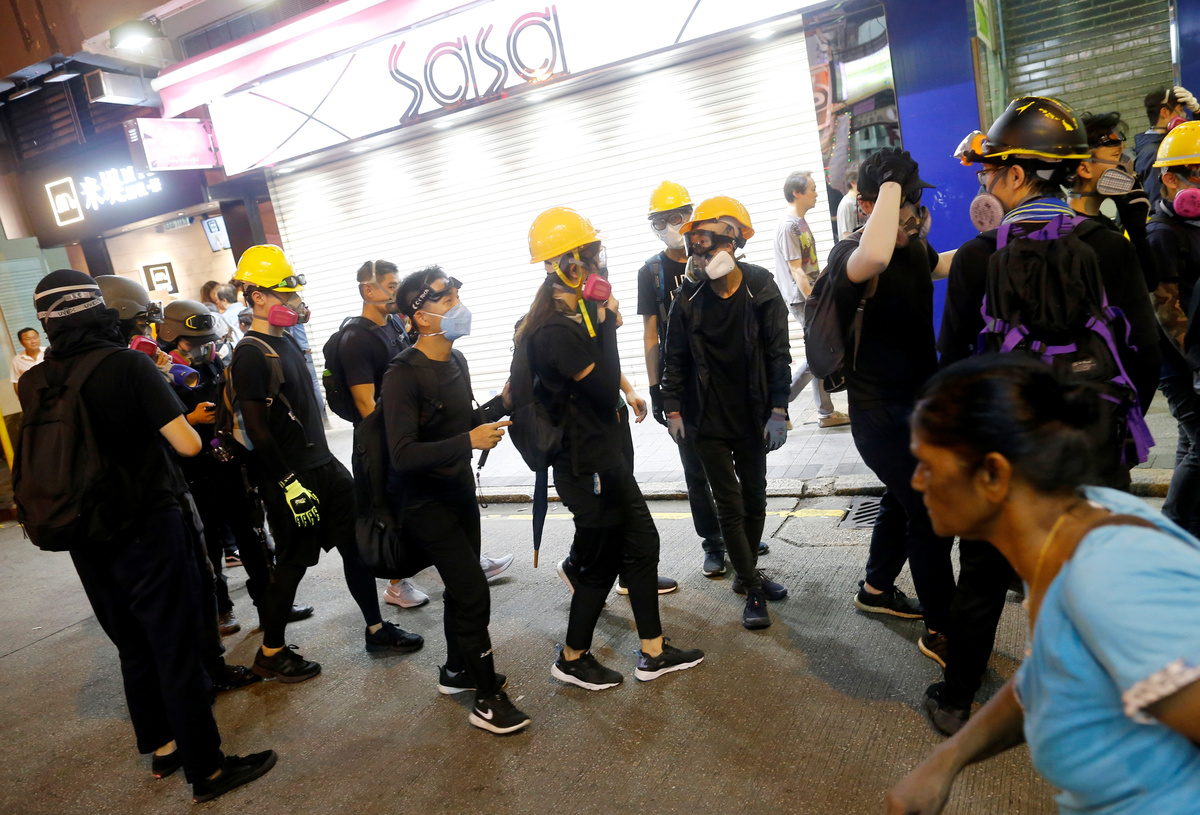
Several other exchanges followed, with protesters, wearing helmets and masks, mostly withdrawing when police fired gas or advanced with shields and truncheons, exhausting authorities and leaving the weeks-long stand-off little closer to resolution.
Riot police officers detain an anti-extradition bill protester during a demonstration in Tsim Sha Tsui neighbourhood in Hong Kong, China, August 11, 2019. REUTERS/Issei Kato
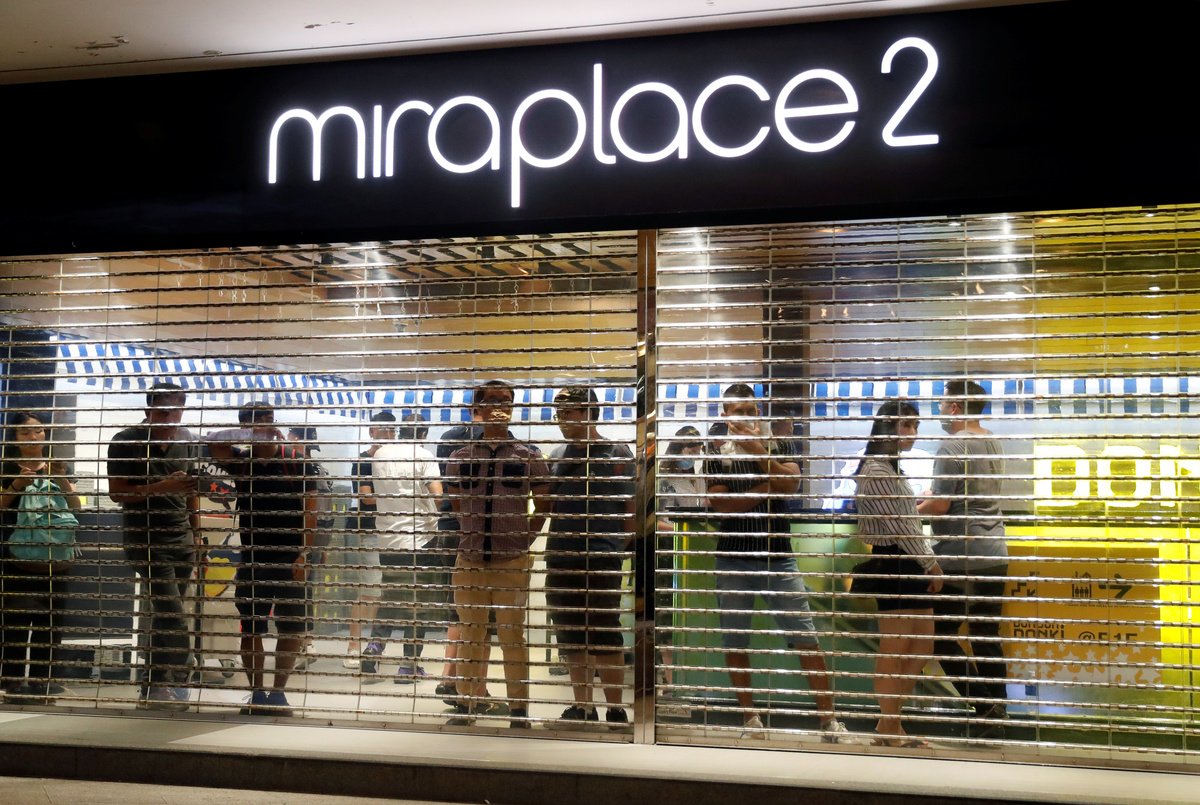
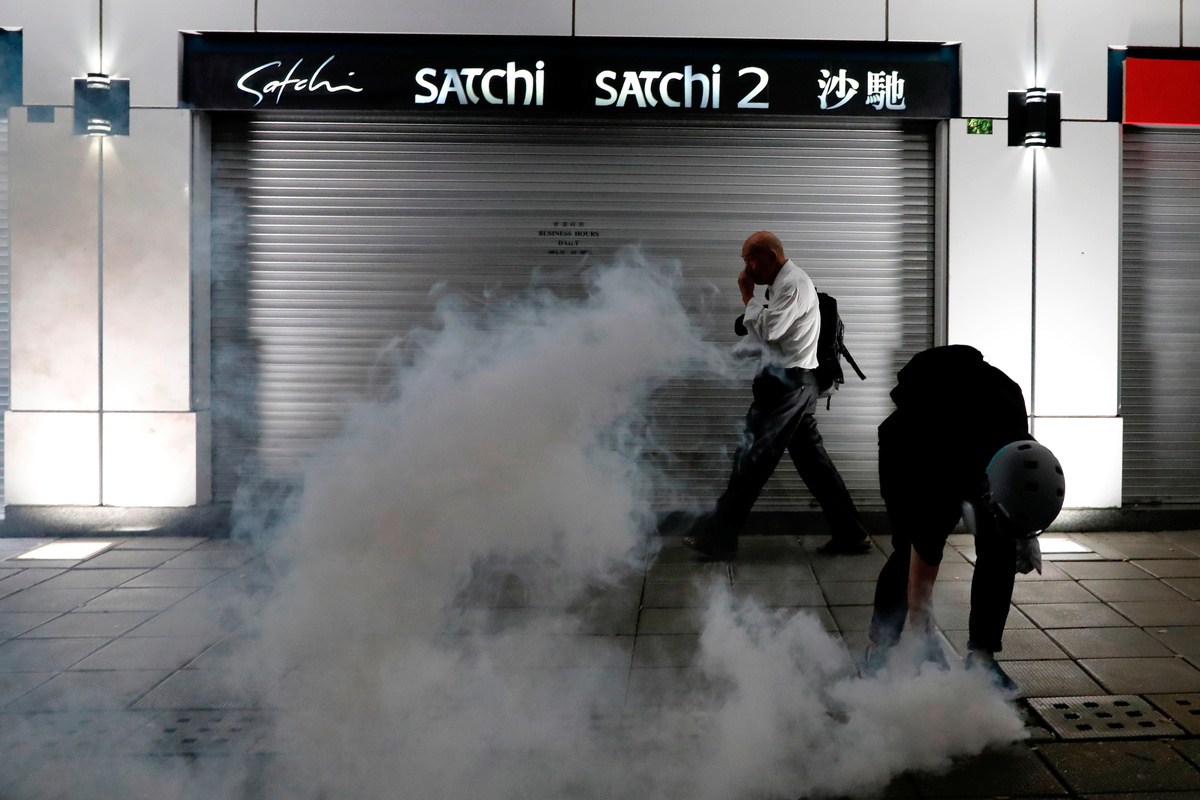
Luxury shops were caught up in the protests, with some shoppers even taking pictures of riot police, while other bystanders - at one stage hundreds - jeered the officers.
"If the government thinks we'll give up and not come out anymore they're wrong," said student Chris Wong, 20, at Tai Po.
"Carrie Lam is now spreading lies and blaming us for destroying Hong Kong's economy. But she's the one who is destroying Hong Kong," he said. "We'll continue to fight...but we're also going to be smart and wear them down."
Anti-extradition bill protesters react among tear gas during a demonstration in Tsim Sha Tsui neighbourhood in Hong Kong, China, August 11, 2019. REUTERS/Issei Kato
Lam, Hong Kong's leader, said on Friday the economy - already buffeted by China's slowing economy and the U.S.-China trade war - was being undermined by the protests, which began in June.
A government spokesman described the day's demonstrations as "illegal activities" that have "been significantly affecting people's daily lives".
Demonstrators, most of them young, appeared only to be digging in. Late on Saturday they flashed laser pointers at riot police and lifted bricks and scavenged building materials to barricade roads in Kowloon.
Riot police officers are seen as anti-extradition bill protesters demonstrate in Tsim Sha Tsui neighbourhood in Hong Kong, China, August 11, 2019. REUTERS/Issei Kato
CATHAY CRACKDOWN
China, meanwhile, has also targeted the city's corporate giants, demanding flag carrier Cathay Pacific Airways <0293.HK> suspend staff involved in the demonstrations - a move which also brought pressure on the airline from mainland businesses.
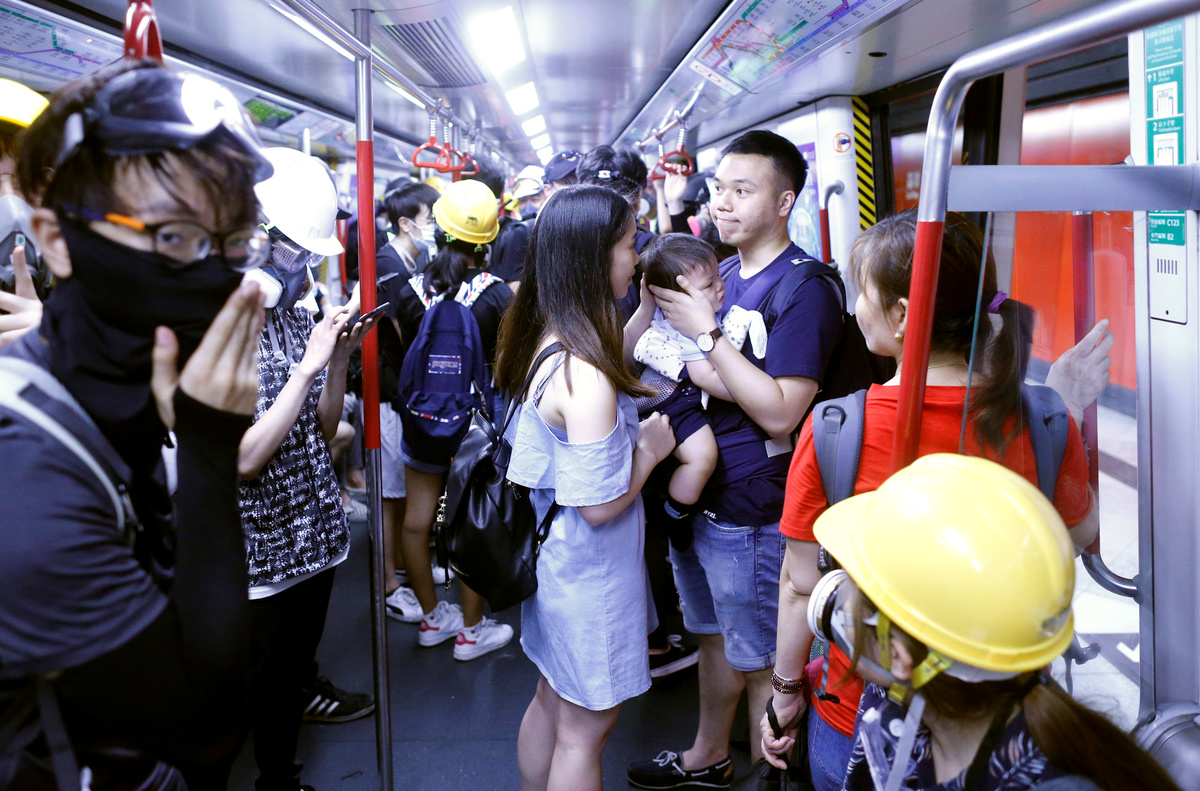
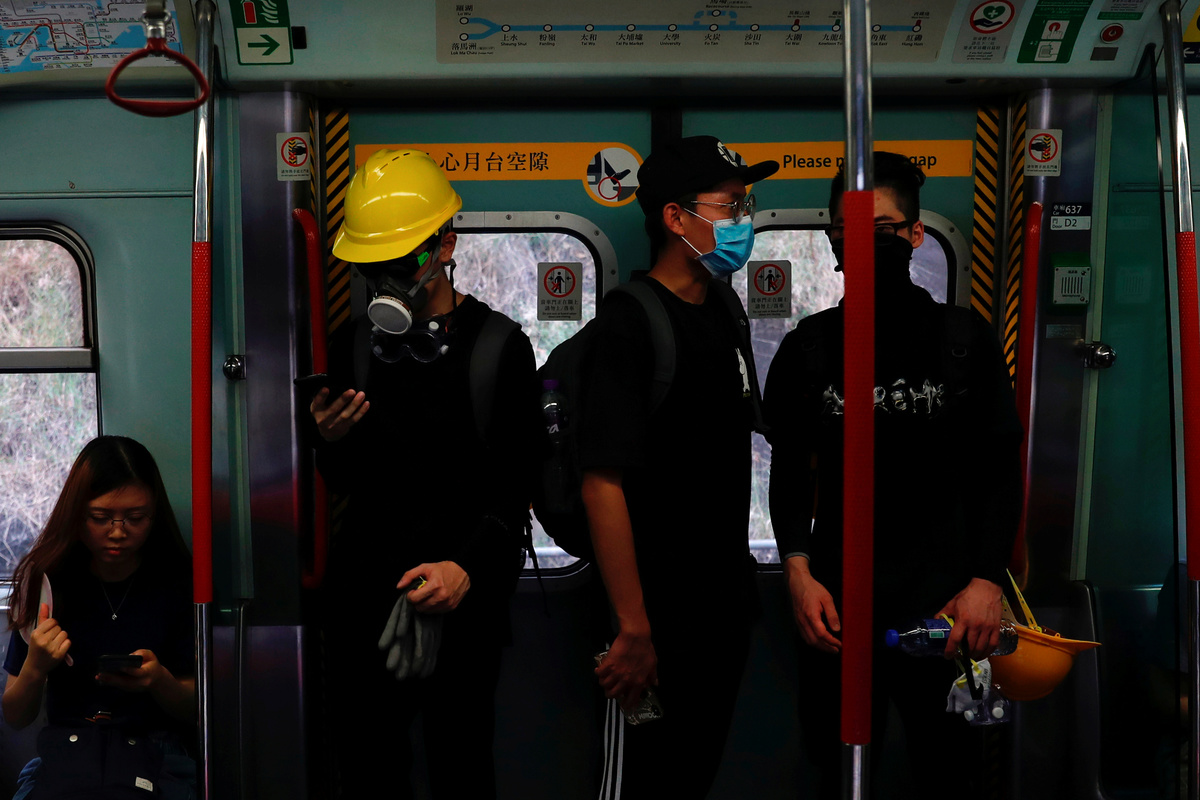
A family shares an MTR train car with anti-extradition bill protesters, who escaped from clashes with police in Kwai Fong in Hong Kong, China, August 11, 2019. REUTERS/Thomas Peter
The airline told staff on Saturday it would bar any "overly radical" employees from crewing flights to the mainland and said it had removed a pilot who was arrested at protests last week from active duty.
Neither warning - one aimed at residents and the other at a business emblematic of the city - deterred demonstrators.
Leung Wai Man, a housewife in her 60s, said she had been motivated to march in Tai Po because she was angry about what she saw as the violent response by police at some protests.
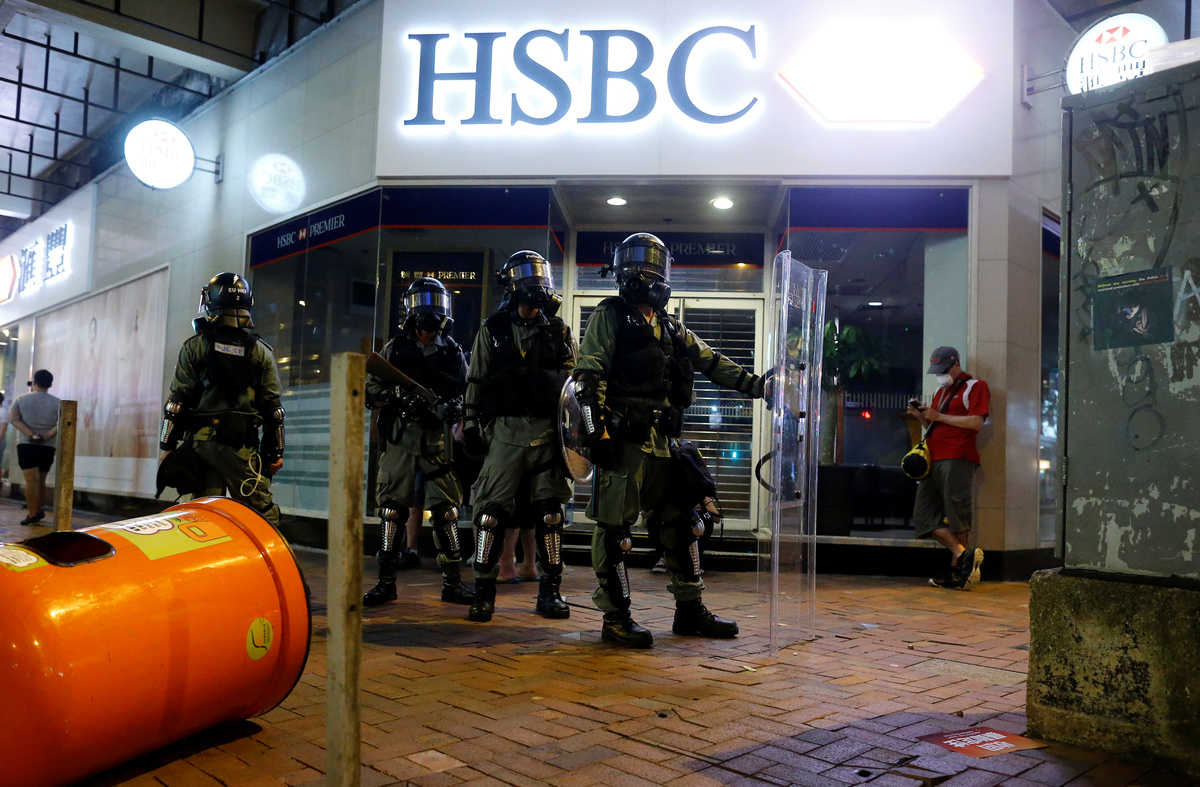
Riot police officers stand outside a branch of HSBC bank as anti-extradition bill protesters demonstrate in Wan Chai neighbourhood in Hong Kong, China, August 11, 2019. REUTERS/Thomas Peter
"We are very angry about the police over arresting our teenagers," she said. She said she was worried about escalating violence, but added that "the protesters were just trying to protect themselves against police violence".
More demonstrations are planned on Sunday, including at the working class district of Sham Shui Po, the scene of violent confrontations between activists and police, prompting authorities to plan shutting many public buildings there.
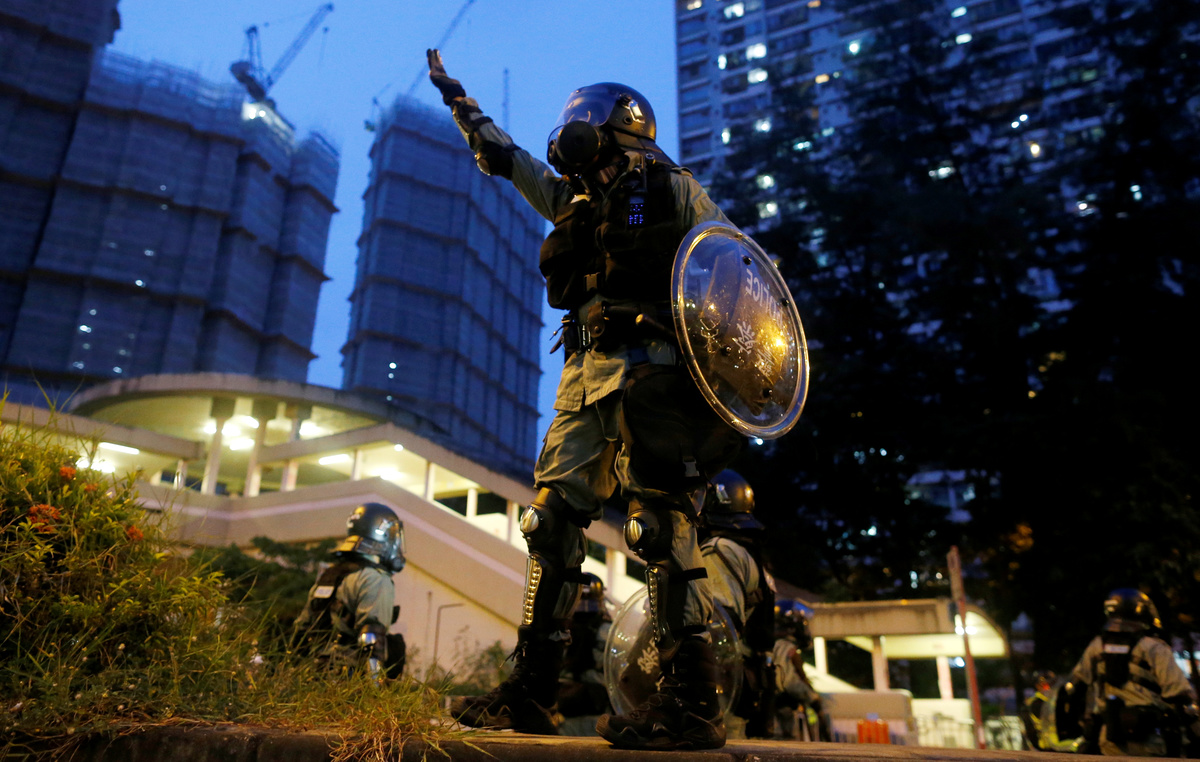
An anti-extradition bill protester reacts after tear gas was fire by the police during a demonstration in Tai Wai in Hong Kong, China, August 10, 2019. REUTERS/Thomas Peter
YOUNG AND OLD
The protests began after Hong Kong's government tried introducing an extradition bill that would have allowed defendants to be sent to mainland China for trial.
The bill has been suspended, but protesters have stepped up their demands and are now calling for greater democracy and Lam's resignation.
A demonstrator tries to extinguish a tear gas canister as anti-extradition bill protesters demonstrate in Kwai Fong neighbourhood in Hong Kong, China, August 11, 2019. REUTERS/Issei Kato
Young people have been at the forefront, worried about the erosion of freedoms in Hong Kong, while also concerned with issues such as wealth disparities in the city.
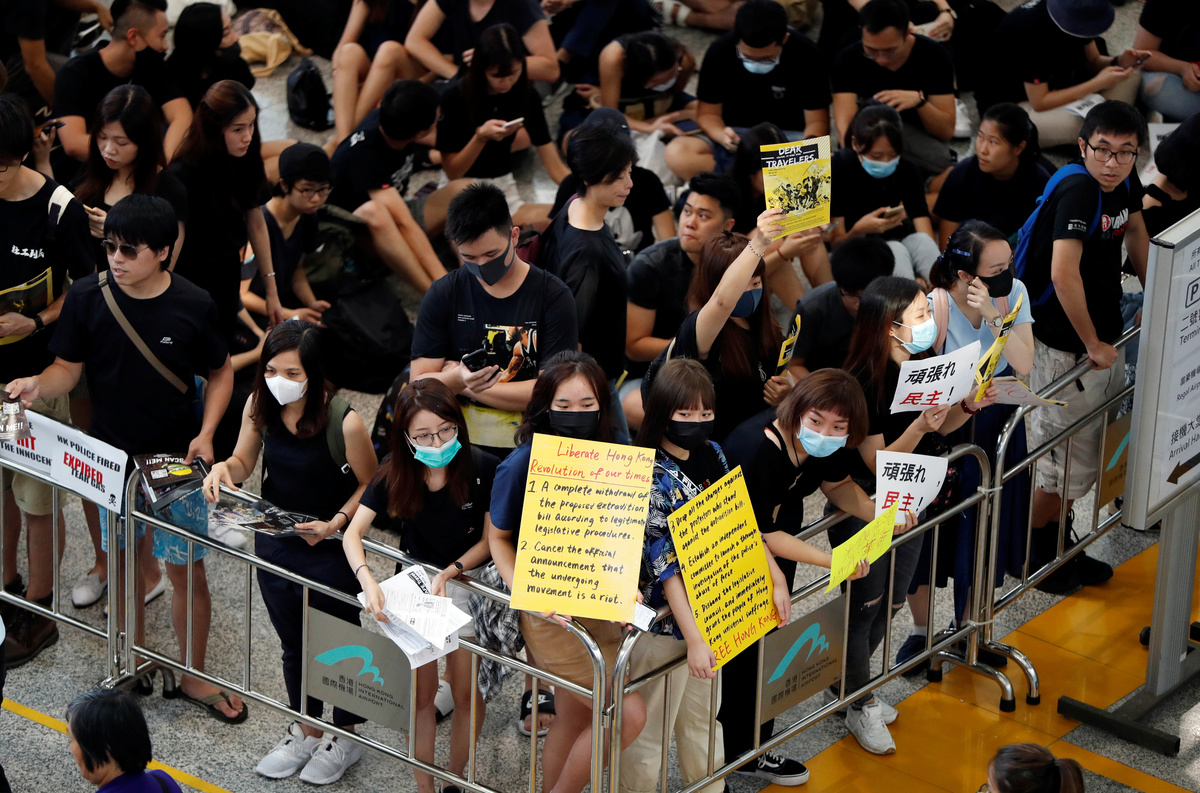
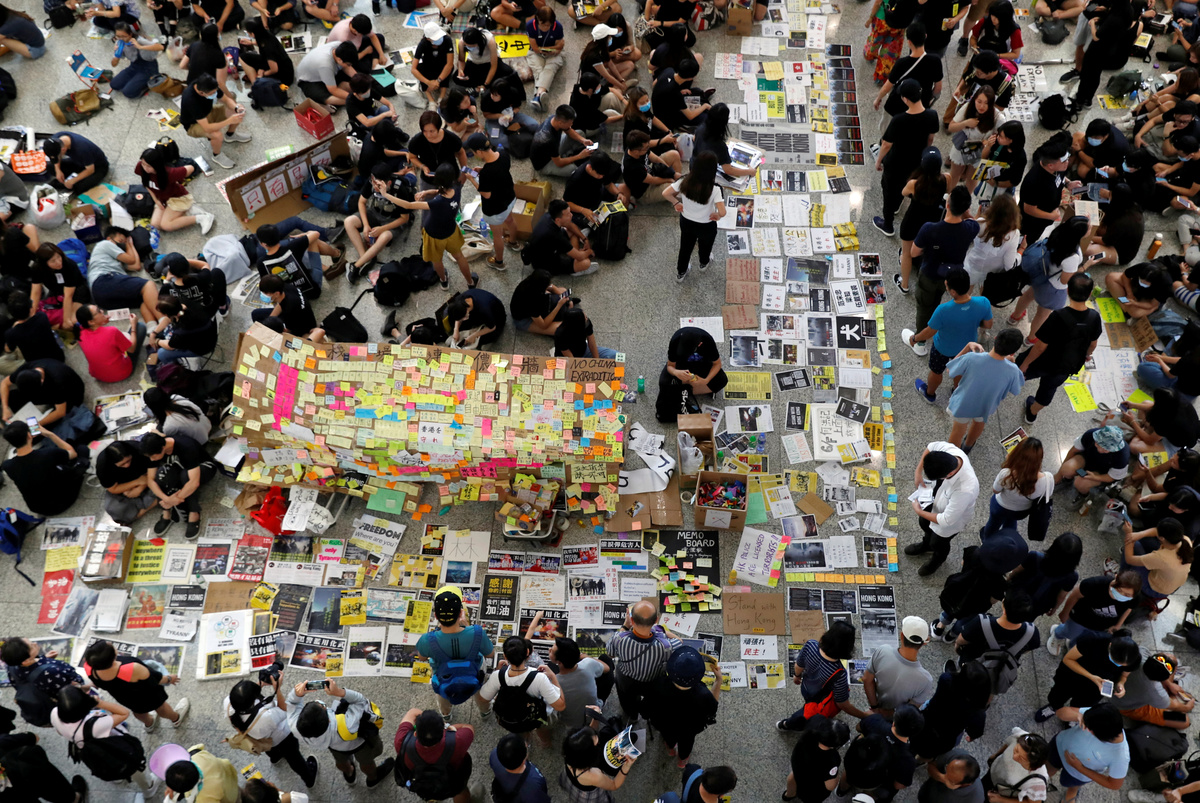
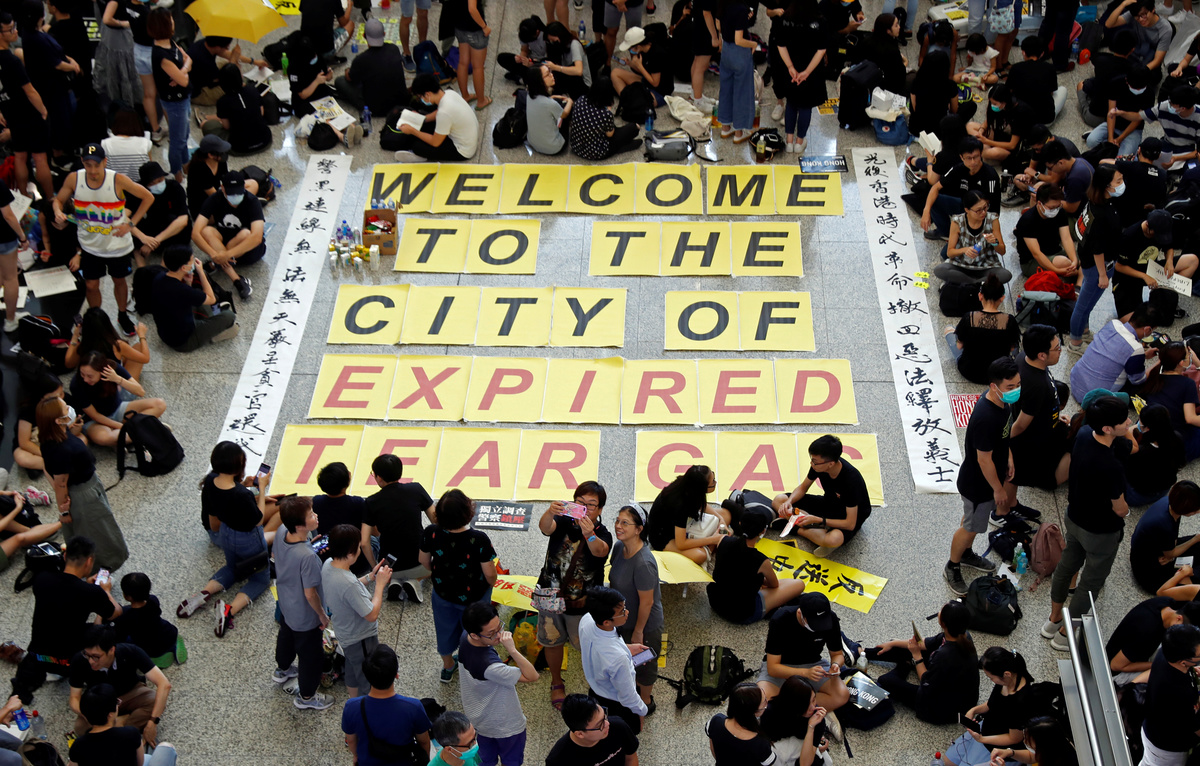
Thousands of mostly young activists filled the airport's arrivals hall for a second day, some sitting and shouting slogans, while others drew protest posters and greeted arriving passengers.
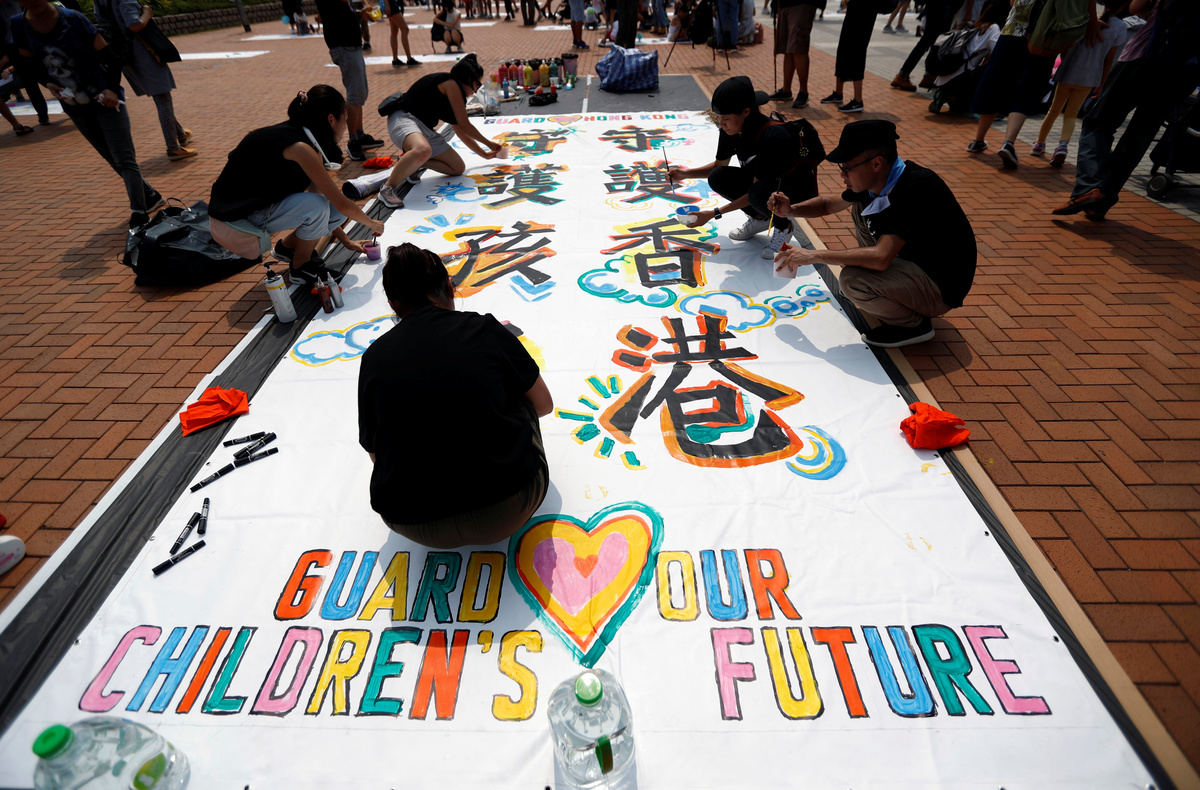
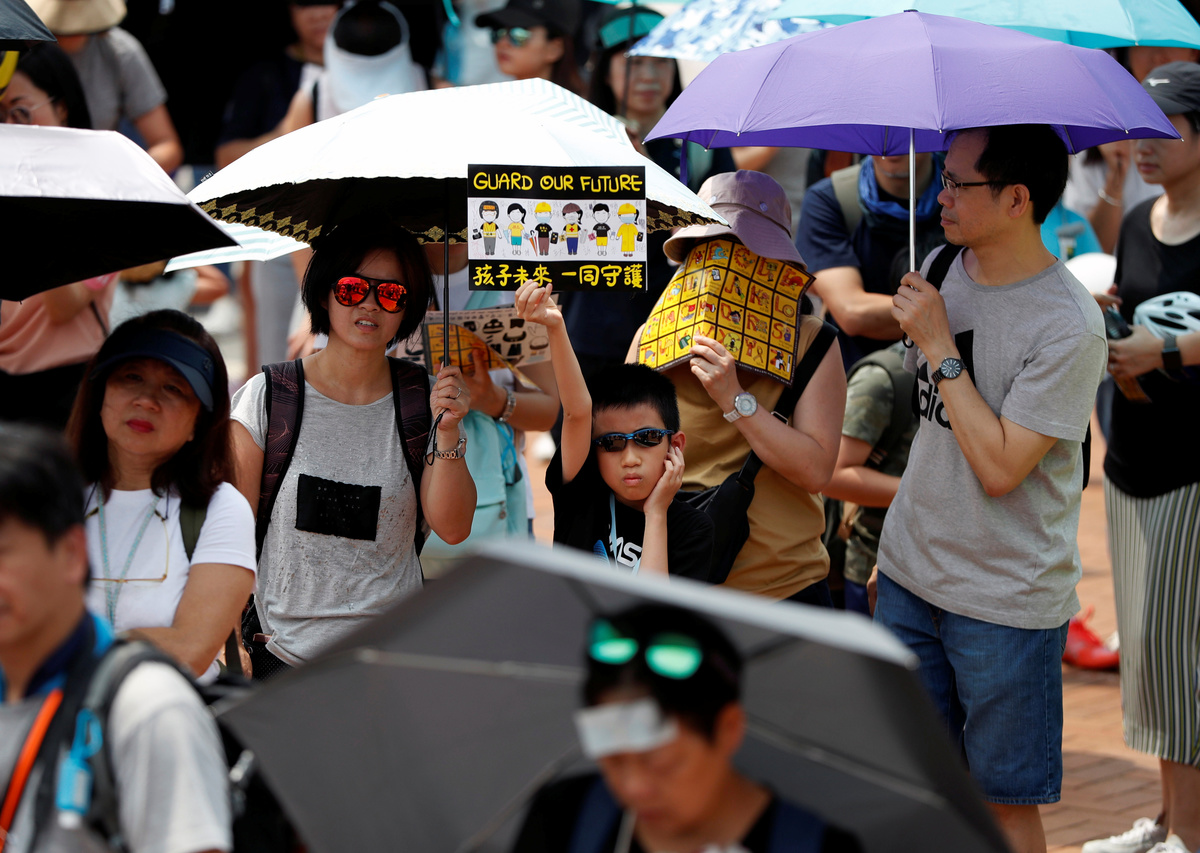
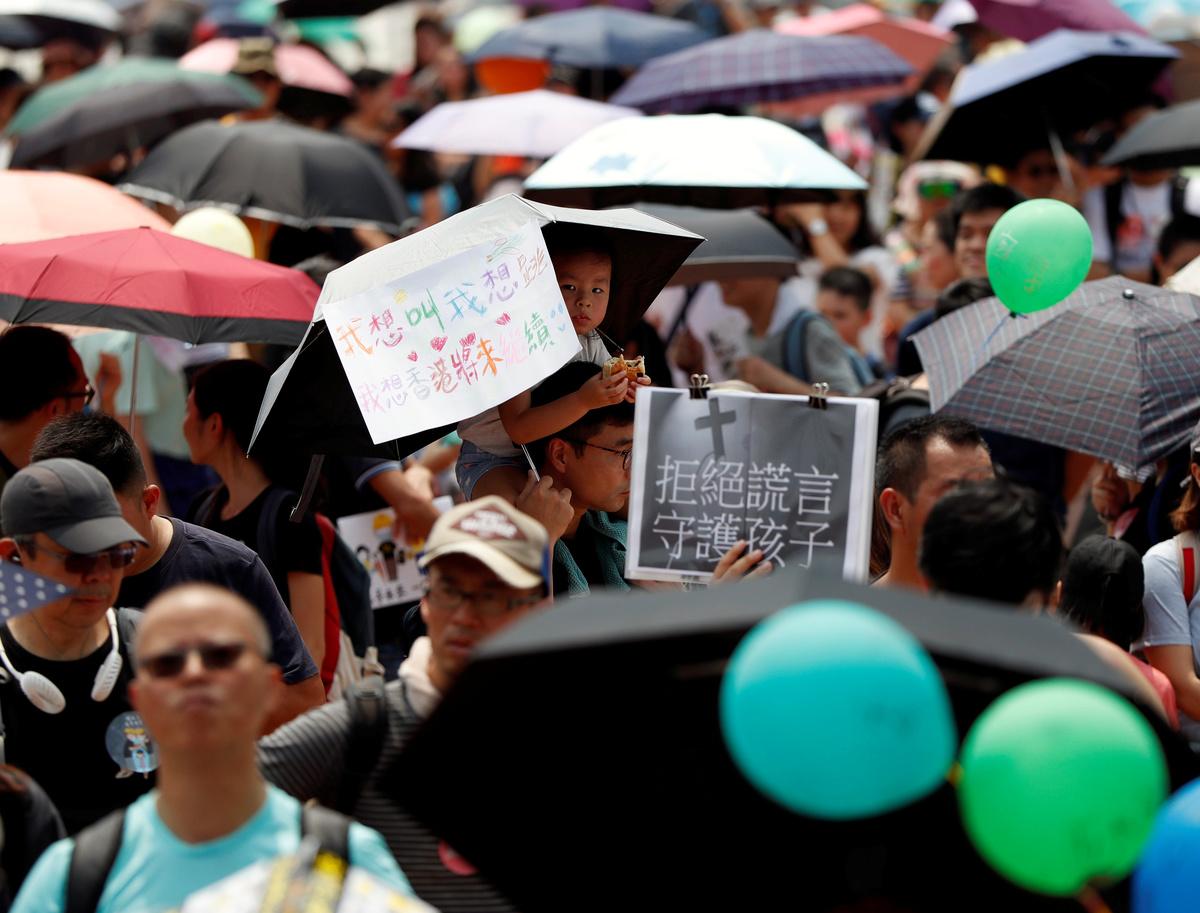
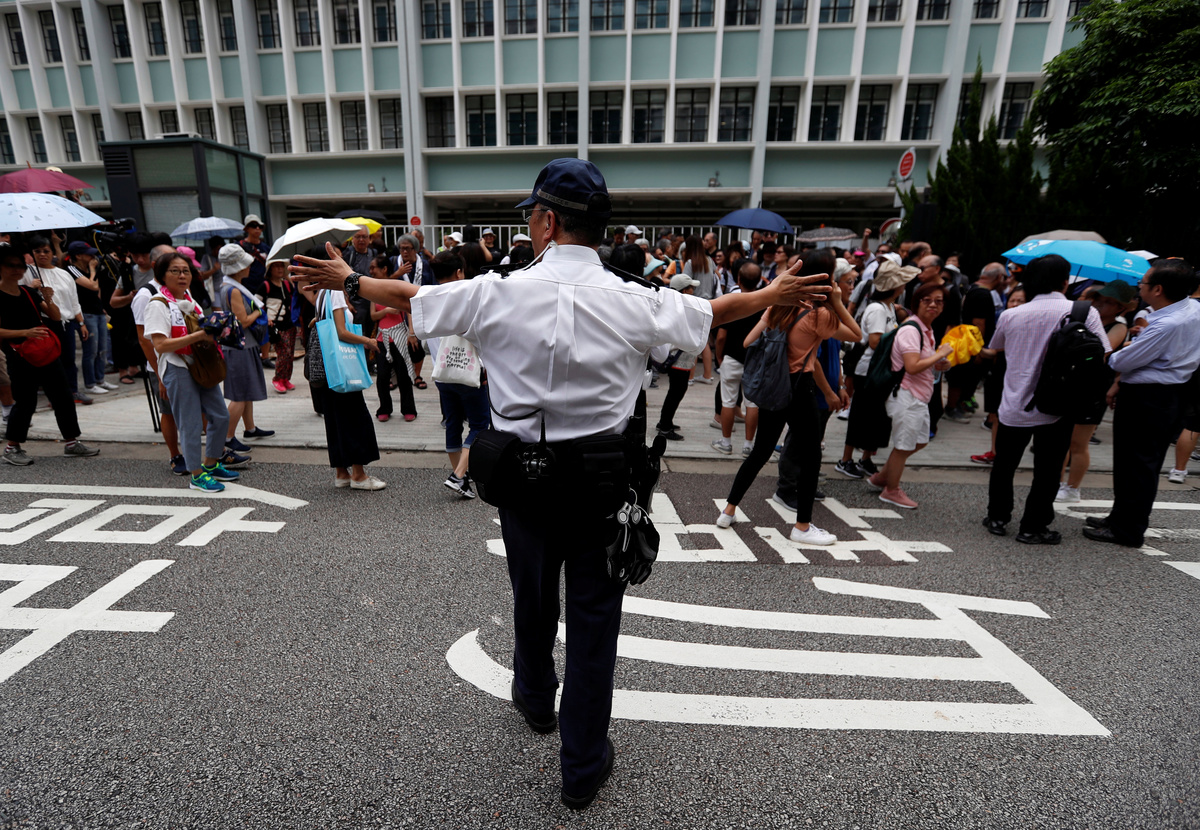
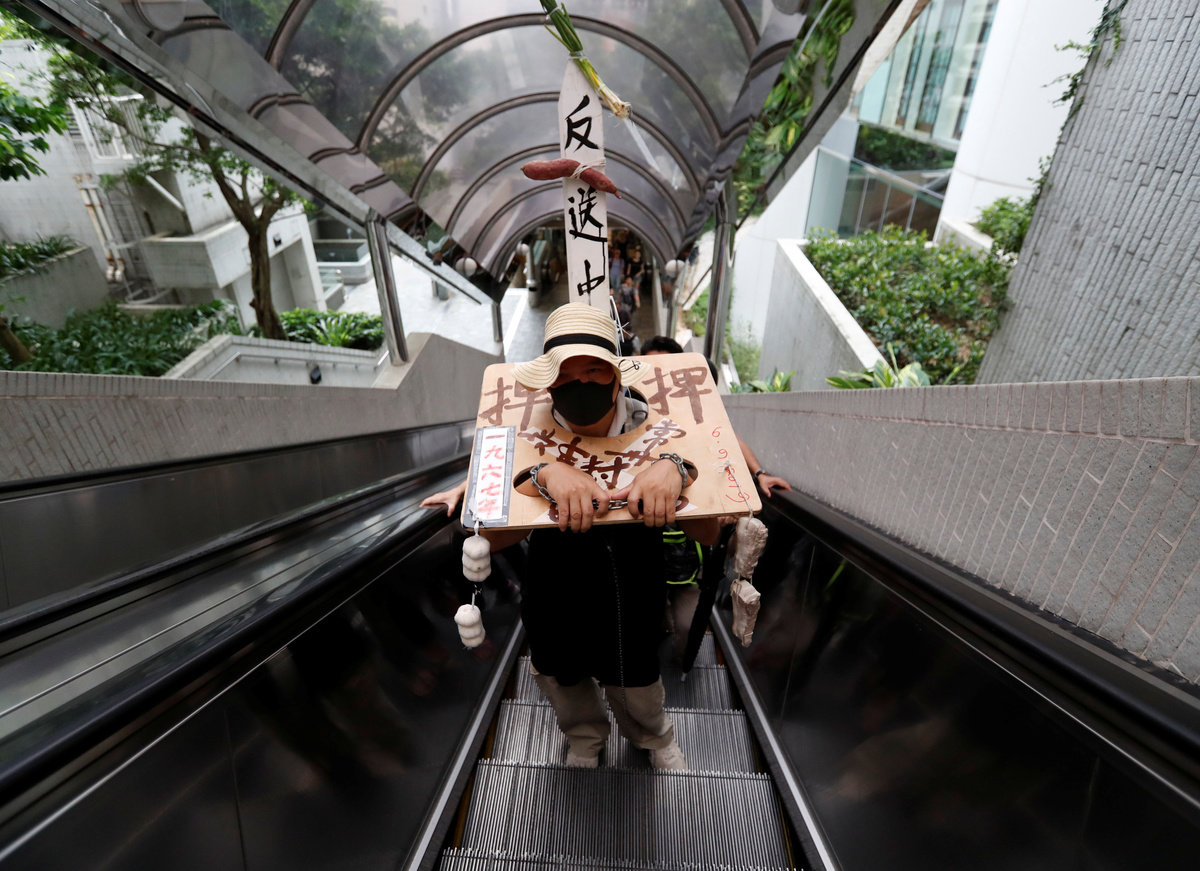
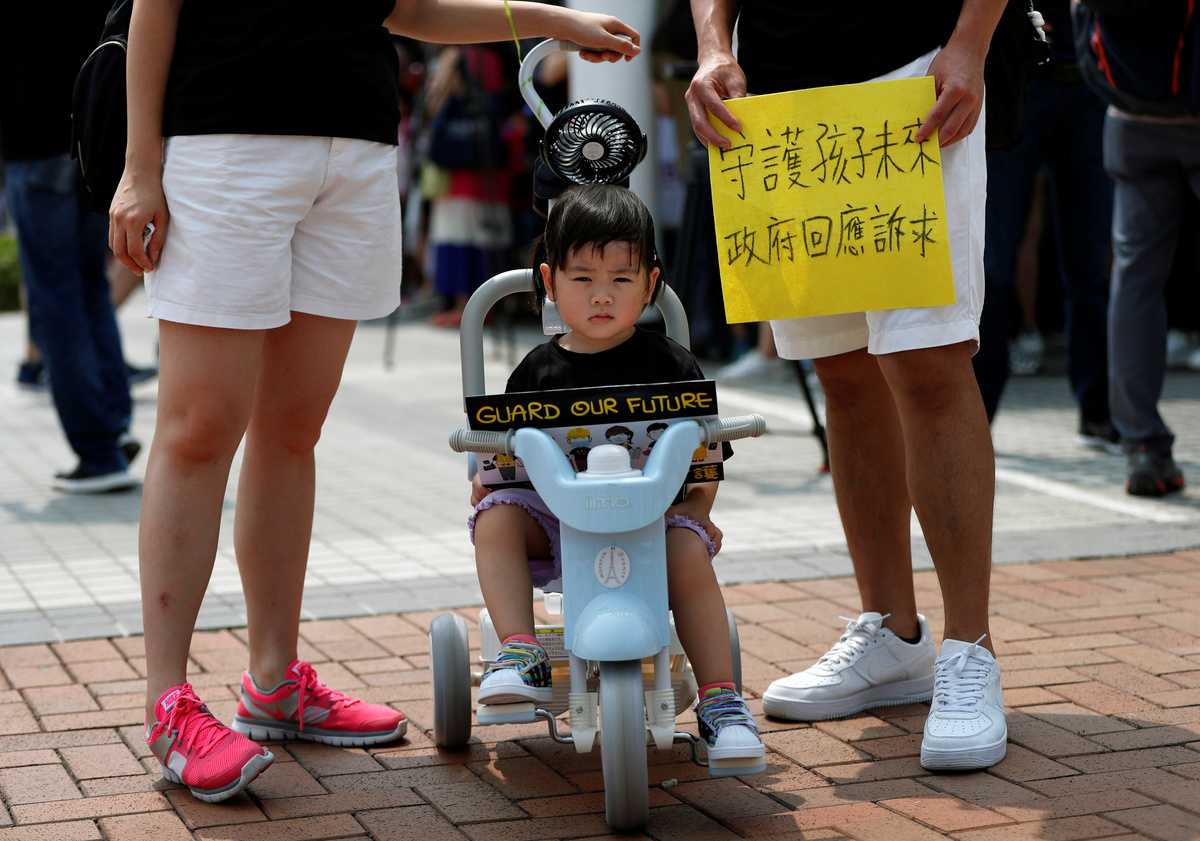
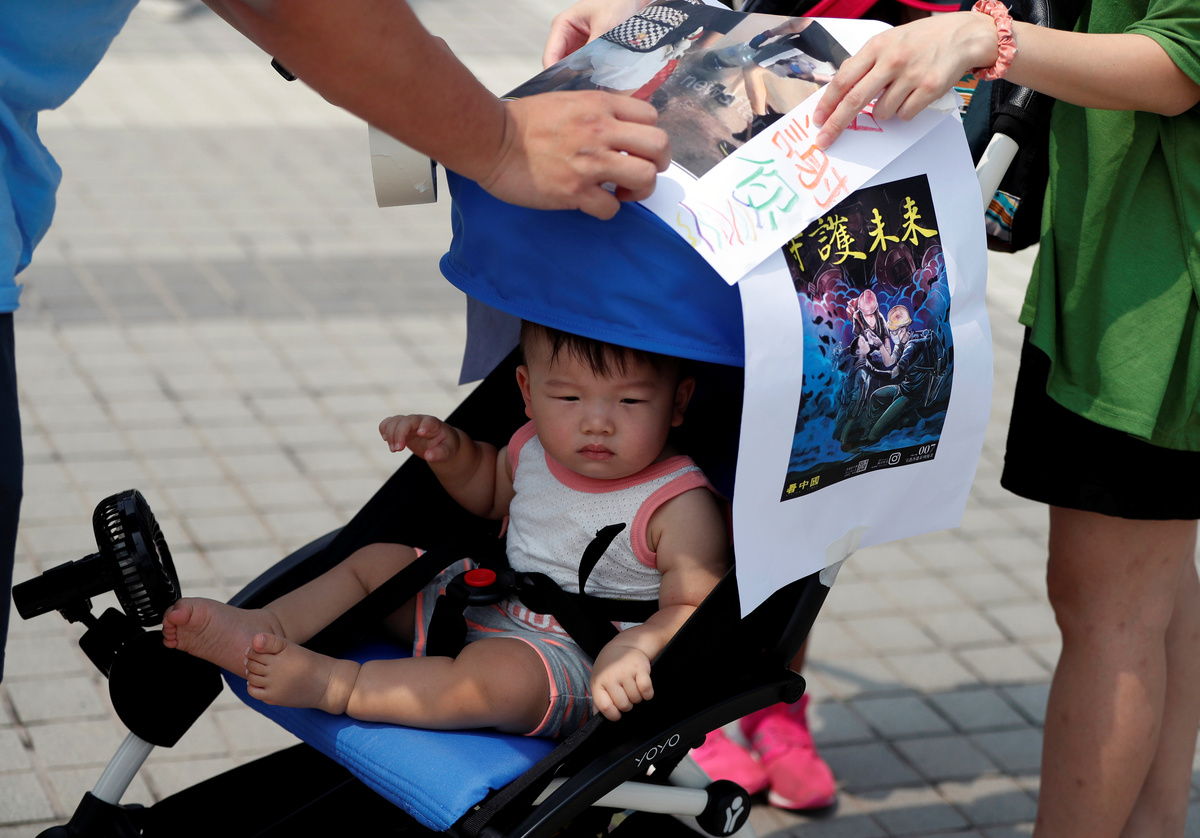
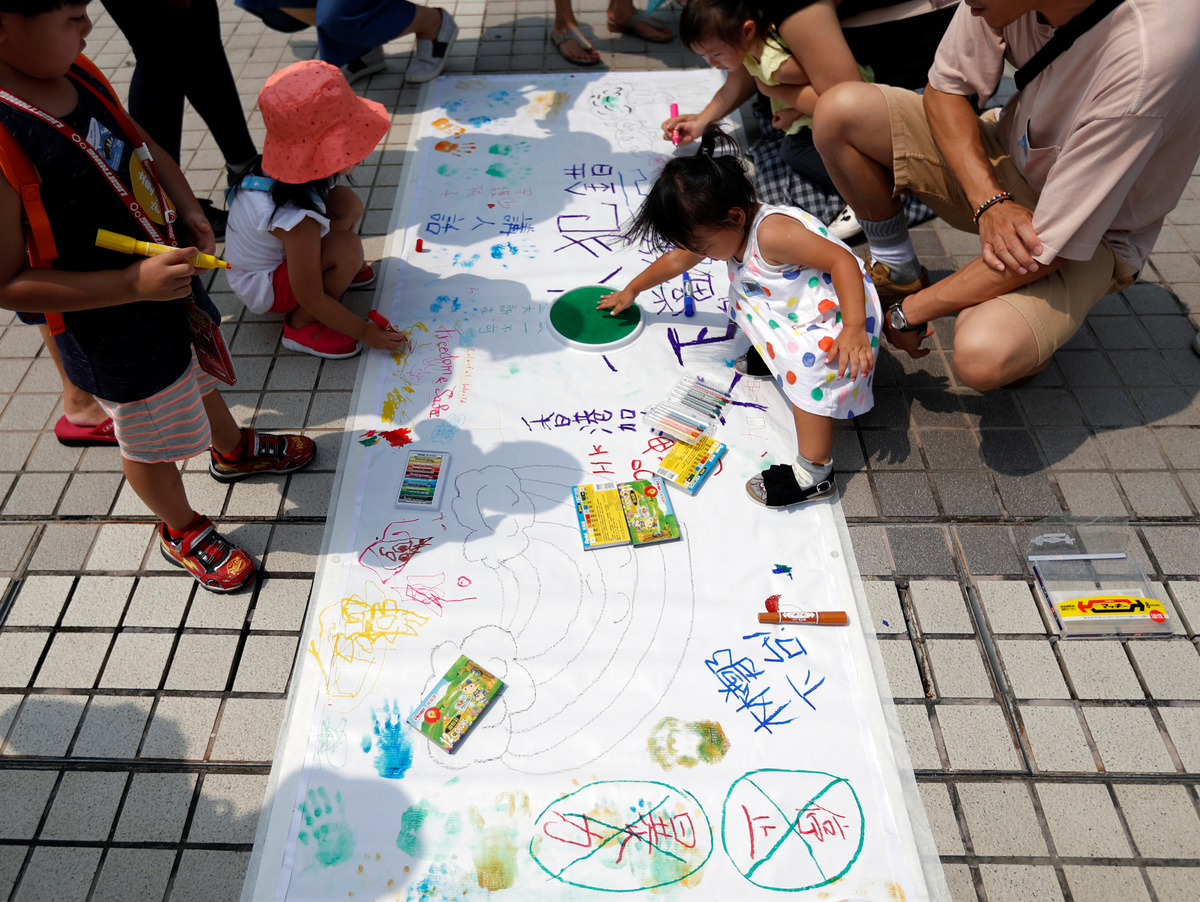
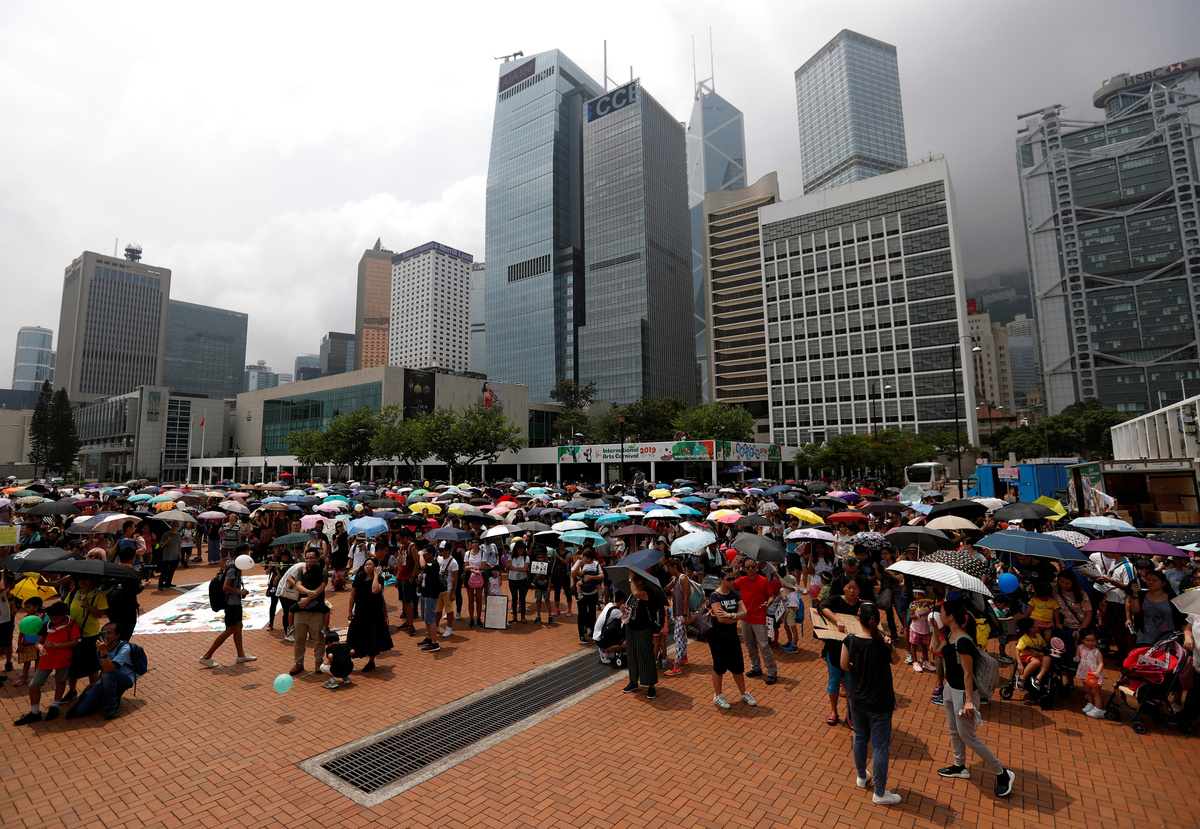
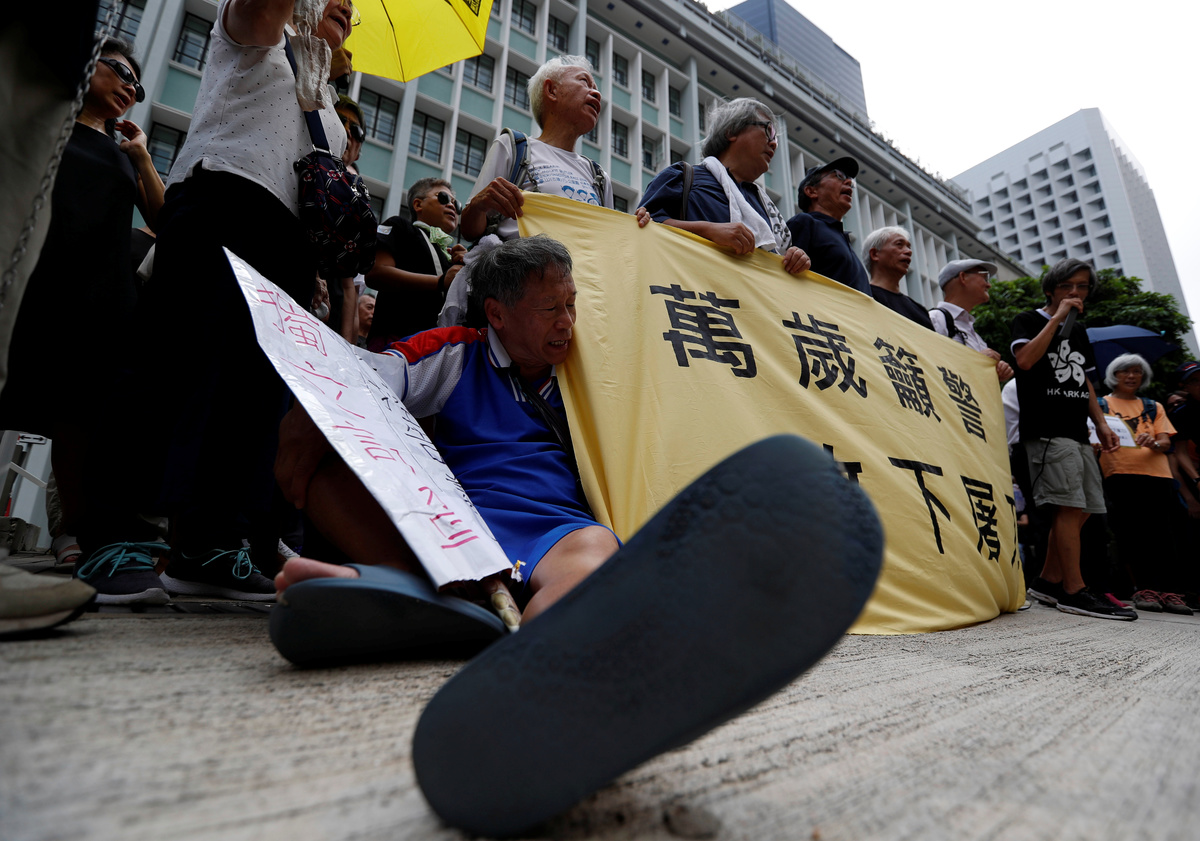
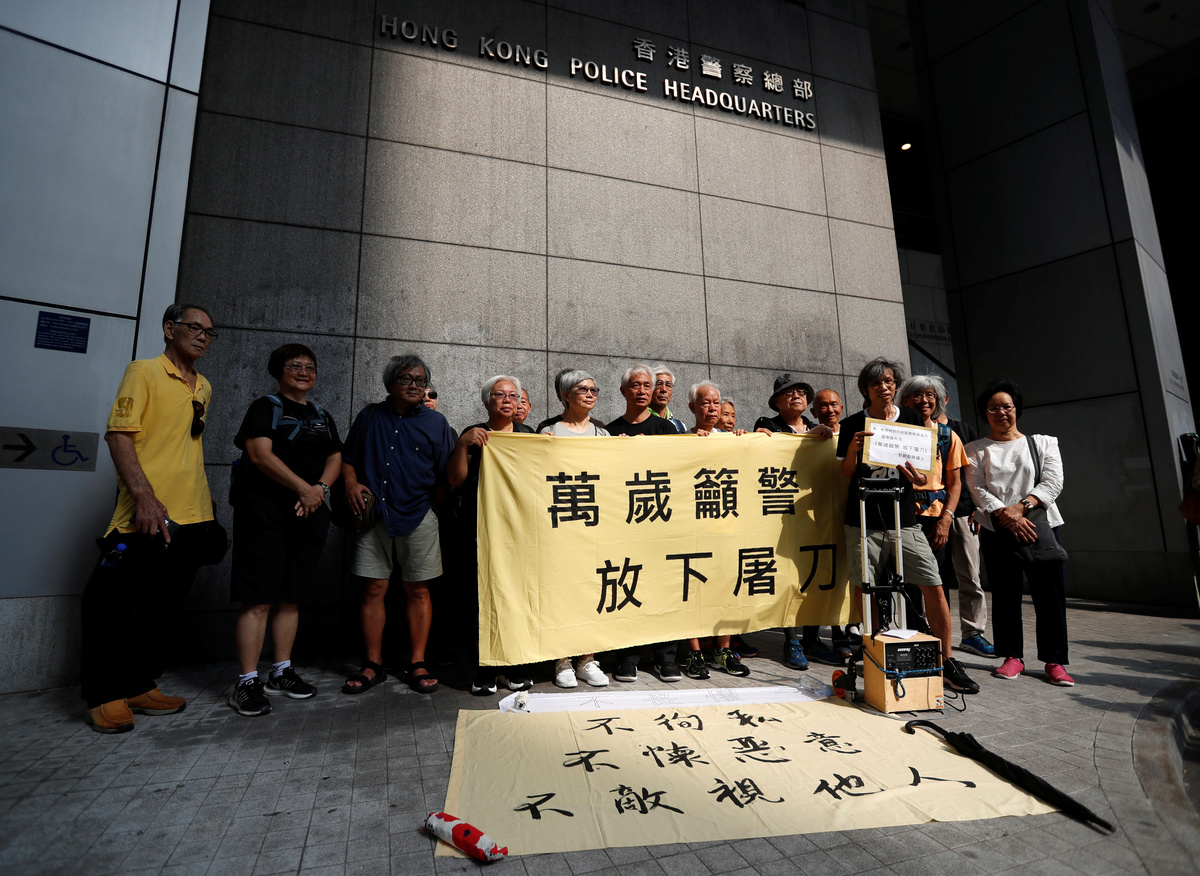
Older people have also been appearing. Earlier on Saturday, in two separate protests, small groups of elderly Hong Kongers and families marched near the financial centre's business district. Both marches and the airport protests were peaceful.
A tourist reacts as anti-extradition bill protesters demonstrate in Tsim Sha Tsui neighbourhood in Hong Kong, China, August 11, 2019. REUTERS/Issei Kato
"We hope to provide a safer place for parents and their kids to participate in rallies, and to voice their concerns," said Fion Yim, 35, representative of the organising committee for what was billed as the family protest.
GLOBAL PRESSURE
People inside a shop watch as anti-extradition bill protesters demonstrate in Tsim Sha Tsui neighbourhood in Hong Kong, China, August 11, 2019. REUTERS/Issei Kato
The protests have been condemned by the central government in Beijing, which has accused foreign powers of fuelling unrest.
Hong Kong was guaranteed freedoms not granted in mainland China, including an independent judiciary, under a "one country, two systems" formula, when Britain handed it back to China in 1997.
Britain's foreign minister Dominic Raab on Friday emphasised the right to peaceful protest in a phone call with Lam, prompting a rebuke from China.
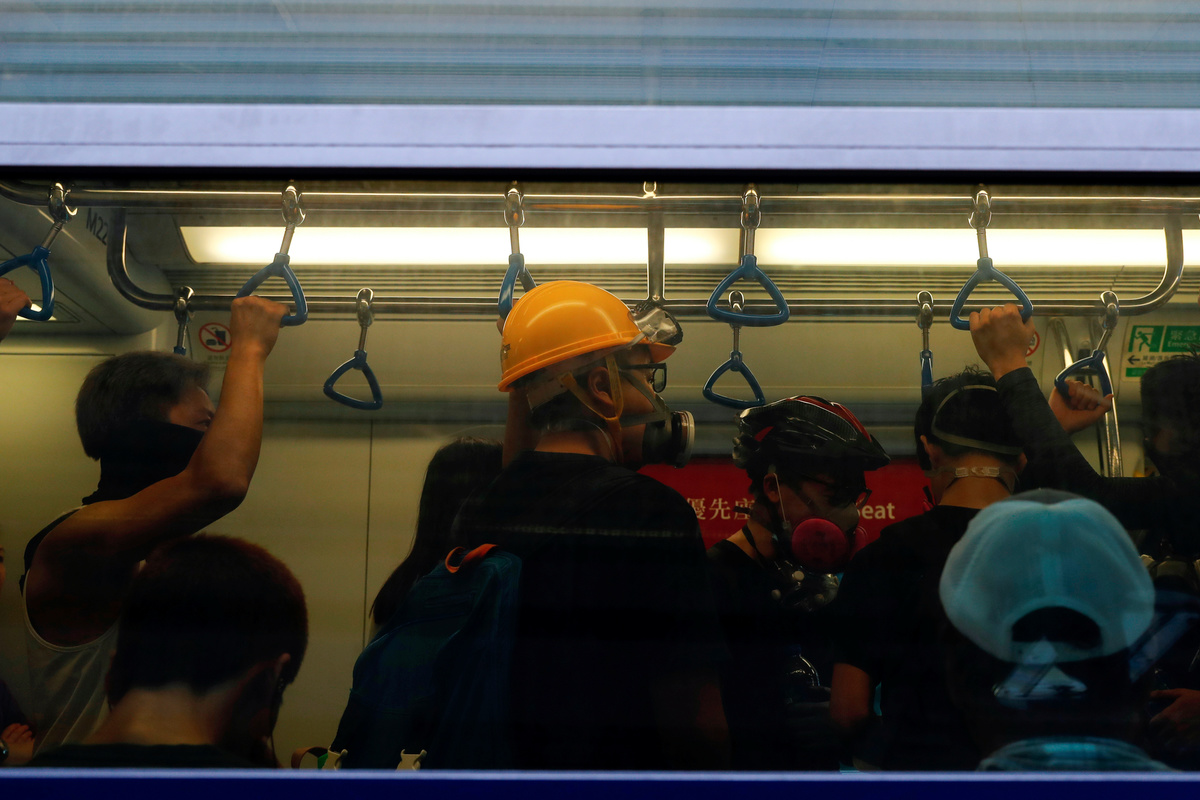
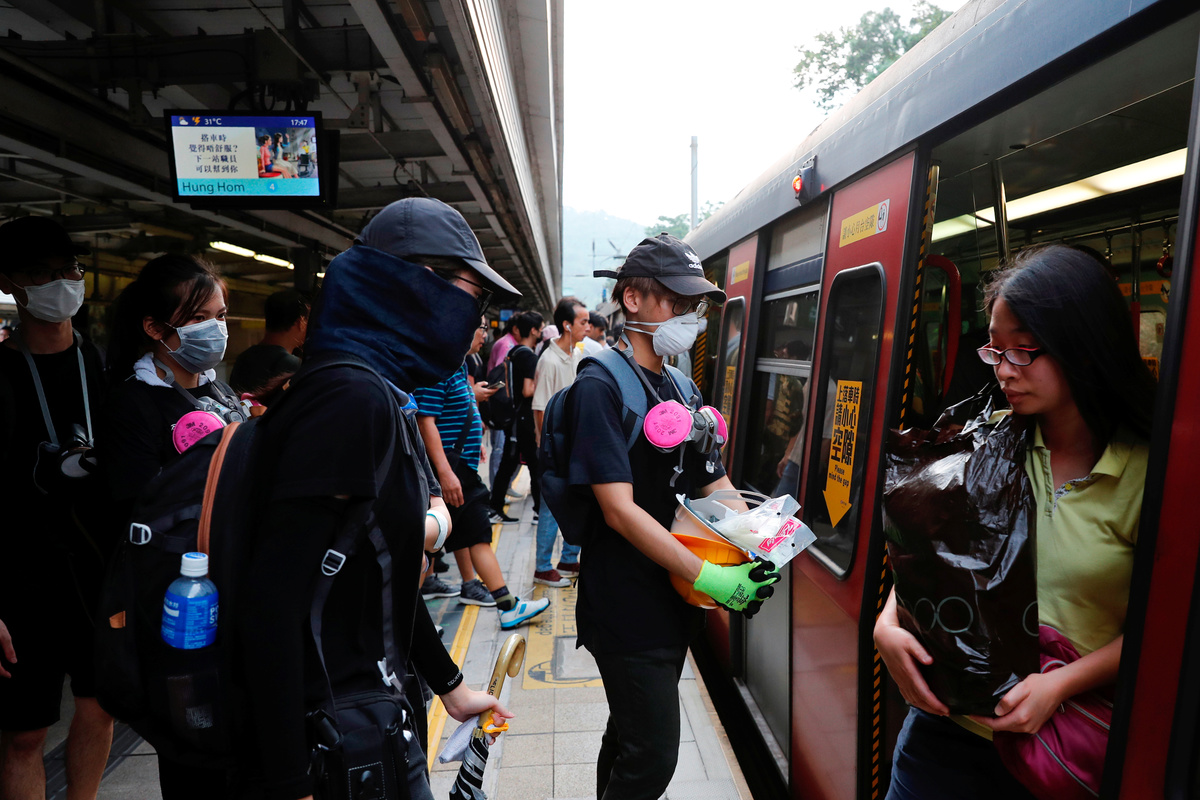
Anti-extradition bill protesters take a Mass Transit Railway (MTR) train during a protest at Tai Po residential area in Hong Kong, China August 10, 2019. REUTERS/Tyrone Siu
(Reporting by Julie Zhu, Yoyo Chow, James Pomfret, Tom Peter, Clare Jim, Stella Qiu and Twinnie Siu; Writing by Philip McClellan and Tom Westbrook; Editing by Peter Graff and Stephen Powell)
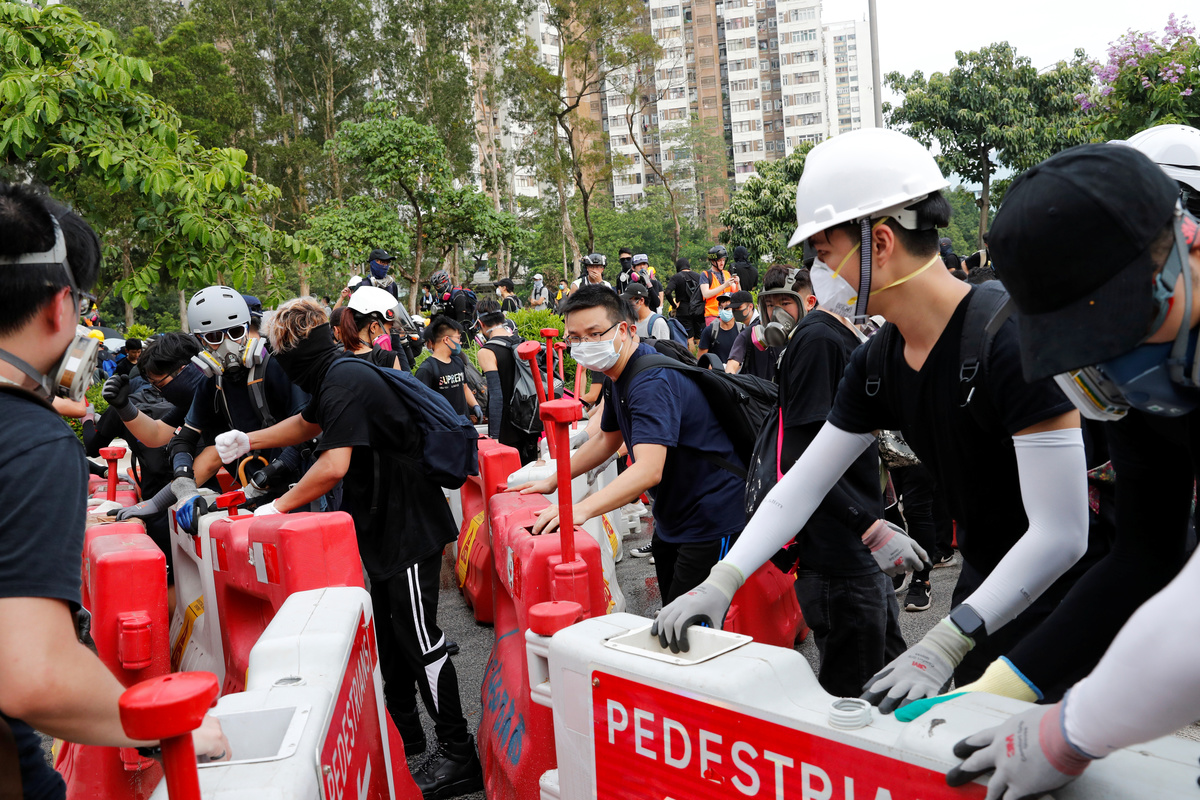
Anti-extradition bill protesters react after tear gas was fire by the police during a demonstration in Tai Wai in Hong Kong, China, August 10, 2019. REUTERS/Thomas PeterA man walks past an anti-extradition bill protester as he tries to pick up a tear gas canister at Tsim Sha Tsui after a demonstration in Hong Kong, China August 10, 2019. REUTERS/Tyrone SiuA riot police officer gestures during a demonstration held by anti-extradition bill protesters in Tai Wai in Hong Kong, China, August 10, 2019. REUTERS/Thomas PeterAnti-extradition bill protesters take a Mass Transit Railway (MTR) train during a protest at Tai Po residential area in Hong Kong, China August 10, 2019. REUTERS/Tyrone SiuAnti-extradition bill protesters set up barriers during a march at Tai Po residential area in Hong Kong, China August 10, 2019. REUTERS/Tyrone SiuAnti-extradition bill protesters take a Mass Transit Railway (MTR) train during a protest at Tai Po residential area in Hong Kong, China August 10, 2019. REUTERS/Tyrone SiuAnti-extradition bill protesters walk through Tsim Sha Tsui neighborhood in Hong Kong, China, August 10, 2019. REUTERS/Thomas PeterProtest members participate in a rally titled "Guard Our Children's Future" at Edinburgh Place in Hong Kong, China, August 10, 2019. REUTERS/Issei KatoFamily members participate in a protest rally titled "Guard Our Children's Future" at Edinburgh Place in Hong Kong, China, August 10, 2019. REUTERS/Issei Kato REUTERS/Issei KatoFamily members participate in a protest rally titled "Guard Our Children's Future" at Edinburgh Place in Hong Kong, China, August 10, 2019. REUTERS/Issei Kato REUTERS/Issei KatoA pollice officer tries to control elderly anti-extradition bill protesters in front of central government office in Hong Kong, China, August 10, 2019. REUTERS/Issei KatoAn elderly anti-extradition bill protester marches near central government office in Hong Kong, China, August 10, 2019. REUTERS/Issei KatoA family member participates in a protest rally titled 'Guard Our Children's Future' at Edinburgh Place in Hong Kong, China, August 10, 2019. REUTERS/Issei KatoA family member participates in a protest rally titled "Guard Our Children's Future" at Edinburgh Place in Hong Kong, China, August 10, 2019. REUTERS/Issei KatoFamily members participate in a protest rally titled "Guard Our Children's Future" at Edinburgh Place in Hong Kong, China, August 10, 2019. REUTERS/Issei KatoFamily members participate in a protest rally titled "Guard Our Children's Future" at Edinburgh Place in Hong Kong, China, August 10, 2019. REUTERS/Issei Kato REUTERS/Issei KatoElderly anti-extradition bill protester rally in front of central government office in Hong Kong, China, August 10, 2019. REUTERS/Issei KatoElderly anti-extradition bill protesters rally at police headquarters in Hong Kong, China, August 10, 2019. REUTERS/Issei KatoAnti-extradition bill demonstrators attend a protest at the arrival hall of Hong Kong Airport, China, August 10, 2019. REUTERS/Issei KatoAnti-extradition bill demonstrators attend a protest at the arrival hall of Hong Kong Airport, China, August 10, 2019. REUTERS/Issei KatoAnti-extradition bill demonstrators greet arriving passengers during a protest at the arrival hall of Hong Kong Airport, China August 10, 2019. REUTERS/Issei KatoAnti-extradition bill demonstrators attend a protest at the arrival hall of Hong Kong Airport, China August 10, 2019. REUTERS/Issei KatoAnti-extradition bill demonstrators attend a protest at the arrival hall of Hong Kong Airport, China August 10, 2019. REUTERS/Issei KatoAnti-extradition bill demonstrators attend a protest at the arrival hall of Hong Kong Airport, China August 10, 2019. REUTERS/Issei KatoAnti-extradition bill demonstrators attend a protest at the arrival hall of Hong Kong Airport, China, August 10, 2019. REUTERS/Issei Kato
Sign up to read this article
Read news from 100’s of titles, curated specifically for you.