Hong Kong's status as an international financial center is on the rocks. As Beijing increasingly weighs in on Hong Kong's affairs, the United States has opened the door to financial sanctions and ended its preferential treatment for Hong Kong. The situation surrounding Hong Kong looks likely to grow even more severe in the months ahead.
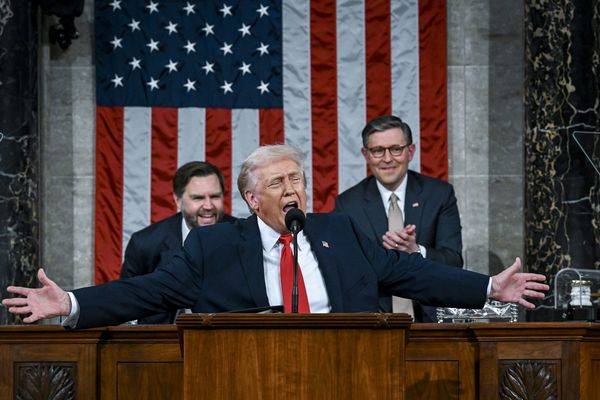
"Hong Kong, in my opinion … will no longer be able to compete with free markets," U.S. President Donald Trump said at a press conference Tuesday. "A lot of people will be leaving Hong Kong, I suspect."
Earlier that day, Trump signed the Hong Kong Autonomy Act, which enables the U.S. administration to slap sanctions on individuals and entities that contribute to the erosion of Hong Kong's autonomy, and an executive order to eliminate preferential treatment for Hong Kong. Consequently, Hong Kong will be treated the same as mainland China, and lose its privileges and special economic treatment.
Perched on the doorstep of the huge Chinese market, Hong Kong was a British territory until 1997, so many people there speak English. The Hong Kong dollar is pegged to the U.S. dollar at a fixed rate, which provides stability in the exchange market.
These strengths cannot be replicated in other cities on the Chinese mainland. "Hong Kong is extremely important to China because it brings in investment from overseas," said Wang Shenshen, a senior strategist at Mizuho Securities Co.
-- Turning point
Hong Kong continued to thrive under the "one China, two systems" formula adopted after it was returned to China from British rule. However, its position as an international finance center is crumbling as friction between the United States and China mounts.
A major turning point came on June 30, when a national security law for Hong Kong came into effect.
Beijing has explained the new law is intended to crack down on activities that undermine the authority of the central government. Despite this, just what actions would be considered illegal remains vague, and there are persistent concerns the law could be used arbitrarily. The law also contains wording that indicates it could be applied to foreigners.
**The Hong Kong Autonomy Act added to the pressure being applied over the fate of Hong Kong**.
The U.S. law clears the way for sanctions against Chinese individuals and entities involved in stifling Hong Kong's autonomy, and also against financial institutions that conduct transactions with these individuals or entities. Mari Takada, consul for political and economic affairs at the Consulate General of Japan in Hong Kong, was cautious about the law. "We must closely check what kind of banks would be subject" to the U.S. sanctions, Takada said.
It is assumed major Chinese banks will be the sanctions' main targets, but it is possible that foreign financial institutions that operate in Hong Kong could also be penalized if they do business with individuals and entities subject to the sanctions. The U.S. sanctions against financial institutions could include prohibiting transactions in foreign exchange, the provision of loans or credit from U.S. financial institutions, and overseas money transfers. Some analysts fear restrictions could be imposed on transactions made in U.S. dollars.
-- Firms feeling anxious
The lack of clarity about Hong Kong's future prospects also makes it possible that a growing number of companies will leave the metropolis.
The New York Times announced Tuesday that it would relocate its Hong Kong-based digital news operation to Seoul. The new national security law stipulates strengthened "guidance and management" of the internet and media, and the U.S. newspaper said this "has created a lot of uncertainty about what the new rules will mean to our operation and our journalism."
According to a survey published Wednesday by the Japan External Trade Organization's Hong Kong office and other bodies, more than 80% of Japanese-owned companies said they are "concerned" or "greatly concerned" by the new law. A recent survey the American Chamber of Commerce in Hong Kong conducted on its member companies also found that more than 77% were "somewhat concerned" or "extremely concerned" about the new law.
As things stand, companies are not scrambling for the door just yet, as they wait to see how the new law and Hong Kong's autonomy play out. However, businesses there are certainly feeling apprehensive about what the future holds.
Read more from The Japan News at https://japannews.yomiuri.co.jp/