
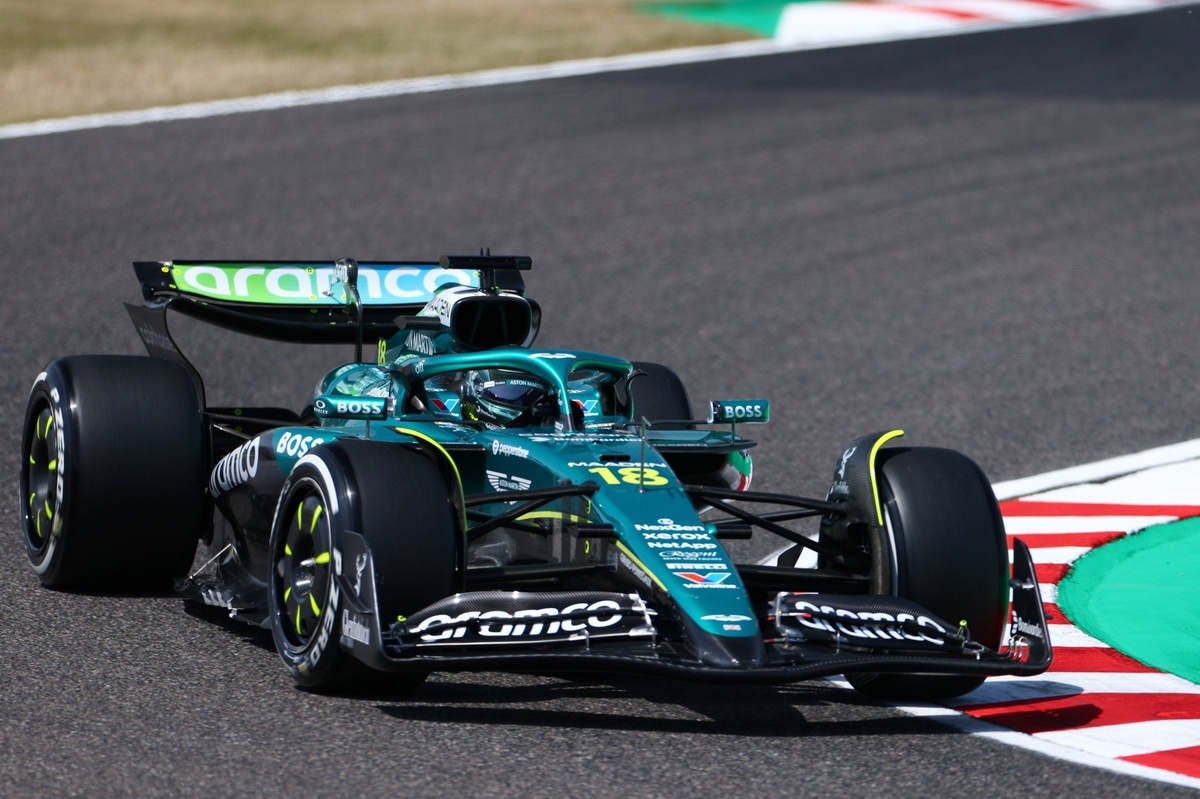
Honda has shared a first glimpse of its 2026 Formula 1 power unit, which will be used exclusively by Aston Martin.
Taking to social media, the Japanese manufacturer shared a close-up shot as well as a short video showing the silhouette of the power unit.
Fans were quick to share their excitement about the team's upcoming F1 season. "Make Fernando and me happy this year. I just want a competitive car that will allow Alonso to at least get some podium finishes," one fan commented, while another added: "No factory in the world like Honda. Remember this company with a lot of success in both car and motorcycle racing. The pinnacle of both cars and motorcycles. Formula 1 and MotoGP world champions is Honda legacy. I'm always [going to] believe in Honda."
Honda will unveil the 2026 power unit during an event on 20 January, ahead of Aston Martin's launch on 9 February.
The 2026 F1 regulations introduce a 50:50 split between internal combustion and electric power. Speaking to Aston Martin about how this will impact the cars, Honda Racing Corporation president Koji Watanabe explained: "Moving to a PU with a 50:50 split means we have to improve the efficiency of how we generate and store more electrical energy – but we also have to determine where and how much of it is used. This isn't new: the current power units require careful management of where energy is recovered and where it is deployed around the circuit – but it becomes more critical in 2026.
"The patterns of energy use differ from corner to corner, and a single circuit might have thousands of energy use patterns. We have developed software in-house at HRC to manage more than 20,000 parameters of data stream coming from the power unit to define the best energy-use patterns.
"This is not the sort of work that gathers a lot of attention publicly. But, in modern F1, where track testing opportunities are limited, the digital technologies and simulations we are developing are critically important – particularly so for 2026, where the increase in electrical energy makes the management of energy recovery and energy deployment more complex. It's a significant technical challenge; at the moment, it's perhaps the most significant of the project."













Read and post comments