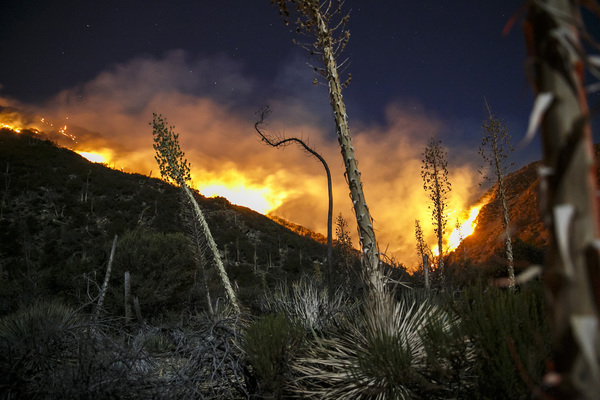
LYTLE CREEK, Calif. _ An explosive brush fire that has ripped through more than 30,000 acres of hills, canyons and flatlands in Southern California's Cajon Pass has bewildered veteran firefighters who fear the flames will only worsen.
"It hit hard, it hit fast _ it hit with an intensity that we haven't seen before," San Bernardino County Fire Chief Mark Hartwig said.
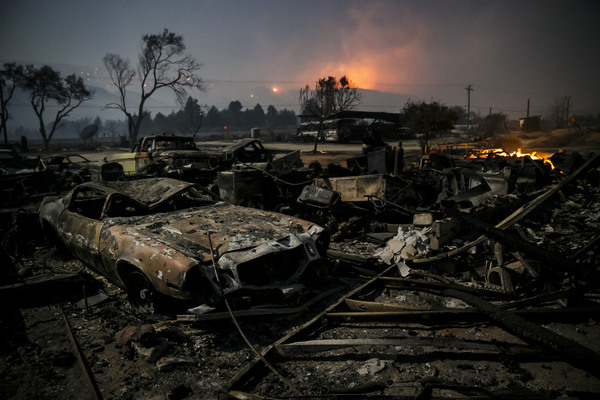
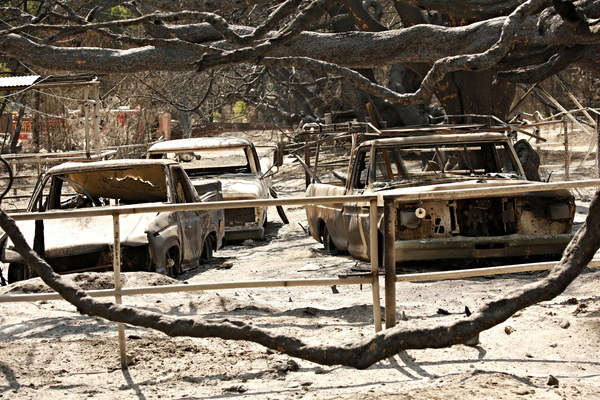
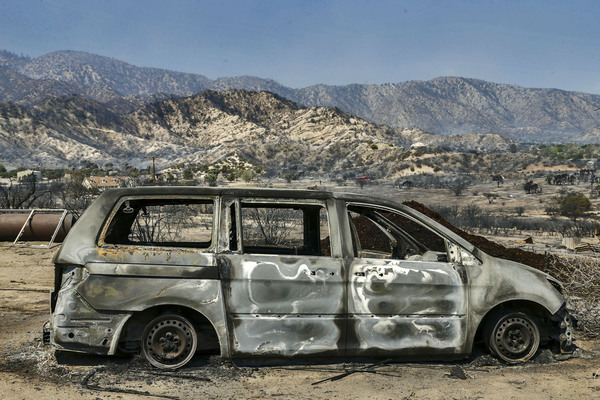
With the Blue Cut fire heading in several directions since it broke out Tuesday morning, more than 80,000 people in rural San Bernardino County communities have been forced to flee. An unknown number of homes were destroyed, and there is no containment in sight.
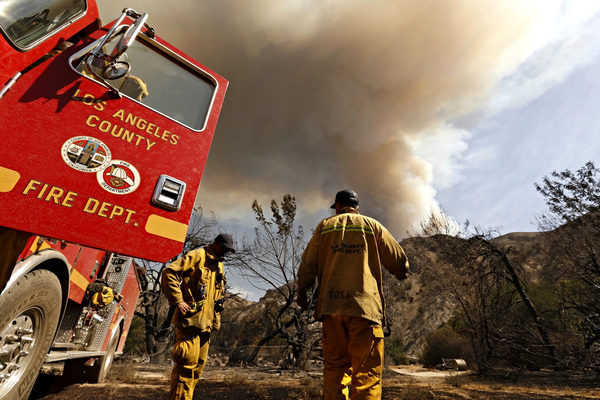
Firefighters have been put on the defense, and officials are bracing for an immense tally of devastation from flames fed by strong winds, dehydrated tinder and triple-digit heat.
"There will be a lot of families that will come home to nothing," Hartwig warned.
On Wednesday, a spokesman for the U.S. Forest Service said assessment teams and cadaver dogs would be sent to homes and structures along Highway 138.
"The fire came so quickly," Chon Bribiescas said. "We want to make sure nobody was left behind."
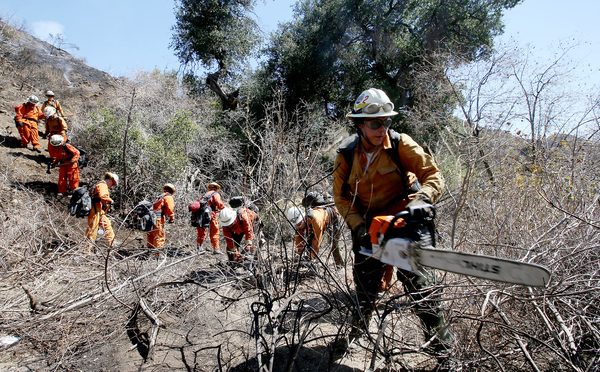
Early Wednesday, Capt. Howard Deets and the Mill Creek hotshots monitored the battle against a blaze that was consuming a hill off of Cajon Boulevard.
Crews on the ground cleared brush and laid hoses as flames flared along the ridge.
It's been 13 years since the area was struck by fire, leaving the hills and mountains a mix of dead brush and new growth.
Still, conditions were ripe for a fast-moving fire.
"It all aligned. The wind, the fuel and the topography," Deets said. "When that happens there's nothing you can do about it. You could throw the world's firefighting resources at it and it's just going to keep going."
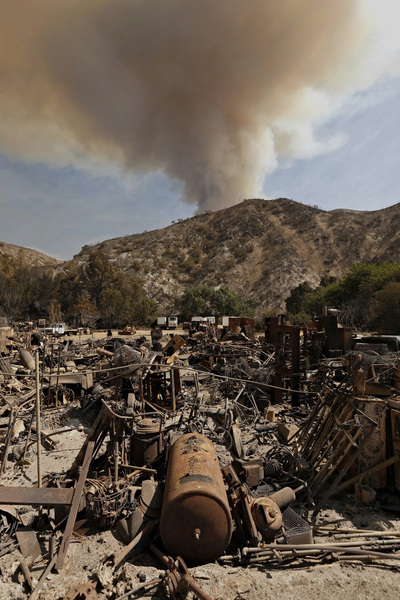
The Cajon Pass acts as a wind tunnel, funneling winds that raced up to 30 miles per hour and helping the blaze jump Interstate 15, said Michael Wakoski, battalion chief of the San Bernardino County Fire and the incident commander of the Blue Cut fire.
Wakoski said crews were battling flames in terrain so rugged it resembled crumpled paper, and that it has been nearly impossible to navigate the steep slopes.
Six county firefighters were trapped Tuesday by walls of flame while defending homes and evacuating residents in Swarthout Canyon, officials said. They were treated for minor injuries and have resumed battling the wildfire. No other injuries have been reported.
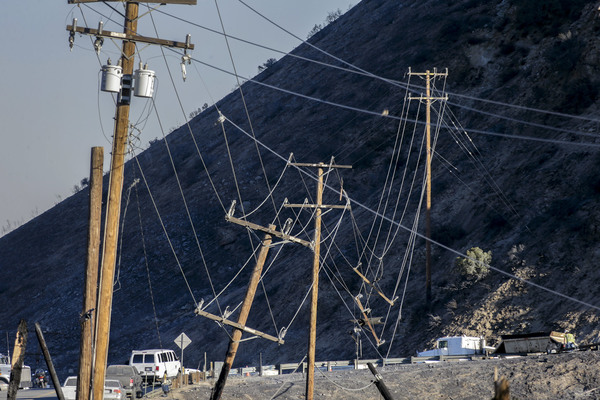
Residents in several communities, including the entire ski resort town of Wrightwood, were forced to flee as the fire spread in several directions. It closed the 15 Freeway and Highway 138 _ the two key routes in the area _ clogging traffic and making it more difficult for residents to evacuate.
In addition to Wrightwood, mandatory evacuations have been ordered for Baldy Mesa, Lytle Creek, Old Cajon Road, Lone Pine Canyon, West Cajon Valley and Swarthout Canyon, fire officials said.
Authorities initially raced door to door, urging residents to evacuate parts of Lytle Creek Canyon. A visit from a deputy on Tuesday prompted Ellen Pollema, 63, and her husband to flee their home in Happy Jack.
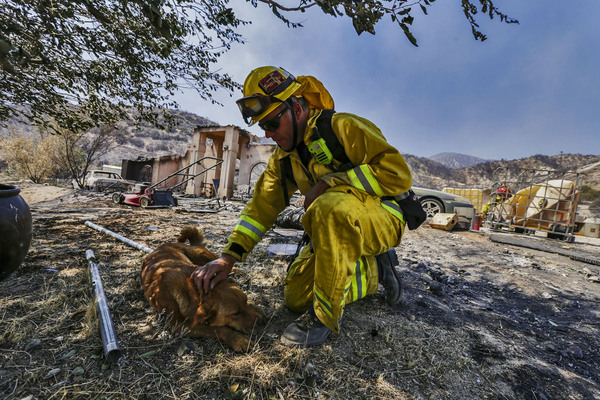
The couple quickly packed their cars and head to a nearby ranger station. An hour later, Pollema sat in a Prius stuffed with pillows, blankets, clothes and a cat nestled in its carrier. Her husband was parked nearby in a sport utility vehicle with the couple's three dogs. Pollema and her husband have lived in the area for 25 years, and were not surprised by the blaze's rapid growth.
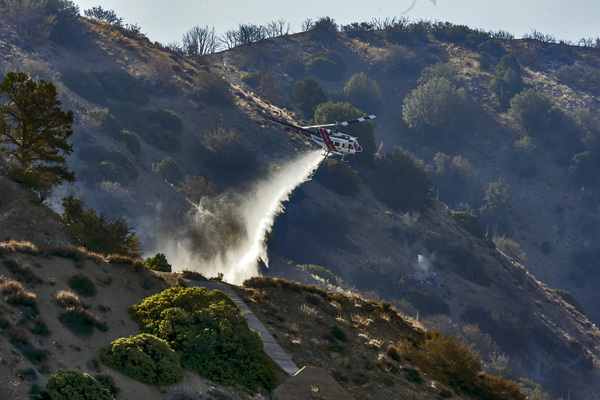
Others took a wait-and-see approach as they watched a helicopter swoop down to draw water from a lake and fly toward the advancing fire near Lytle Creek Road and Alder Way.
Cheryl Anaya, 67, had chosen to stay behind to try to protect her two-story log cabin in case flying embers descended on the wood frame building. She had done the same during a previous wildfire in north Fontana several years earlier.
"We're gonna stay and fight," she told one neighbor who was heading for the nearest highway.
But with the Blue Cut fire rapidly growing in size, Anaya accepted that she too might have to race out of the area if the flames got too close.
The blaze is the latest in a series of destructive wildfires to hit California as the state endures its fifth year of drought. The fires this year have claimed hundreds of homes and killed eight people, but officials warn the worst might be still to come because Southern California's traditional fire season doesn't begin until fall, when the hot Santa Ana winds typically arrive.
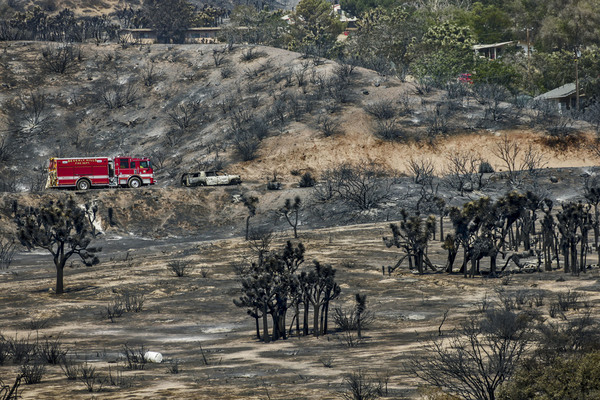
Officials blame the drought _ which has left brush dangerously dry _ for helping fuel the fires, which have stretched from Lake County in Northern California to the border region in San Diego County. In some areas, the fires have also been fueled by millions of dead or dying trees in forests.
The fires are a sort of "new normal," said Char Miller, an expert on wildfires and national forests at Pomona College.
"We're in the fifth year of drought and we're starting to see the consequences of that," Miller said.
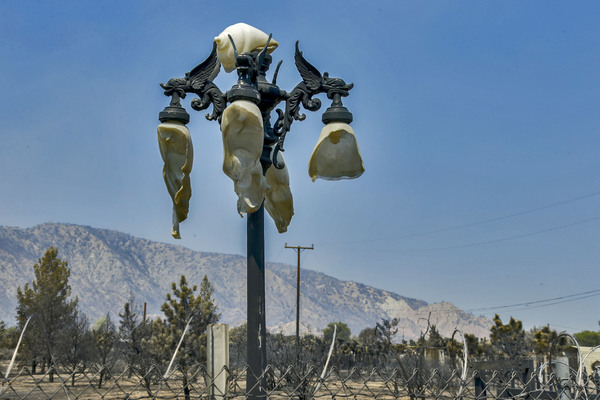
Authorities shut down the 15 Freeway from Oak Hill Road to Kenwood Avenue, forest officials said. California 138 is closed from California 2 to the 15. The 15 is the major thoroughfare for drivers headed to Las Vegas from Southern California.
There is little weather relief in sight for firefighters battling the Blue Cut fire, the National Weather Service said.
"At least for the next couple of days, it's going to be very, very dry," said Philip Gonsalves, a meteorologist with the weather service in San Diego. "That's the conditions that will affect the fire more than anything else. It's going to be hot, very dry and windy in the afternoons."
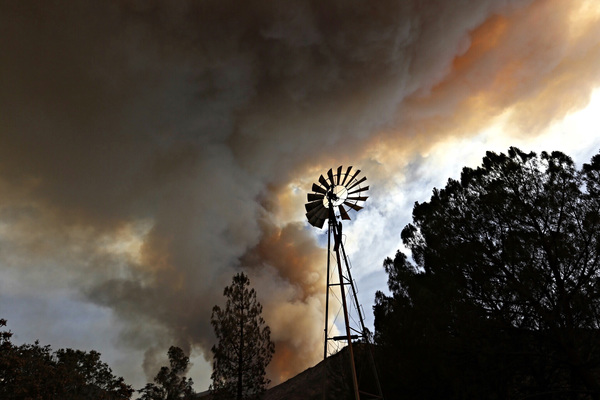
The winds should drop off at night, the weather service said, but it will still be dry.
"They won't get much in the sense of humidity recovery in the nighttime hours," Gonsalves said. "If there's a fire in a location where there's good humidity recovery overnight, it helps the firefighters to get a handle on the fire. That's not the case here. This is important because the fire doesn't lay down at night. They don't gain much of an advantage."
Starting Friday, he said, temperatures will cool slightly and that will help firefighting efforts. A high of 99 is forecast Wednesday, with southwest wind gusts of up to 10 mph expected in the afternoon.