Alice Welch describes herself as the “ultimate Robert Welch groupie”. In fact, she’s quite a lot more than that, being both the daughter of the great product designer and silversmith, and, with her brother Rupert, custodian of the company that still bears his name.
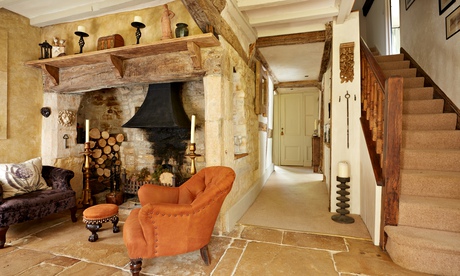
Her rambling, centuries-old Gloucestershire farmhouse might not look obviously like the home of someone with such impeccable modernist credentials, but there are clues lurking here and there. For are those not Robert Welch Lumitron table lamps and Robert Welch Hobart cast-iron candlesticks adding the slightest 1960s groove to an otherwise classic country interior? Indeed they are. And if you were forward enough to fling open her kitchen cupboards and drawers, you would find them full of highly collectible Robert Welch tableware.
“I like to mix the very old and the new, which is something my family did,” Alice says. “We lived in a very modern house in Stratford-upon-Avon when I was growing up. It was all glass, teak floors and teak ceilings, and underfloor heating, which was really out-there then. But my parents always mixed that modernism with antiques, and it worked well. That has been a big influence on me.”
Welch’s search for this dream house, like the sensitive restoration it has undergone since, was slow and painstaking – so slow and painstaking, indeed, that her exasperated husband, John Simpson, an interior designer and paint-effects specialist, had long ago given up accompanying her on viewings. Why so exacting?
“I was after character,” she says. “I didn’t mind if that was uber-modern or very old, but it had to have it. I’d looked at 50 houses before this one. I just walked in here five years ago and thought it was the most fantastic place I’d ever seen. It has a very cosy feel even though it is a big house. And what I like is that it is built on a square plan, with each room leading on to another, so there are no wasted corridor areas. I agreed to buy it there and then.”
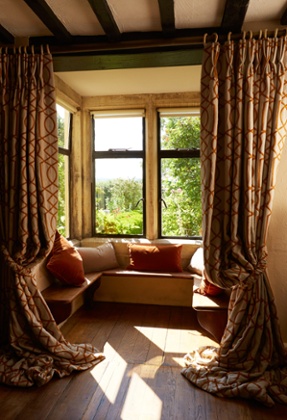
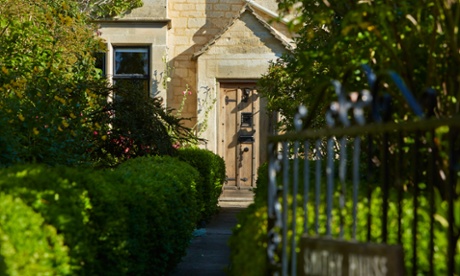
It’s not hard to see why. There are mullioned casement windows galore, original flagstone floors and, in the oldest part of the house, an inglenook fireplace (complete with authentic bread-proving oven) dating to the mid-17th century. There are enough bedrooms – five – to accommodate the couple’s frequent overnight guests comfortably, and a cottage garden whose glory Welch, though a keen plantswoman herself, attributes to the vision and back-breaking hard work of the house’s previous owners. And then there is the Cotswolds countryside, which is laid out before you beyond a handsome pair of honey-coloured stone gate piers. It is here that Welch walks her wire-haired dachshunds, Buster and Poppy, relishing the restorative effect of the Gloucestershire air. She got more of that than she bargained for, mind, when she and John decided to replace the timber frame supporting the back of the house with green oak.
“It was quite a drama as it involved taking down the whole of the back wall. There we were, taking baths with just a plastic sheet billowing in the wind between us and the outdoors.” The timber frame and their modesty eventually restored, the couple then embarked on other projects to tease the house, which is not listed, into the 21st century – such as replacing wattle-and-daub walls with something suitably sympathetic but more insulating.
All that remains now is to finish stripping the internal beams of the accretions of oppressive black paint, a task so tedious that they can only bring themselves to tackle it one room at a time. “It really is a labour of love.” All those on the ground and first floors are done, but they still have the cavernous attic to go, Welch adds with a sigh. Still, it’s hard to feel too sorry for her.
Robert Welch – Design: Craft and Industry by Charlotte and Peter Fiell is published by Laurence King at £30. To buy a copy for £24, go to bookshop.theguardian.com