Many years ago, as a fresh-faced government researcher who had just done a stint as a housing adviser, I was pulled up short by a council housing officer who asked me why I was researching homelessness when we already knew all the answers.
And that's the trouble with homelessness. Many of us think we know what the problem is and even how we might prevent it, but the sad fact is that too much of what we know about the problem and what will work to tackle it just doesn't happen.
Of course that's not for want of trying. We know that once homelessness has happened, support workers are crucial in helping people get their lives back on track – reconnecting them with friends and family and helping them deal with a wide range of issues. What we haven't been really clear about until now are the needs people accessing support services really have. Is it all about homelessness or not?
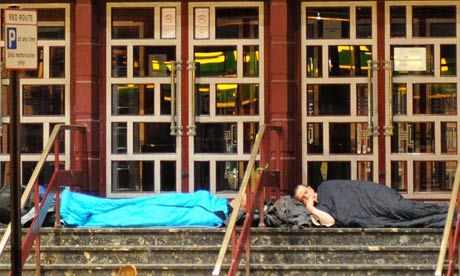
Official homelessness, such as applying to the council or getting into a hostel, happens very late in people's homelessness journey. So, with annual homelessness figures increasing for the first time since 2003-04 and 1,768 people sleeping rough, we need to better understand people's experiences of both homelessness and rough sleeping.
New research on tackling homelessness and exclusion does just that; highlighting the striking incidence of mental health issues, traumatic childhood experiences and suicide attempts amongst people accessing low-level homelessness support services. Low-threshold homelessness support is supposed to be for people whose main problem is homelessness, but in reality people's lives are far from this straightforward. Some 25% of the people in our research had as many as 16 different problems, including homelessness.
Low threshold services weren't set up to deal with this level of complexity. This presents really clear challenges; not least the levels of expertise support workers need to deal with the extent of mental distress – 79% of all services users reported anxiety and depression and 38% had attempted suicide. There's also a bigger challenge – co-ordinating the other services involved in working with people.
Spending cuts present another threat. Despite the government protecting the national Supporting People budget, at least in relative terms, at a local level the lack of a budget ring fence means that the gloves are off. Services are facing real problems. Homeless Link's survey of needs and provision found that 63% of services that had funding cuts had reduced staffing levels, closed services and/or reduced their contact time with clients. Over the last year that amounts to a loss of 1,169 bed spaces.
These are challenging times to ask more from overstretched services, but with a £400m Homelessness Prevention Grant and another £20m for the transition fund to tackle rough sleeping there are clear opportunities.
If we're serious about tackling homelessness we need to use these funds to deliver more flexibly tailored, individual support services. We know this can work with the complex lives of rough sleepers to support them out of homelessness.
This research is a wake-up call, not just for services on the ground but for government too. If we're serious about tackling homelessness and rough sleeping, we've got to turn the rhetoric about joint working into a reality.
Kathleen Kelly is policy and research manager at the Joseph Rowntree Foundation
This content is brought to you by Guardian Professional. Join the housing network for the latest updates on housing policy, practice and careers