
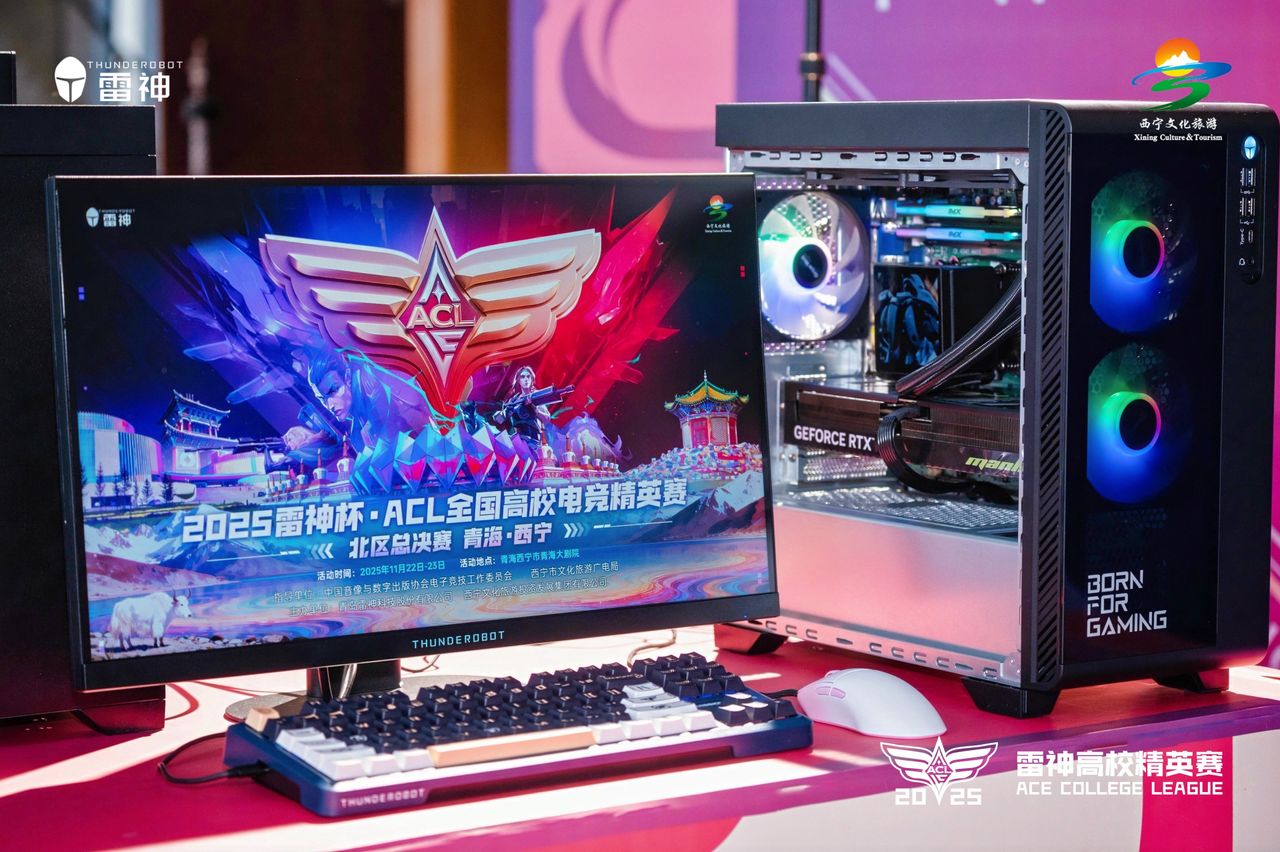
While Chinese chipmaker Hygon may not currently have a processor that surpasses the best CPUs, it seems only a matter of time before it introduces a very competitive chip. Recently, Thunderobot launched the Black Warrior Hunter Pro, China's first gaming PC powered by a domestic Hygon C86-4G processor, which appears to deliver performance close to that of Intel's 13th Generation Raptor Lake models.
The C86-4G, designated with the OPN 3490, features 16 cores, 32 threads, and 32MB of L3 cache. If the specifications appear familiar, it is because Hygon licensed AMD's Zen IP through a joint venture several years prior. Current speculation suggests that Hygon employs the Zen core design in the C86-4G, despite the company's latest roadmap indicating that the C86-4G utilizes a "new, self-developed microarchitecture." The C86-4G operates at a clock speed of 2.8 GHz, which is lower than AMD's first-generation Zen processors.
The C86-4G supports cutting-edge technologies, including DDR5 and PCIe 5.0. Neither was supported on Zen, but Hygon may have identified a method to transfer AMD's Zen chiplets to a more recent I/O Die (IOD) equipped with a DDR5 and PCIe 5.0 controller.
More significantly, the C86-4G is an x86 processor, so it'll run Microsoft Windows and compatible applications and games, unlike other Chinese domestic processors based on Arm or RISC-V architectures. This represents a significant advancement for China, as the C86-4G can be readily used beyond gaming without worrying about compatibility or translation layers.
Hygon C86-4G CPU Benchmarks
Processor |
SPEC06 STint |
SPEC06 STfp |
SPEC06 MTint |
SPEC06 MTfp |
|---|---|---|---|---|
Core i7-14700 |
81 |
97 |
585 |
501 |
C86-4G |
47 |
64 |
607 |
460 |
Core i7-13700 |
76 |
92 |
498 |
427 |
Core i7-12700 |
71 |
85 |
386 |
331 |
A recent Weixin post demonstrates the C86-4G competing with the Core i7-12700, Core i7-13700, and Core i7-14700. The SPEC CPU 2006 benchmark, however, is outdated and has been in the retirement home since 2018. Nevertheless, the V-Ray benchmark remains a reliable option for assessing processor performance.
The C86-4G's single-threaded performance was inferior to that of all Intel processors. It was up to 33% less efficient than the Core i7-12700.
In the context of multi-threaded performance, however, the C86-4G demonstrated an improvement of up to 22% over the Core i7-13700 in integer benchmarks and up to 8% in floating-point benchmarks. It additionally achieved performance levels up to 4% higher than the Core i7-14700 in the multi-threaded integer benchmark.
Processor |
V-Ray Benchmark |
|---|---|
Core i7-14700K |
22,532 |
C86-4G |
17,640 |
Core i7-13700 |
16,436 |
Core i7-12700 |
13,628 |
Regarding the V-Ray benchmark, the C86-4G achieved a score 29% higher than the Core i7-12700 and 7% higher than the Core i7-13700. However, the Chinese chip fell behind the Core i7-14700K by a substantial 22% margin.
The post also claims that the C86-4G is capable of running Valorant and Black Myth: Wukong; however, no proof or results were presented.
It is easy to comprehend why the C86-4G lags in single-threaded performance, given the speculation that it continues to utilize AMD's Zen execution cores. Clearly, it holds an advantage in multi-threaded performance due to its 16 cores. The Core i7-12700 and Core i7-13700 may appear impressive on paper with their 12 and 16 cores, respectively; however, only eight of these are P-cores.
While Hygon's processors are viable options for processing power, Chinese domestic graphics cards present a different situation. Despite their progress over the past few years, there remains a significant gap between domestically produced Chinese graphics cards and those offered by Nvidia, AMD, or even Intel. Consequently, Thunderobot's latest RGB-inspired, liquid-cooled gaming PC continues to utilize an Nvidia GeForce RTX gaming graphics card.
Meanwhile, Hygon celebrates a victory for domestic chips, and Thunderobot enjoys the spotlight for having released China's first domestically produced gaming PC, even if it's just the processor that's homegrown.

Follow Tom's Hardware on Google News, or add us as a preferred source, to get our latest news, analysis, & reviews in your feeds.