The Milan Furniture Fair is widely regarded as the litmus test for what is happening in design, the place where innovations are unveiled and new trends come to the fore. And this is precisely why the highly regarded Dutch designer Hella Jongerius and design theorist Louise Schouwenberg chose the occasion to launch a strongly worded manifesto critiquing the industry. It suggests design has become “an empty shell, devoid of meaning and substance” and deplores “the obsession with the New for the sake of the New”.
Anchored by the behemoth trade fair Salone del Mobile (now in its 55th year), the Milan Furniture Fair (aka Milan Design Week) is an international show-and-tell of new design and ideas. That’s the hope, at least.
It’s fair to say that it wasn’t Milan Design Week’s finest hour, however, with murmurs of “damp squib” heard well before the rain started on the fifth day. Jongerius and Schouwengerg needn’t have worried. Earth-shattering newness? Not so much. Instead some of the most alluring exhibits were retrospectives and some of the most pleasing products were 20th-century designs reissued and repackaged for a 21st-century market.
There were exceptions, and certainly some useful points for trend-hunters to take away. I’ll take a punt on pink being the colour of the week, although the pastel shades of green, yellow and blue were also strong. Marble, copper and exposed woodgrain surfaces continue their dominance over synthetic fabrications. Chairs that hang from the ceiling are apparently the new chairs that have legs. And for some unfathomable reason, the wacky style of the 80s postmodern Memphis group – which I’ve always thought of as the physical manifestation of a migraine – is having a bit of a moment.
The following are among my personal highlights. Some impressed through their sheer ambition, others because they were inspiring and delighted the eye, and a few simply because I’d actually like to have them in my home. And surely that’s what this week should be about.
Enlightening lighting
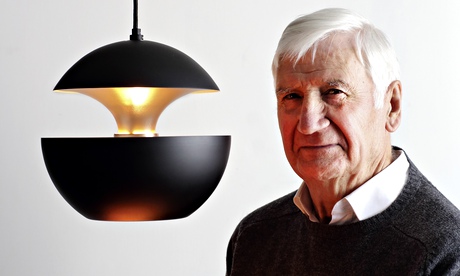
There were some standout pieces at Euroluce, the biennial lighting feature at Salone del Mobile. DCW Éditions specialises in searching out long-forgotten 20th-century lighting designs. This year it presented Here Comes the Sun, designed by the French architect Bertrand Ballas in 1969, when it was created in small numbers. After finding one in a flea market, DCW Éditions tracked down Ballas (now in his 80s) and put it into production for the first time. London-based Michael Anastassiades introduced the latest evolution of his elegant chandelier series with Mobile Chandelier No 7, featuring two opaline glass globes of different sizes hanging from a curved rod of black patinated brass. Spanish company LZF Lamps created a spectacle with its imaginative use of wood veneer. The sculptural pieces (such as the metre-long carp light Koi designed by Inocuo The Sign) are hand-made in its Valencia workshop (dcw-editions.fr; michaelanastassiades.com; lzf-lamps.com).
Open-door policy
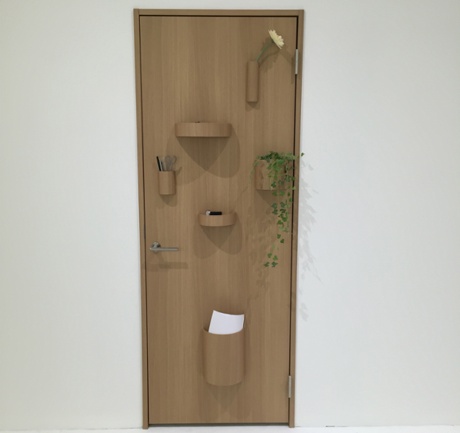
The Japanese studio Nendo, led by designer Oki Sato, staged a mighty exhibition featuring new pieces for about a dozen manufacturers. There was no shortage of the pared-down, minimalist aesthetic we’ve come to expect from Nendo. The tinted glass furniture for Glas Italia was unearthly in its perfection and beauty. Equally compelling was the Tokyo Tribal collection designed for the Singapore company Industry+. It featured pieces that combine oak frames with woven bamboo in two-tone geometric patterns used, for instance, to form chubby backrests on chairs. Elsewhere Nendo explored the idea of standard door design, incorporating sconce lights or plant pots, and in one case a built-in mini-me second door for children. The presentation showed that Nendo is not only prolific but also has a great sense of range and an ability to still surprise and make you smile (nendo.jp/en; industryplus.com.sg).
The glamour king
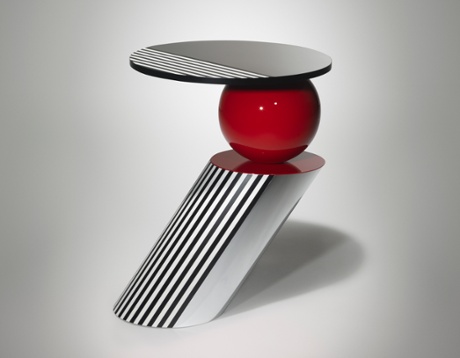
One of the most ambitious and best-realised single-designer presentations I visited was that of the London-based Lee Broom, who created a stylised department store setting to show off his whopping 25 new pieces. This was a moody, sexy show spread over two floors where disrobed mannequins, curtains and plinths were painted matt grey, allowing Broom’s glossy designs to stand out. There were hints of the 80s with combinations of red and black and wonky postmodern shapes; playfulness in a burlesque-style swing seat, and graceful material combinations in lighting. I’d struggle to name a designer who poured on the glamour quite like Broom (leebroom.com).
Palaces for the people
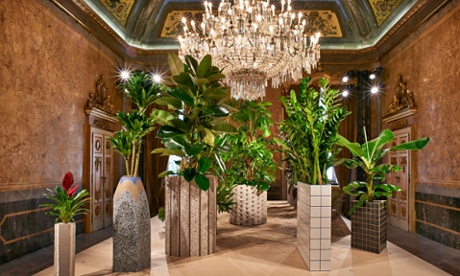
One of the true highlights of the week was visiting the extraordinary palazzos where some exhibitions were staged. Louis Vuitton took over part of the glitzy gilt-and-marble Palazzo Bocconi for its Objets Nomades collection in collaboration with designers including Barber Osgerby and the Campana Brothers. Airbnb teamed up with Fabrica designers to explore the idea of “housewarming” within the setting of Palazzo Crespi – still a family home. Stone-surface manufacturer Caesarstone commissioned Canadian designer Philippe Malouin to use its materials to fill Palazzo Serbelloni. While his plant pots had the most commercial appeal, it was a Caesarstone swing set, installed in a ballroom, that really stole the show. If you ever find yourself in Milan during its design week, I implore you to take advantage of the fact that these historic places are open to the public for a rare look within. Who knows, you might even like some of the new stuff that’s being exhibited inside (caesarstone.co.uk).
Ahead of the curve
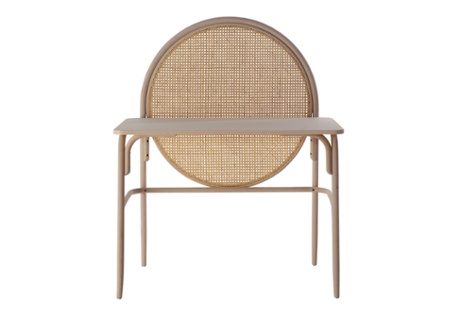
Gebrüder Thonet Vienna is known for its iconic mid-19th century No 14 chair, an early example of steam-bent wood manufacturing. It still uses this process, but through collaboration with leading designers including Front and Martino Gamper it is now moving the brand’s aesthetic beyond that of the archetypal bistro chair. The most impressive pieces were by Italian-Danish duo GamFratesi (Stine Gam and Enrico Fratesi), who won the Milano Design Award for their curation of the MindCraft exhibition of Danish design. The dining chairs, upholstered seating and desk they produced for Thonet were among the prettiest and most pleasing designs of the week (gebruederthonetvienna.com).
David Nicholls is Features Director of House & Garden