Afternoon summary
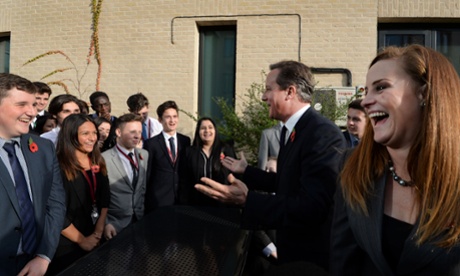
- David Cameron has used a visit to Rochester today to urge Labour and Lib Dem supporters to back the Tories tactically in the byelection to keep Ukip out. He spoke shortly before a new poll came out giving Ukip a 12-point lead in the constituency.
-
Cameron has claimed that today’s Wanless/Whittam report shows that there was no cover-up at the Home Office - contradicting Theresa May, who said a cover-up may have taken place. On a visit to Rochester, he said the report showed “conspiracy theorists” would have to “look elsewhere”.
There will be lessons to learn from this report and people should study it closely. But I think it is important that it says there was not a cover-up. So some of the people who have been looking for conspiracy theories I think will have to look elsewhere.
Earlier, May explicitly said the report did not prove that there was no cover-up. (See 2.30pm.)
-
Ministers have opened the way to 16 and 17-year-olds getting the vote in Wales in a referendum on whether the Cardiff assembly should have more powers. They have agreed a concession to the Wales bill, which would allow the Welsh assembly, not London, to decide whether 16 and 17-year-olds should have the vote in a future referendum on Cardiff getting tax-raising powers. Assembly members are in favour of enfranchising this group. The move was welcomed by the Lib Dem peer Lord Tyler.
We have seen during the Scottish referendum that 16 year olds are more than capable of taking a considered and active part in democracy. Surely no one can claim that 16 year olds in Wales are any less bright, responsible and engaged than 16 year olds in Scotland.
That’s all from me for today.
Thanks for the comments.
Updated
Cameron urges people to vote tactically against Ukip in Rochester - Byelection round-up
Following the Ashcroft poll, here is a Rochester and Strood round-up with more stories from the byelection.
-
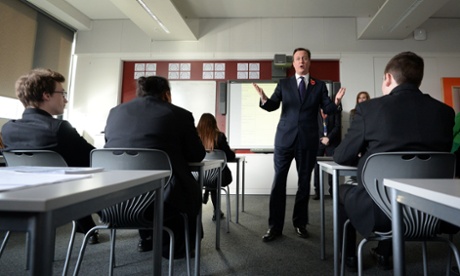
David Cameron has used a visit to Rochester today to urge Labour and Lib Dem supporters to back the Tories tactically in the byelection to keep Ukip out. He told the local paper:
I would say to people who have previously voted Labour, Liberal, Green or anything, that if you want a strong local candidate and don’t want some Ukip boost and all the uncertainty and instability that leads to, then Kelly is the choice ...
There is a real opportunity for people of different political parties to unite behind the local candidate and to say to the MP ‘we don’t like the way you behave; we don’t like this sort of politics we want to vote for the person who stands up for the area’.
Cameron on the campaign trail Rochester visit #4 at Strood Academy with Kelly Tollhurst pic.twitter.com/mDQBCWylOH
— Beth Rigby (@BethRigby) November 11, 2014
-
Rod Liddle at the Spectator gives his verdict on the Rochester hustings organised by BBC South East.
The best, by a million miles, was Labour’s Naushabah Khan – unruffled, articulate, competent. Mark Reckless – Ukip’s lauded defectee – was disingenuous and evasive and possessed of all of the charisma and warmth of a caravan site on the Isle of Sheppey in late February. But at least he made sense when he spoke.
The Tory candidate, Kelly Tollhurst, was utterly useless on a rather epic level, unable to string a single sentence together. The Lib Dem bloke look like he’d been constructed out of flour and water by a class of remedial six year olds and made no sense at all.
You can watch the hustings here.
WATCH: UKIP's @MarkReckless on @bbcsoutheast's Rochester and Strood by-election special http://t.co/44Gho2EY0l
— UKIP (@UKIP) November 11, 2014
And here is a BBC news report about it.
Yesterday, only ten days before the Rochester and Strood by-election, a damning letter from Medway Hospital NHS trust emerged, in which Mr Reckless was accused of “misleading” voters in an election leaflet.
Shena Winning, chairwoman of the trust, said the board of directors were “extremely concerned, and surprised, to see a picture of our acting chief executive Dr Phillip Barnes and your candidate being used in the editorial”.
Ms Winning said the photograph implied “that both Dr Barnes and the hospital were supporting Mr Reckless’s campaign”, which she criticised as “misleading and out of context”. The trust called on Mr Reckless to withdraw the leaflet immediately.
Not since Simon de Montfort and his knights rode into Rochester Cathedral on Good Friday 1264 and stabled their horses in the pews of the ancient church has this north Kent town commanded the attention of so many political bigwigs. Nigel Farage is the de Montfort of our times, rampaging around the country and railing against the tyranny of the existing power structure. Back in the 13th century de Montfort effectively ran the country for a short while. He called two parliaments that stripped Henry III of his unlimited authority and invited ordinary citizens to participate in the governance of the nation for the first time.
Though an undoubted Norman toff, de Montfort was the unlikely progenitor of modern parliamentary democracy. Farage, with his suspiciously French-sounding name, sees himself as a bulwark against despotism (the EU) and the champion of the common man (and woman). He is also using Parliament as the vehicle for his crusade. The Clacton by-election secured Ukip its first MP in the shape of former Tory Douglas Carswell, and Rochester and Strood looks likely to return another next week. Mark Reckless, who defected to Ukip on the opening day of last month’s Conservative Party conference, has been ahead in the few polls conducted since then, if not quite as emphatically as Mr Carswell was on the other side of the Thames Estuary.
Updated
And here’s an extract from Lord Ashcroft’s commentary on his Rochester poll.
Ukip lead the Conservatives by 44% to 32% in the Rochester & Strood by-election, according to my poll of the constituency completed yesterday. Labour are a distant third with 17%, with the Liberal Democrats on 2%.
The previous three polls of the campaign have all found the Conservatives on between 30% and 33%. While UKIP appear to have consolidated their position over the course of the campaign, Labour have declined from the mid-twenties to the mid-teens ...
Though Mark Reckless looks set to be returned to parliament next Thursday, the evidence is that he can expect a battle next May. Of those naming a party, 36% of Rochester voters said they would probably vote Conservative at the general election, 35% Ukip and 21% Labour. Just under three quarters (72%) of Ukip by-election voters said they would stay with their party next year, with 11% saying they would switch to the Tories and a further 11% saying they did not know what they would do.
Updated
My Rochester & Strood by-election poll, at a glance: pic.twitter.com/zbdLi8VQYD
— Lord Ashcroft (@LordAshcroft) November 11, 2014
Ukip have 12-point lead in Rochester byelection, poll says
Ukip have a 12-point lead in Rochester, according to Lord Ashcroft’s latest poll.
UKIP 12 points ahead in Rochester, but what will happen next May? My by-election poll commentary, now on @ConHome: http://t.co/hrfbLkGK8Y
— Lord Ashcroft (@LordAshcroft) November 11, 2014
Updated
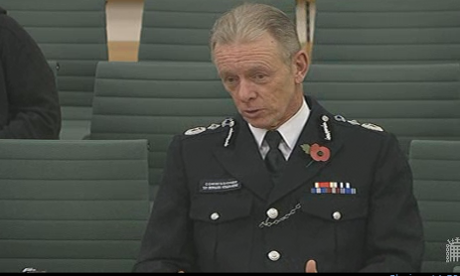
Sir Bernard Hogan-Howe's evidence to the home affairs committee - Summary
Here is a summary of the key points from the hearing.
- Sir Bernard Hogan-Howe said the Home Office has still not decided whether or not the Met can use the three water cannon is has bought. Officers can train with them, but they cannot use them without permission, he said. After the hearing Keith Vaz, the committee chairman, said he was surprised by this.
Amazed that Theresa May has not written to Met Police Commissioner giving an answer as to whether he can use the 250k water cannons
— Keith Vaz MP (@Keith_VazMP) November 11, 2014
- Hogan-Howe said he thought water cannon would have been helpful to police on the first day of the riots in 2011. But he stressed that he was not a zealot for water cannon, and that ideally he would like them not to be used.
- He said that the police should only use the Regulation of Investigatory Powers Act when people are suspects or victims. Ripa should not routinely be used in relation to journalists, he said. But, equally, criminals had to be investigated, he said.
- He said democracy required “a strong press” and that journalists needed to protect their sources.
-
He said it was Met policy stipulated that undercover officers should not have sex with people they were investigating. But undercover officers also had to be allowed some “leeway”, he said.
Q: Is the landscape of policing settled? You are keeping counter-terrorism.
Hogan-Howe says he thinks the government was right to keep that with the Met.
And that’s it. I’ll post a summary soon.
Q: We are also looking at the College of Policing. How do you think they have done?
Pretty well, says Hogan-Howe. It has a good leader, but it is struggling with a lack of resources.
Keith Vaz goes next.
Q: The committee is about to launch in inquiry into Mr Bigs. Some 80% of £920m owed by convicted millionaires has not been paid.
Hogan-Howe says the Met is doing pretty well. But the overall amount of money being recovered is too low.
Julian Huppert goes next.
Q: Straw men are put up in this argument. Have you come across anyone arguing for the police to have no access to internet data?
Almost, says Hogan-Howe. Some campaigners in this area won’t say what they would propose as an alternative.
Q: Do you accept that there is a lack of trust in authority post Snowden?
Hogan-Howe says the web should not be an area where people can commit crime with impunity.
He accepts that many people are concerned about the intervention of the state in privacy. There is a balance to be struck, he says.
Q: Can it be a matter of life or death for the police to access communications data?
Sometimes, says Hogan-Howe.
The police would always say they would use information for a good purpose, he says.
But he accepts that the public are concerned.
There is a difference between the police and the security services. They gather intelligence; the police need to gather evidence they can put in court.
With intercept evidence, the threshold that has to be passed before police can get the information is very high.
With communications data, the bar is lower, he says.
Michael Ellis, a Conservative, goes next.
Q: Sajid Javid has said the Conservatives would introduce a bill of rights including freedom of the press. Would you support that?
Hogan-Howe says he does not want to comment on the idea of a bill of rights.
He says it would be unwise to go to far either way. People should not be given absolute protection. But journalists should be allowed to do their job.
The press play an important role in a democracy, he says.
Updated
Winnick asks about the case of Bob Lambert, the undercover police officer who fathered a child with a woman he was spying on.
Hogan-Howe says commanders used to be able to authorise these operations to run for years and years.
Now, if an operation is lasting more than a year, there has to be approval from a higher authority.
Q: Is sex out?
Hogan-Howe says it was never meant to happen anyway.
Q: Won’t that lead to people using that as a test?
Hogan-Howe says these kind of issues arise anyway, with issues like drugs and firearms. Officers are tested, and have to make decisions quickly. They should be given some leeway, he says.
He says he cannot say this will never happen.
But the policy is clear.
Labour’s David Winnick goes next.
Q: Are you saying water cannon would have helped during the riots?
Only on the Saturday, says Hogan-Howe.
He says he saw what happened when officers “stood there being bricked” for a long time.
Hogan-Howe says he thinks water cannon should be available for the police.
Q: What will you do if the home secretary decides not to allow you to use them?
Hogan-Howe says they may decide to keep them in case they get permission to use them on a later occasion.
Julian Huppert tells Hogan-Howe he once said he was not a zealot for water cannon. He reads out the quote.
Hogan-Howe says Huppert has not read the full context.
He says he is not a zealot of guns either.
He hopes that water cannot are never used on mainland Britain. But in the 2011 riots there could have been a case for using them.
Q: Have the Met made arrests of people on Project Spade (involved suspect child abusers, involving information from Canada)?
Hogan-Howe says the Met received around 190 notifications. Two thirds of those have been followed up. Of the remainder, most are people who have been charged or are in jail already. In only three or four cases are the Met still trying to identify the offender.
Julian Huppert, the Lib Dem MP, goes next.
Q: It was agreed to have a new code of practice for Ripa. Have you seen that?
Hogan-Howe says he has not seen anything specific.
Q: Can you exclude journalists from Ripa?
Not entirely, no, says Hogan-Howe.
If crime is involved, it should be investigated.
There are some areas where people should be protected: laywers and their clients, journalists and their sources, perhaps MPs, perhaps medical privilege.
In cases like this, there should be checks before Ripa can be used, he suggests.
He says he has seen cases where lawyers have been acting as criminals. They might be acting as a lawyer 90% of the time, but a criminal 10% of the time.
In those cases, with intercept evidence, the police use a firewall, so information only gets passed to the police if a third-party says it is relevant.
Q: Would you be happy to look at these options?
Yes, says Hogan-Howe. But there would be an issue about how you define a journalist.
Q: Have you stopped destroying documents?
Yes, says Hogan-Howe.
Q: On corruption, do you accept the estimate that between 1,000 and 2,000 officers can be corrupt.
Hogan-Howe says that figure was for the whole of England and Wales. It was an estimate.
He says he thinks the situation is much better than it used to be.
Over the last 18 months, 18 people have been removed, either for corruption or for misuse of information.
Twenty or more years ago, corrupt officers were working in groups. Now they work on their own.
Q: Since you have been commissioner, leaks to the media, with the exception of the Andrew Mitchell case, have come to a halt. But it was said the Met was responsible for the leak of the information about the Sir Cliff Richard investigation.
Hogan-Howe says he does not think the leak to the BBC came from the Met’s Operation Yewtree.
MPs question Met commissioner about Ripa
The Commons home affairs committee is now taking evidence from Sir Bernard Hogan-Howe, the Metropolitan police commissioner, about the Regulation of Investigatory Powers Act (Ripa) and other matters.
Hogan-Howe says there may be a case for setting limit on the time people can be on police bail.
Lunchtime summary
-
Theresa May, the home secretary, has said that she cannot be sure that the Home Office did not engage in a child abuse cover-up in the 1980s. She was speaking in the Commons after publishing a report by Peter Wanless and Richard Whittam into the missing dossier containing abuse allegations given to the Home Office by the late Conserative MP Geoffrey Dickens. Wanless and Whittam said there was no evidence that there was a cover-up. Speaking in the Commons May said:
[Wanless and Whittam] do not prove or disprove allegations about the Home Office in the 1980s. Their verdict is case not proved, not case not guilty. And I cannot stand here and say that the Home Office was not involved in a cover-up. There might have been a cover-up. That is why we have set up the inquiry into child abuse.
Giving evidence to a Commons committee, Wanless also said that his inquiry could not determine for certain that there was no cover-up. He told the MPs:
But what was going on outside the filing system, who knows?
- May has told MPs that she has has the Metropolitan police to investigate claims by a report, Don Hale, that files containing abuse allegations that he obtained from the late Barbara Castle were seized by Special Branch and suppressed. (See 1.14pm.)
- Chris Grayling, the justice secretary, has revealed that telephone calls between prisoners and MPs and between prisoners and their lawyers have been recorded by accident. In a statment to the Commons, he has apologised.
- The European court of justice (ECJ) has ruled that Germany can refuse welfare benefits to EU migrants if they have never held a job in the country. Downing Street has welcomed this. The prime minister’s spokesman said:
We are going to look, alongside other European governments including the German government, very closely at this ruling. I think that one of the things that it underlines has been that freedom of movement, as the prime minister has said, is not an unqualified right. So we will look very carefully at what we and other governments can do working together in response to this judgment.
Rachel Reeves, the shadow work and pensions secretary, also welcomed the ruling. She said:
Labour welcomes today’s European Court of Justice ruling on restricting benefits to immigrants from EU member states who travel simply to claim benefits. Labour has repeatedly called on the government to act to ensure that the UK benefit system is only there for those prepared to contribute, including extending the three month waiting time EU migrants have to wait before claiming benefits and ending the unfair practice of child benefit being sent abroad. It’s now time for ministers to act.
- The Communication Workers Union has become the latest union to back Neil Findlay in his bid to become the next leader of the Scottish Labour party. It is also backing Katy Clark for deputy leader.
- Downing Street has said that David Cameron will press international leaders to do more to combat the spread of Ebola when he meets them at the G20 summit in Australia later this week.
-
A survey of Labour activists has found strong support for Ed Miliband. As the Press Association reports, the data, compiled by Dr Richard Carr from Anglia Ruskin University’s Labour History Research Unit, draws on a survey carried out yesterday which was answered by 202 Labour Party councillors in key marginal constituencies ahead of the next general election. Three quarters of them said Miliband should not resign, even if newspaper speculation surrounding his leadership continues and Labour’s poll lead disappears.
Updated
That’s it. The urgent question is over.
Chris Grayling, the justice secretary, is now making a statement. He says that calls between prisoners and MPs’ offices have been recorded. He apologises and says this practice has stopped.
I’ll post a summary soon.
Labour’s Kevin Brennan asks May if she can shed light on claims that the Dickens report is held in the file of Barbara Castle’s paper archive in Oxford.
May says that she does not know any more about this, but that this is something to be investigated.
Updated
Zac Goldsmith, a Conservative, says the report quotes a letter saying two cases were passed to the police for investigation. It is hard to believe there is not evidence of what happened, he says.
May says that is why she wants this followed up.
Labour’s Ann Clwyd asks if Wanless and Whittam looked at allegations that the police in Wales failed to investigate abuse allegations.
May says Wanless and Whittam were looking at the Home Office. But events in Wales will be covered by the main inquiry.
Philip Hollobone, a Conservative, asks if May has considered appointing either Peter Wanless or Richard Whittam chair of the child abuse inquiry.
May says she will add their names to the list of possible candidates.
Labour’s Stephen Doughty asks why May did not offer to make a statement on the report today.
May says she has made a number of statements about child abuse. She wants to ensure that the work launched by the government does get to the truth.
Michael Ellis, a Conservative, says he thinks the security services may have taken copies of the relevant files. Will May find out if these copies exist?
May says Wanless and Whittam did look at this. She has asked for more reassurance on this.
Labour’s John Mann says Don Hale was given a huge amount of Home Office information about abuse allegations involving many prominent people, including many MPs. Why is it right for the Metropolitan police to investigate?
May says Hale can give evidence to the new inquiry.
But she felt it was right to request a police investigation.
Labour’s Yasmin Qureshi says witnesses to the home affairs committee this morning suggested Michael Mansfield QC as a chair of the overarching child abuse inquiry.
May says others have suggested Mansfield. But other names have been suggested too.
Updated
Julian Huppert, the Lib Dem MP, says Wanless and Whittam told the select committee they submitted their report last month. May has a track record of delaying reports. Why did it take so long to publish this one?
May says she said last week she did not want to publish it last week.
When she gets a report, she reads it and asks questions. As a result, she has written to Wanless saying she would like reassurance that the police handled the information they got properly.
She does not want to be in a situation where the Home Office thinks all it has to do is submit information to the police, she says.
Keith Vaz, the chair of the home affairs committee, says Theresa May should have given evidence to her committee on this. She was invited to attend today. Wanless and Whittam were very clear that the “shambolic record keeping” of the Home Office was a problem. When will this be addressed?
May says she did not feel it was right to give evidence to the committee today before the report was published.
May says she is clear that the Official Secrets Act should not stop people giving evidence on this matter.
May says the Wanless/Whittam report concluded “case not proved”. It did not conclude “not guilty”. That is why the general inquiry is so important.
May is responding to Cooper.
She says she does not accept that the terms of reference were too narrow.
Some historic allegations are being investigated by the police, she says.
As for the Don Hale comments, May says she did not hear the whole of his interview. Her office has been in touch with the Metropolitan police, and it has agreed it will look into his claims.
-
May says Metropolitan police to investigate Don Hale’s claims of a paedophile cover-up in the 1980s.
Yvette Cooper, the shadow home secretary, is responding to May.
She says it is unfortunate the review was published just before Peter Wanless appeared before the select committee. May should “go the extra mile” to allow proper scrutiny to take place.
Cooper asks if Wanless and Whittam told her about anything outside their terms of reference that should be investigated?
Who will investigate allegations of cover-up? Specifically, what is being done about the claims made by Don Hale? (See 9.51am.)
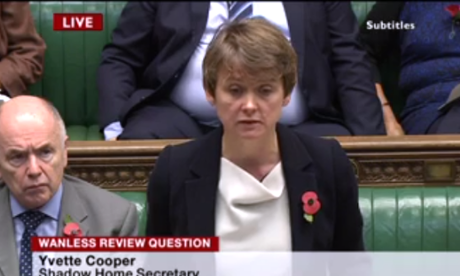
Urgent question on the Wanless/Whittam report
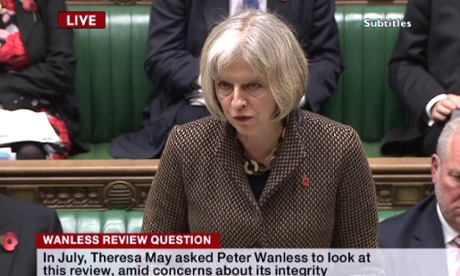
Theresa May, the home secretary, is responding to Labour’s urgent question about the Wanless/Whittam report now.
She says they found nothing to support a concern that files had been systematically destroyed to cover up child abuse.
And they found no evidence that the Home Office funded the Paedophile Information Exchange.
They made three recommendations about how the Home Office handles information like this. The Home Office has accepted those recommendations.
May says she has also asked for further assurances about what happened to allegations passed on to the police and MI5. (See 11.05am.)
Updated
You can read all today’s Guardian politics stories here. And all the politics stories filed yesterday, including some in today’s paper, are here.
As for the rest of the papers, here’s the PoliticsHome list of top 10 political must-reads, and here is the ConservativeHome round-up of all today’s political stories.
And here are two articles I found particularly interesting.
Even the anonymous plotters have given up, briefing that they will strike if Labour loses the election. They will not have to do so. If Labour loses, Miliband will be gone whether he wants to stay or not.
But the shallowness of the plotting should not obscure the depth of unease. One of the ways Miliband deals with the intense and often personal criticism that comes with leadership is to ignore it. When a speech, an interview or stance is criticised, his favourite response is to argue “this comes with the territory”. No, sometimes the speech, stance or interview is nowhere near good enough. Ideally, he needs to listen to criticism before making a speech. If not in advance, then he needs to listen afterwards ...
Some time ago, Miliband’s close allies told him that, like Shakespeare’s Prince Hal, he must establish distance with those he used to work and play with. But Prince Hal knew for sure he would acquire the crown when he moved on ruthlessly. As the frenzy over Miliband’s leadership fades he must rediscover his earlier capacity to get on with the unlikeliest of colleagues, binding a team with a shared sense of purpose. He can only play the role of a lofty, intimidating king if he wins the right to wear the prime ministerial crown.
The Bank of Miliband is flunking its stress test. There were dignified ways for the Labour party leader Ed Miliband to greet whispers of a putsch against him last week. He might have ignored them, or dismissed them out of hand, or made a brutal example of a few malcontents pour encourager les autres. The Conservatives’ probable loss of a parliamentary by-election on November 20, in Rochester in southern England, would by itself relieve the strain on the opposition leader anyway.
Instead, Labour resorted to paranoia and a siege mentality more becoming of a millenarian cult than a grown-up political party. They blame the “rightwing press”, particularly the chunk of it owned by Rupert Murdoch, not only for the leadership tremors but for Mr Miliband’s low reputation in the country. If voters disdain Mr Miliband, the party seems to believe, it is because they are brainwashed. The best that can be said for this theory is that it has ideological pedigree; the one morsel of Marxist doctrine still evidently cherished by the British left is false consciousness.
Keith Vaz goes next.
Q: If you had had more time, could you have discovered more?
Whittam says it would be better for focus on bringing to justice outstanding complaints.
He says he would encourage survivors to come forward.
Q: Are you doing some work on Rotherham?
Wanless says he has not started that yet. He will be looking at work the Home Office has done, but that has not finished yet.
Q: And have you been asked for your views on the overarching child abuse inquiry.
No, says Wanless.
And that’s it.
They are wrapping up now so the committee members can be in the Commons for hte urgent question on the Wanless/Whittam report at 1pm.
Wanless says he would like to get a reply from the Home Office saying they are taking the recommendations seriously.
Nicola Blackwood, a Conservative, goes next.
Q: Did you think there was someone who would have been able to shed light on this if you had been able to find them?
Whittam says that, if there was someone like that, he and Wanless would have approached them.
There are a lot of claims on the internet. People mentioned anonymous Home Office informants. But they don’t know who they are.
Wanless says there are some people he would have liked to speak to about PIE. But, for one reason or another, they could not be traced.
Labour’s David Winnick goes next.
Q: You are not saying there was no cover-up?
Whittam says that, on the evidence they have, they cannot say that there was no cover-up? But they should not be interpreted as meaning that they are implying that there was one.
As for what was going on outside the filing system, who knows, Wanless says.
Q: Did you meet Don Hale? (See 9.51am.)
Whittam says Hale did not come to see them.
Barbara Castle finished her term as a minister before the period covered by their terms of reference. So this dossier may be a different one.
But Hale is welcome to come to see them. We are listening, says Whittam.
Q: Doesn’t Hale’s story imply that somewhere there was a cover-up?
Whittam says allegations should be investigated.
Michael Ellis, a Conservative, goes next.
Q: Did you find any evidence of files being copied?
Whittam says they did ask about this. They asked people like MI5 and the whips’ office. The results are in the report.
Keith Vaz, the chairman, goes next.
Q: Simon Danczuk says he put you in touch with forensic investigators. (See 11.36am.) Were you able to use them?
Wanless says that conversation was very helpful. But all the papers in this case are on paper. The forensic analysts specialise in digital files.
Whittam says experts told them this would not be helpful.
Labour’s Paul Flynn goes next.
Q: Who will we find out if a real cover-up took place?
Wanless says they did come across people in the criminal justice system who have an understanding of what it is like to be a victim.
We need to create an environment where people feel happy to come forward, he says.
There is no substitute for evidence from real people.
Over the last year we have seen celebrated people, who perhaps thought they were above the law, being brought to justice.
Q: The scale of the overarching inquiry is enormous. Would it be better to have a small inquiry?
Wanless says he is worried about having to wait years for results.
Children are being abused today, he says.
James Clappison, a Conservative, goes next.
Q: Do you think public money went to the Paedophile Information Exchange?
Wanless says this was impossible to prove or disprove one way or the other.
Q: Did you identify individuals in the Home Office sympathetic to PIE?
Wanless says the whistleblower mentioned someone who said there might be a legitimate reason for funding PIE.
Q: So the paperwork was shambolic?
Wanless says he does not know, because papers were only kept for six years.
Q: Did you get full cooperation?
Whittam says the police responded to all inquiries.
Q: Does this shambolic approach to record keeping persist?
Wanless says he now has a “greater confidence” that the Home Office deals properly with allegations about crimes involving children.
Q: So you have seen no evidence of a direct cover-up? But he could not find some information because of chaotic record keeping. And it is possible things could have gone missing deliberately?
That’s correct, says Wanless.
Whittam says there may have been cover-ups. But there would not necessarily be evidence of this.
Q: What is your view of Home Office record keeping?
Wanless says it was not exactly brilliant. In fact, it was “a mess”.
Q: So it was a bit shambolic?
Wanless says it was difficult to piece together. That is why their report contains a number of caveats.
Q: You conclude there was nothing to show a deliberate cover-up?
That’s right, says Whittam.
He says they inspected paper files. And titles of files were held on disc.
But they were dependent on file titles. Some information was under the heading Brighton assaults.
Wanless says they were dependent on searching using the right search terms.
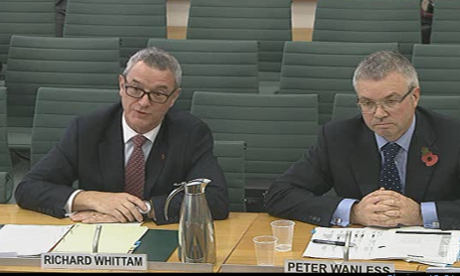
Wanless and Whittam give evidence to the home affairs committee
Peter Wanless and Richard Whittam QC have just started giving evidence to the home affairs committee about their report.
Wanless is chief executive of the NSPCC. Whittam is a barrister.
Wanless told Keith Vaz, the committee chair, that the report was given to the Home Office in the middle of last month.
Updated
Here are some more extracts from the Wanless/Whittam report.
-
Wanless/Whittam concluded there was nothing suspicious about the 114 “missing files”.
Based on titles alone, 18 are files started specifically in relation to an individual Parliamentary Question [2 year retention], and 67 are files about a specific piece of correspondence, almost always written by an MP on behalf of a constituent [2 year retention]
We can offer no assurance as to what was in the specific pieces of correspondence [1 was from Geoffrey Dickens on behalf of a constituent in 1986, 5 cases all from 1985 mention PIE, on the other hand others would seem to be about legal or operational matters rather than specific cases – eg video links in courts.] But destruction after 2 years for all such files was the practice so, in that sense, they are not missing
Of the 27 other files: 15 might be described as policy files concerning general child abuse-related issues rather than suggesting in any sense they relate to specific cases or allegations and one is about a research proposal, again general in nature
That leaves 11 remaining files, in order of date creation as follows
42.1. A briefing file about fugitive paedophilia prepared for a Home Secretary visit to the Netherlands [68]
42.2. A file about points raised by Scarborough Health District regarding evidence of children in cases of sexual abuse
42.3. A file of briefing for the PM on “child abuse evidence problems” [43]
42.4. A child sex abuse general briefing file, part of a series [53]
42.5. A file called police checks – sexual abuse [14]
42.6. A research audit of police training in sexual abuse [22]
42.7. A research file on police operations against child sexual abuse [23]
42.8. A policy file about an EC communication on combatting child sex tourism [26]
42.9. A research file on policing paedophile networks [27]
42.10. A policy file on proactive operations against child sex abusers [28
42.11. A file on the News of the World Paedophile campaign [40]
On the face of this kind of analysis, we do not detect a pattern of destruction or set of particular files going missing, as opposed to those which have been retained in the official records, that support a suspicion that registered files were deliberately destroyed to cover up child abuse in the period with which we are concerned.
-
MI5 told Wanless and Whittam they did not have any relevant files.
The Security Service responded to the request to search their records. In their reply they set out the methodology they had used and provided a schedule of the results of that search. That schedule indicates that the Security Service does not hold any file that is relevant to our review.
Updated
At the home affairs committee David Winnick, the Labour MP, has just asked about the Don Hale revelations. (See 9.51am.)
Peter Saunders, chief executive of the National Association for People Abused in Childhood (NAPAC), said he thought files were being destroyed “as we speak” by people who had something to hide.
Q: So do you think files were deliberately destroyed at the Home Office?
Saunders said it was not surprising that people wanted to destroy evidence.
Updated
Danczuk dismisses the Wanless/Whittam report as a whitewash.
Simon Danczuk, the Labour MP for Rochdale who has been a prominent campaigner for the child abuse inquiry, has put out a statement saying the Wanless/Whittam inquiry was “set up to fail”. It was a “whitewash”, he said.
He said he had met Peter Wanless to discuss the inquiry. Danczuk said:
My impression was that the Home Office were not being particularly helpful in giving him access to files and that he was not given sufficient time to find the documents that were handed to the then home secretary, Leon Brittan, in the 1980s.
Danczuk said he met data forensic specialists who had worked on a number of high-profile cases, including the Libor scandal and the Hillsborough inquiry. He asked Wanless if he was using the same techniques, but found that he was not. Danczuk went on:
The approach is pretty amateurish. Since Theresa May announced her inquiry into child abuse this summer we’ve made no progress whatsoever. We desperately need to snap out of this overly cautious and defensive approach and see an appetite to confront the cover ups of the 1980s, not just gloss over the past and hope it all goes away.
The message that’s continually being conveyed by government to survivors of child abuse is that we hear you, but we’re not acting. Theresa May has a once in a generation opportunity to address child abuse failings of the past. But so far all we’ve seen are whitewash reports and hopeless attempts to manage and contain an historic child abuse inquiry.
Wanless/Whittam report says Home Office probably did not fund Paedophile Information Exchange
And this is what the Wanless/Whittam report says about the allegations that the Home Office provided funds to PIE, the Paedophile Information Exchange. (This was a subsidiary part of its investigation.)
-
Wanless/Whittam say that the Home Office probably did not fund the Paedophile Information Exchange, but that the possibility cannot be dismissed entirely.
Review 2 had concluded that on the balance of probabilities and in the absence of supporting evidence or a corroborative account, the alleged funding of PIE by the Home Office’s Voluntary Services Unit [VSU] did not take place. We have explored further the suggestion made by the whistleblower, and not covered explicitly in the original review, that funding of PIE might have taken place with the knowledge of the police or security services as part of an effort to infiltrate PIE. On the information we have seen during the period of our review, we have found nothing in registered files or in testimony offered by contemporaries in and around the VSU [voluntary services unit] to support what the whistleblower remembers being told. Nor, however, have we been able to dismiss the suggestion entirely.
Wanless/Whittam report says no evidence to suggest Home Office involved in abuse cover-up
And here is an extract from the full Wanless/Whittam report.
This is what it says about the possibility of some of the files being removed as part of a cover-up.
- Wanless/Whittam say there is “no basis” for thinking files removed from the Home Office as part of a cover-up.
- They say there is “nothing specific to support a concern that the Home Office had failed in any organised or deliberate way to identify and refer individual allegations of child abuse to the police.”
It is, therefore, not possible to say whether files were ever removed or destroyed to cover up or hide allegations of organised or systematic child abuse by particular individuals because of the systems then in place. It follows that we cannot say that no file was removed or destroyed for that reason. By making those observations they should not be misinterpreted. We do not conclude that there is any basis for thinking that anything happened to files that should not have happened to them, but identify that limitation in our review. Further, and with the same caveat, our review cannot be taken to have concluded one way or the other whether there was organised child abuse that has yet to be fully uncovered - indeed it is public knowledge that active police investigations examining allegations of historic child abuse are underway.
All that said, based on registered papers we have seen, and our wider enquiries, we found nothing to support a concern that files had been deliberately or systematically removed or destroyed to cover up organised child abuse. We found nothing specific to support a concern that the Home Office had failed in any organised or deliberate way to identify and refer individual allegations of child abuse to the police.
Theresa May's statement on the Wanless/Whittam review
Theresa May, the home secretary, has just released the Wanless/Whittam review and her written ministerial statement on it.
- May publishes Wanless/Whittam report but says it leaves some questions unanswered.
- May demands further answers on what police did about the Geoffrey Dickens allegations.
- May wants to know if allegations passed on to MI5 and what, if anything, they did about them.
Since I cannot find it on the web yet, here is the full text of her statement.
On 7 July I announced to the House that Peter Wanless and Richard Whittam QC would be conducting a Review of two Independent Reviews that were commissioned by the Permanent Secretary at the Home Office in relation to child abuse. The full report by Peter Wanless and Richard Whittam QC will be placed in the House Library today and will also be available on Gov.uk.
In response to public concern, Peter Wanless and Richard Whittam QC were asked to lead this work to address the allegation that, in the 1980s, the Home Office failed to act on information received in respect of child sexual abuse.
They have concluded that, in respect of the first Review commissioned by the Permanent Secretary, “the conclusions were reasonably available to the Reviewer on the information then available” and that they “agree with recommendations made”. In respect of the second Review commissioned by the Permanent Secretary, Peter Wanless and Richard Whittam QC make clear that they “have seen no evidence to suggest PIE was ever funded by the Home Office because of sympathy for its aims”. Their Review makes three recommendations for the Department, all of which have been accepted. These were that:
- They endorse the recommendations made in the first Review
- Where an allegation of child abuse is made it must be recorded and the file marked as significant. That significance should then inform the Department as to how to handle that file, its retention and the need to record when [if at all] it is destroyed. This approach is relevant, not only to the Home Office, but could usefully be adopted across Government as well.
- There should be a system within the Home Office of recording what information is sent to the police and then a formal procedure of confirming what the result of that reference is.
My officials have already implemented the recommendations from the first Review commissioned by the Permanent Secretary, which have now been endorsed by Peter Wanless and Richard Whittam QC. They will work to implement recommendations two and three of Peter Wanless and Richard Whittam QC’s Review as soon as possible.
I have also written to Peter Wanless and Richard Whittam QC today on two particular aspects on which I am seeking further reassurance, firstly their consideration of how the police and prosecution authorities handled any material that was handed to them at the time. The Home Office will publish their response to this question, to ensure full transparency on this point.
Secondly, I have asked them for similar assurance in relation to the full unredacted final reports of the first investigation, and the list of the 114 files considered in their Review, to establish whether any of the material mentioned in these was ever passed to the Security Service and, if so, what action the Security Service took in respect of this material.
Peter Wanless and Richard Whittam QC’s full report, which is being placed in the House Library today, contains a number of Annexes. These Annexes include copies of the full reports from the first Review that the Permanent Secretary commissioned. Peter Wanless and Richard Whittam have made only the redactions that they judge are necessary to ensure publication does not jeopardise any future criminal investigations or trials.
Publication of this Review today is an important step in ensuring institutions take seriously their duty to protect children from abuse and to learn lessons from any failures.
Updated
For the record, here are today’s YouGov GB polling figures.
Labour: 33% (no change from YouGov in the Sunday Times)
Conservatives: 32% (down 1)
Ukip: 17% (up 1)
Lib Dems: 6% (down 1)
Greens: 6% (no change)
Labour lead: 1 point (up 1)
Government approval: -24
According to Electoral Calculus, that would give Labour a majority of 6.
Yvette Cooper has been granted an urgent question about the Wanless report.
Urgent question from @YvetteCooperMP on Wanless report at 1 pm. Followed by statement on Prison Communications
— Labour Whips (@labourwhips) November 11, 2014
Normally Commons business starts at 11.30am on a Tuesday, but today it is starting at 12pm, which means the urgent question will be at 1pm.
This means it could clash with the home affairs committee’s Wanless hearing (starting at 12.15pm), which would less than ideal because some of the MPs most keen to take part in the UQ would be stuck in committee.
We’re going to have to wait a bit longer for the Wanless report, according to the Sun’s Steve Hawkes.
Another day.. now Home Office says the Wanless report delayed by an hour
— steve hawkes (@steve_hawkes) November 11, 2014
On the Today programme Don Hale, a journalist, explained how the late Barbara Castle gave him a dossier containing sexual abuse allegations about prominent figures in the 1980s. After he was visited by Sir Cyril Smith, who tried to get him to hand it over, Hale was raided by Special Branch officers who took the dossier away.
The Daily Mail published an account of Hale’s story earlier this year. (Thanks to mikechampion in the comments for the link.)
Hale told the Today programme that he was not interviewed by the Wanless inquiry. The Labour MP John Mann isn’t impressed.
Wanless failed to interview Don Hale about leaked Home Office sex abuse files. Hardly a forensic investigation.
— John Mann MP (@JohnMannMP) November 11, 2014
Sajid Javid, the culture secretary, is giving a speech to the Society of Editors later today.
According to extracts released in advance, he will say that the proposed Conservative British bill of rights would include specific protections for journalists.
If we receive a majority at the next election, a Conservative government will scrap Labour’s Human Rights Act and deliver a new British bill of rights and responsibilities.
And today I’m delighted to announce that I have agreed with the justice secretary that the British bill of rights will include specific protection for journalists and a free press.
The Human Rights Act and the European Court of Human Rights have not done enough to protect journalists who play such a unique role in our society. Our British bill of rights will change that.
Wanless/Whittam report - Background reading
The Home Office is due to publish the Wanless/Whittam report within the next hour. Here is some background reading.
-
The final report from the investigator, from August 2013 (pdf). Here is the conclusion.
The Independent Investigator is satisfied that the Home Office did pass on to the appropriate authorities any information received about child abuse in the period 1979 to 1999 which was credible and which had any realistic potential for further investigation. The Investigator believes that the risk of any undisclosed material remaining in files from that period is extremely low.
The Home Office took appropriate and proportionate action in the identified cases involving Home Office staff. In the absence of detailed central records of disciplinary cases for the period it is not possible to give an assurance that all relevant cases have been identified. The Investigator found no evidence of any unresolved allegations against Home Office staff or of any related complaints.
- A letter from the Home Office to the home affairs committee with more details of those inquiries, from July 2014. It was sent by Mark Sedwill, the Home Office permanent secretary. Here’s an extract.
The investigation did not find a single dossier from Mr Dickens, but several sets of correspondence over a number of years to several Home Secretaries containing allegations of sexual offences, including, for example, action taken regarding the import of pornographic material reported in some of the media this week. As well as these specific allegations, later correspondence from Mr Dickens focused on broader related policy issues, such as the risk of children and young people being drawn into occult activities. The review found no record of specific allegations by Mr Dickens of child sex abuse by prominent public figures ...
The review carried out an extensive analysis of a central database containing details of over 746,000 files for the 1979-1999 periods and identified 527 potentially relevant files which had been retained. These 527 files plus 46 personnel files (573 in total) were all physically examined by the Independent Review. In addition the same extensive analysis of the central database identified 114 potentially relevant files had been presumed destroyed, missing or not found. The investigation identified 13 items of information about alleged child abuse, nine of which were known or reported to the police including four cases involving Home Office staff. The remaining four items, which had not been previously disclosed, have now been passed to the police. Details of the cases involving Home Office staff are in the Executive Summary of the Final Report.
I have today appointed Peter Wanless – the chief executive of the National Society for the Prevention of Cruelty to Children – to lead a review not just of the investigation commissioned by Mark Sedwill but also how the police and prosecutors handled any related information that was handed to them. Peter Wanless will be supported in his work by an appropriate senior legal figure, who will be appointed by the Permanent Secretary. Where the findings of the review relate to the Director of Public Prosecutions, it will report to the Attorney General as well as to me. I will ask the review team to advise my officials on what redactions to the full investigation report might be needed in order that, in the interests of transparency, it can be published without jeopardising any future criminal investigations or trials. I expect the review to conclude within eight to ten weeks, and I will place a copy of its terms of reference in the House Library today.
Today the Home Office is publishing a child abuse inquiry. It is not from the main, overarching inquiry, which still hasn’t got a chair and is only just getting going. It’s the inquiry from Peter Wanless and Richard Whittam into what happened to the dossier of child abuse allegations that the late Conservative MP Geoffrey Dickens submitted to the Home Office in the 1980s. Technically it’s not even a full inquiry; it’s actually an inquiry into whether an earlier, internal inquiry into this, carried out last year, was conducted properly.
Still, it’s bound to generate some questions. The home affairs committee is taking evidence after its publication from Wanless and Whittam, as well as from other witnesses involved in the new, overarching inquiry.
In the meantime, the Home Office is also assessing the aftermath of yesterday’s shambolic debate on the European arrest warrant - which didn’t actually cover the EAW. Here are the latest developments.
- Labour has announced that it will use its opposition day debate next week to allow MPs to have a proper vote on the EAW. This will take place the day before the Rochester and Strood byelection.
-
Liam Fox, the Conservative former defence secretary, has accuses John Bercow, the speaking of going “over the top” yesterday in his remarks accusing the government of breaking a promise to allow MPs a vote on the EAW.
Here is the agenda for the day.
9.45am: Justine Greening, the international development secretary, gives evidence to the Commons international development committee on Ebola.
11.30am: The home affairs committee takes evidence on the child abuse inquiry. At 11.30am Alison Millar, counsel for the victims groups, Hilary Willmer, chairwoman of Parents Against Child Sexual Exploitation (PACE), and Peter Saunders, chief executive of the National Association for People Abused in Childhood (NAPAC) give evidence. At 12.15pm Peter Wanless and Richard Whittam give evidence on their report into the missing child abuse dossier.
2.45pm: Sir Bernard Hogan-Howe, the Metropolitan police commissioner, gives evidence to the home affairs committee about the police’s use of the Regulation of Investigatory Powers Act (Ripa) when investigating journalists.
As usual, I will be also covering all the breaking political news from Westminster, as well as bringing you the most interesting political comment and analysis from the web and from Twitter. I will post a summary at lunchtime, and another at the end of the day.
If you want to follow me on Twitter, I’m on @AndrewSparrow.
Updated